
Cape Froward National Park: Protecting the Edge of the World
At the southernmost point of South America, Chile is establishing Cape Froward National Park, one of the most ambitious conservation initiatives in decades. Located on the Brunswick Peninsula, southwest of Punta Arenas, this protected area encompasses pristine wilderness facing the Strait of Magellan.
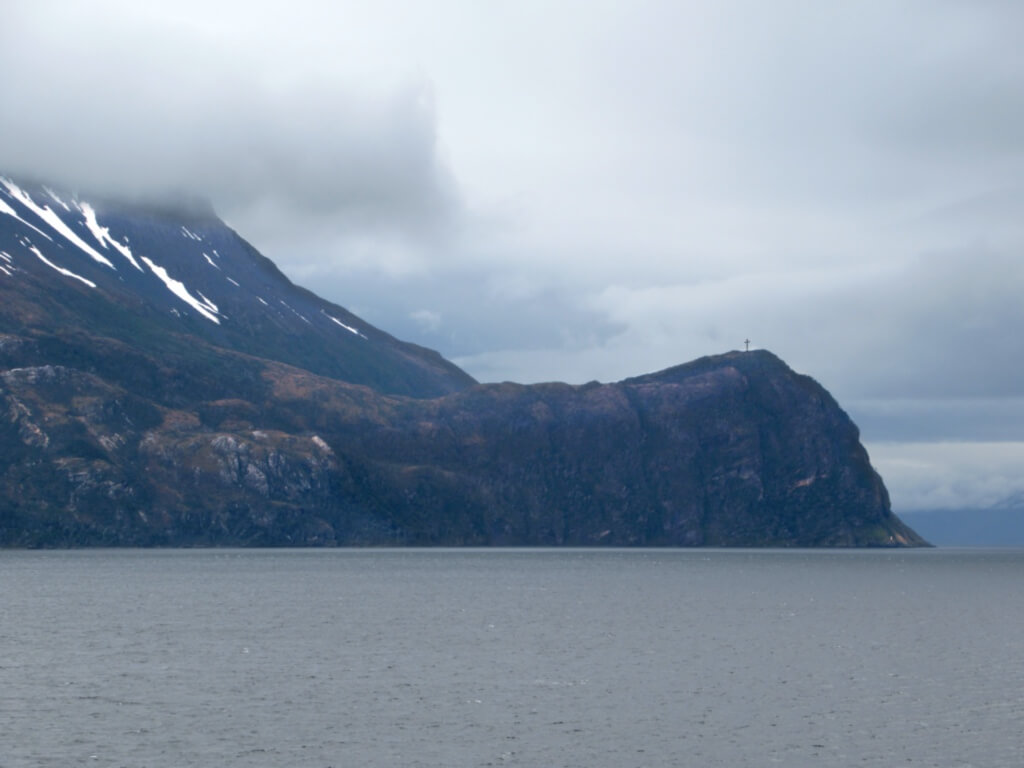
Cape Froward National Park: Chile's Newest Wilderness at the Edge of the World
At the southernmost point of the South American continent, Chile is establishing Cape Froward National Park, one of the nation's most ambitious conservation initiatives in decades. Located on the Brunswick Peninsula, approximately 62 kilometers (39 miles) southwest of Punta Arenas, this protected area encompasses approximately 155,000 hectares (383,000 acres) of pristine wilderness facing the historic Strait of Magellan. The park represents a convergence of extraordinary natural features: temperate forests dominated by southern beeches (Nothofagus species), extensive carbon-storing peatlands covering nearly 25,000 hectares (61,800 acres), and dramatic coastal zones where Pacific and Atlantic waters meet at the continent's terminus. Following a historic land donation of 127,000 hectares (314,000 acres) by Rewilding Chile and Tompkins Conservation in November 2025, the Chilean government is expected to complete the legal decree establishing the park within two years, creating Chile's 47th national park and marking the 16th protected area facilitated by Tompkins Conservation.
Geographic Setting: The Edge of the World
Cape Froward marks the southernmost point of mainland South America at approximately 53°54'S latitude, where the continent narrows to its terminus before fragmenting into the Tierra del Fuego archipelago. This geographic extremity has earned the region its reputation as the "edge of the world"—a place where terrestrial landscapes give way to the Southern Ocean's vast expanses.
The Brunswick Peninsula, upon which Cape Froward is situated, extends southward between the Strait of Magellan to the east and Otway Sound to the west. This rugged, isolated landmass encompasses approximately 1,780 square kilometers (687 square miles) of largely roadless wilderness. Route 9, Chile's southernmost highway, literally ends at a gate marking the boundary of the future national park, requiring visitors to continue on foot or by boat to reach the cape itself.
The Strait of Magellan, the legendary waterway first navigated by Ferdinand Magellan in 1520, flows past Cape Froward, connecting the Pacific and Atlantic Oceans. The strait's cold, nutrient-rich waters support exceptional marine biodiversity and have shaped human history in the region for millennia.
Climate and Ecosystems
Cape Froward experiences a subantarctic oceanic climate, characterized by cool temperatures, high humidity, persistent winds, and year-round precipitation. Summer temperatures average 10-15°C (50-59°F), while winter brings temperatures often near freezing. Annual precipitation exceeds 1,000 millimeters (39 inches), with notorious weather changes shifting rapidly between sunny periods, rain squalls, and fog.
The park encompasses a mosaic of interconnected marine, coastal, and terrestrial habitats. Magellanic subpolar forests dominated by evergreen Magellan's beech (Nothofagus betuloides) and canelo (Drimys winteri) clothe the landscape, with trees often twisted and stunted by persistent westerly winds.
Extensive peat bogs are among the park's most ecologically significant features. These carbon-storing wetlands contain vast amounts of organic matter accumulated over millennia. Peatlands store approximately one-third of the world's terrestrial carbon, despite covering only 3% of Earth's land surface, making them critical for regulating the climate. The preservation of Cape Froward's peatlands contributes significantly to both biodiversity conservation and climate change mitigation.
The Huemul Discovery: Hope for an Endangered Species
In July 2025, conservationists from Rewilding Chile made a remarkable discovery during a helicopter expedition to inaccessible mountain terrain around Cordes Bay—confirming the presence of a new subpopulation of ten huemul deer (Hippocamelus bisulcus), one of South America's most endangered large mammals.
The huemul, a stocky, medium-sized deer appearing on Chile's coat of arms as a national symbol, has suffered catastrophic population declines—losing 99% of its population to hunting and habitat loss. Fewer than 1,500 individuals remain across Chile and Argentina, surviving in small, isolated populations scattered throughout the Patagonian Andes.
The Cape Froward discovery proved particularly significant because researchers had not previously documented huemul presence in this region. Wildlife director Cristián Saucedo explained that when they arrived at the mountaintop via helicopter, they immediately saw a huemul, ultimately confirming a breeding population including males, females, and a fawn.
The resident huemul group appears to be thriving thanks to the rugged geography of Cape Froward, which has served as an inadvertent refuge. Geographic barriers have prevented human access, allowing the population to remain relatively undisturbed. The discovery demonstrates that pristine, roadless places allow endangered species to persist, though conservationists emphasize that formal protection through national park designation is essential for long-term preservation.
Marine and Coastal Biodiversity
Cape Froward's marine and coastal environments are equally significant for conservation. The cold waters of the Strait of Magellan support rich ecosystems, with abundant phytoplankton and krill that form the foundation of complex food webs.
Marine mammals frequently observed include humpback whales (Megaptera novaeangliae), which migrate to these productive feeding grounds during summer; southern sea lions (Otaria flavescens); and various dolphin species, including endemic Chilean dolphins (Cephalorhynchus eutropia). Magellanic penguins (Spheniscus magellanicus) breed along the coast, while numerous seabirds, including cormorants, albatrosses, and petrels, exploit marine resources.
The integrated protection of land and marine environments within the park boundaries creates opportunities for ecosystem-based management that recognizes the interconnections between terrestrial and aquatic systems.
Cultural and Historical Significance
Cape Froward occupies ancestral Kawésqar territory. The Kawésqar people—nomadic marine hunter-gatherers—navigated the channels, fjords, and straits of western Patagonia in bark canoes. Evidence of this long human history remains visible in old trees showing scars where the Kawésqar stripped bark to line their vessels.
Magellan's 1520 passage through the strait opened a sea route connecting the Atlantic and Pacific oceans, fundamentally changing global trade and exploration. Eight lighthouses built along the coastline guide ships through the perilous strait, with the San Isidro Lighthouse standing sentinel on the cliffs.
The iconic Cross of the Seas—a large cross erected at Cape Froward's southernmost point—has become a symbol of reaching the literal end of the mainland, a destination for pilgrims, tourists, and sailors who have ventured to the continent's edge.
The Tompkins Conservation Legacy
The creation of Cape Froward National Park represents the culmination of decades of conservation work by Tompkins Conservation and Rewilding Chile. Douglas Tompkins, founder of The North Face, and his wife, Kristine Tompkins, former CEO of Patagonia, Inc., dedicated their lives and considerable resources to protecting Patagonian wilderness.
Between 2021 and 2024, Rewilding Chile acquired 127,000 hectares (314,000 acres) on the Brunswick Peninsula. In November 2025, this land was donated to the Chilean government with the condition that it be officially designated as a national park within two years. Combined with protected fiscal lands, the future park will comprise approximately 155,000 hectares (383,000 acres)—similar in size to Grand Teton National Park in the United States.
This land donation represents the latest in an extraordinary conservation legacy. Tompkins Conservation has helped create 16 national parks protecting 14.5 million acres across Chile and Argentina, making Douglas and Kristine Tompkins among the most consequential conservationists of the 21st century.
The Route of Parks Connection
Once established, Cape Froward National Park will form a critical southern anchor in Chile's Route of Parks (Ruta de los Parques), a 2,800-kilometer (1,740-mile) conservation corridor spanning Chilean Patagonia from Puerto Montt to Cape Horn. This network links 17 national parks that protect approximately 11.8 million hectares (28 million acres)—one of the largest protected-area systems on Earth.
Cape Froward will specifically connect to adjacent protected areas, including Kawésqar National Park and Alberto de Agostini National Park, creating an 8-million-hectare biological corridor in the Magallanes region. This connectivity is essential for maintaining genetic diversity, supporting species migrations, and providing resilience against climate change.
Sustainable Tourism and Economic Development
Cape Froward National Park is designed to balance environmental preservation with sustainable economic development. As the first national park within the municipality of Punta Arenas, it is expected to boost ecotourism and create opportunities for local communities.
Rewilding Chile is developing infrastructure plans, including well-designed hiking trails, visitor facilities, and designated camping areas. Several private tourism operators already offer experiences including multi-day backpacking expeditions from Punta Arenas to the cape, boat tours navigating the Strait of Magellan to observe marine wildlife, and kayaking programs with whale encounters.
Well-managed tourism can create economic alternatives to extractive industries while fostering environmental awareness, transforming visitors into advocates for protecting the places they've come to value.
The Path Forward
The Chilean government is expected to complete the legal decree establishing Cape Froward National Park within two years of the November 2025 land donation. This timeline reflects the complexity of creating protected areas in Chile, requiring Indigenous consultations, environmental assessments, and administrative processes.
For Chile, Cape Froward National Park represents continued progress toward the country's commitment to protect 30% of national territory by 2030. The addition of Cape Froward's 155,000 hectares will substantially contribute to this conservation target while protecting critical peatland ecosystems that play a crucial role in regulating the climate.
Cape Froward National Park stands as a testament to the power of collaborative conservation—demonstrating how philanthropic vision, government commitment, and community engagement can protect extraordinary wild places for future generations. At the very edge of the world, where the South American continent meets the Southern Ocean, this new protected area will ensure that subantarctic forests, endangered wildlife, and unique ecosystems endure as a legacy of 21st-century conservation leadership.