
The Nazca Plate: Engine of Andean Formation
The Nazca Plate, a medium-sized oceanic plate named after the southern Peruvian region of Nazca, drives Andean mountain building and volcanic activity along South America's western coast. It exemplifies how oceanic-continental convergence gives rise to spectacular geological features.
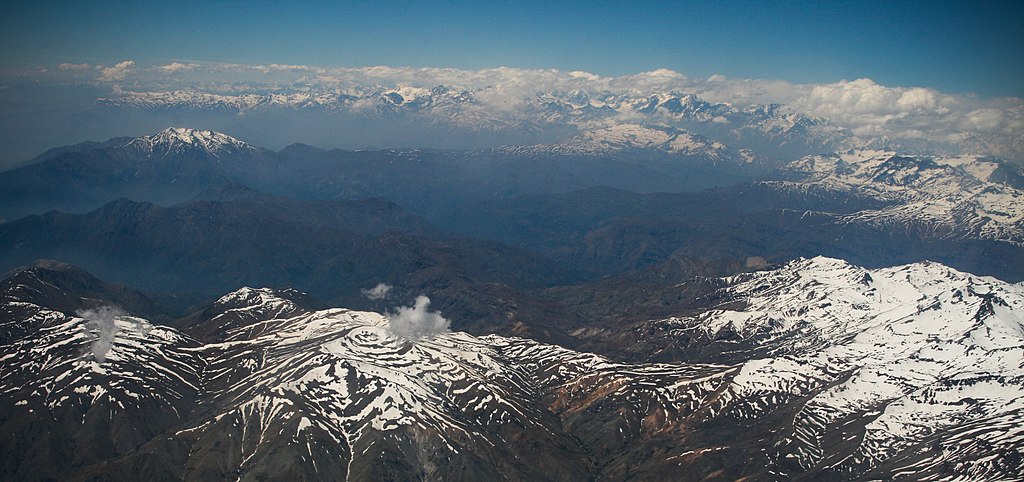
Oceanic Powerhouse: How the Nazca Plate Shapes Western South America
The Nazca Plate, a medium-sized oceanic plate covering approximately 15 million square kilometers (5.8 million square miles), serves as the primary driver of Andean mountain building and volcanic activity along South America's western coast. Named after the Nazca region of southern Peru, this entirely oceanic plate illustrates how oceanic-continental convergence gives rise to some of Earth's most spectacular geological features.
Formation and Evolution
The Nazca Plate formed approximately 23 million years ago during the breakup of the ancient Farallon Plate, along with the Cocos Plate to the north. This fragmentation process occurred as the Pacific-Farallon spreading center approached the western margin of the Americas, fundamentally altering the tectonic configuration of the eastern Pacific.
The plate's oceanic crust ranges in age from near-zero at the East Pacific Rise to approximately 50 million years at its eastern margin. This age progression reflects the continuous creation of new oceanic crust at the spreading centers and its eventual destruction through subduction beneath South America.
Plate Boundaries and Motion
The Nazca Plate exhibits complex boundary relationships with four major neighboring plates. Its eastern boundary forms the Peru-Chile Trench, where rapid subduction occurs beneath the South American Plate. The western boundary follows the East Pacific Rise, a mid-oceanic ridge system where the Pacific Plate diverges at rates of 150-160 millimeters (5.9-6.3 inches) per year.
To the north, the Nazca Plate meets the Cocos Plate along the Galápagos Ridge, while its southern boundary with the Antarctic Plate follows the Chile Ridge. The Chile Triple Junction, located near 46°S off the Chilean coast, represents the complex intersection point where the Nazca, South American, and Antarctic plates meet.
The plate moves eastward at velocities ranging from 59 millimeters (2.3 inches) per year in the north to 90 millimeters (3.5 inches) per year in the central region, representing some of the fastest convergence rates on Earth.
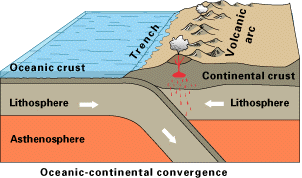
Simplified sketch of the tectonic forces along most of the Andes.
Subduction Dynamics and the Peru-Chile Trench
The subduction of the Nazca Plate beneath South America creates the Peru-Chile Trench, one of the world's major oceanic trenches. This feature extends 5,900 kilometers (3,700 miles) from northern Peru to the Chile Triple Junction, reaching maximum depths of 8,065 meters (26,460 feet) in the Atacama Trench off the northern coast of Chile.
Subduction geometry varies significantly along the margin, resulting in distinct segments with distinct characteristics. In northern Peru and southern Ecuador, normal subduction occurs at angles of 25-30 degrees. However, beneath central Peru and northern Chile, the subducting slab flattens dramatically, creating "flat-slab" subduction where the Nazca Plate remains nearly horizontal for hundreds of kilometers before resuming its descent into the mantle.
This flat-slab geometry has a profound influence on Andean geology, causing volcanic activity to migrate eastward and creating the broad, high-elevation Altiplano plateau. The absence of active volcanism in these flat-slab regions contrasts sharply with the intense volcanic activity in areas of normal subduction.
Volcanic Consequences: The Andean Volcanic Belt
Nazca Plate subduction drives the formation of the Andean Volcanic Belt, one of Earth's most extensive volcanic systems. This belt contains over 200 potentially active volcanoes distributed across six countries: Colombia, Ecuador, Peru, Bolivia, Chile, and Argentina.
The volcanic belt exhibits three distinct segments corresponding to different subduction geometries. The Northern Volcanic Zone extends through Colombia and Ecuador, featuring stratovolcanoes such as Cotopaxi and Reventador. The Central Volcanic Zone spans southern Peru, Bolivia, northern Chile, and northwestern Argentina, including giants like Ojos del Salado (6,893 meters or 22,615 feet), the world's highest volcano.
The Southern Volcanic Zone spans central and southern Chile, as well as adjacent Argentina, and is home to volcanoes such as Villarrica and Osorno. Each zone reflects distinct aspects of the subduction process, ranging from slab geometry to magma composition, resulting in diverse volcanic landscapes and hazard profiles.
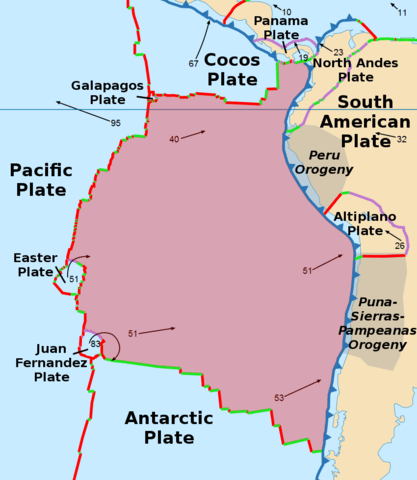
Map depicting the location of the Nazca Plate.
Seismic Activity and Earthquake Generation
The rapid convergence between the Nazca and South American plates generates some of Earth's most powerful earthquakes. The subduction zone regularly produces megathrust earthquakes exceeding magnitude 8.0, including the 1960 Valdivia earthquake (M 9.5), the strongest earthquake ever recorded.
Earthquake distribution reflects the geometry of subduction zones and the coupling between the plates. Shallow thrust earthquakes occur along the plate interface, while intermediate-depth earthquakes (70-300 kilometers or 43-186 miles deep) result from deformation within the subducting slab. Deep earthquakes (those occurring at depths of over 300 kilometers or 186 miles) mark the slab's continued descent into the upper mantle.
The flat-slab regions generate distinctive seismic patterns, with intermediate-depth earthquakes occurring unusually far inland, sometimes over 700 kilometers (435 miles) from the trench. These events reflect the horizontal extent of the subducted slab, providing crucial insights into subduction dynamics.
Galápagos Hotspot and Ridge System
The Nazca Plate interacts with the Galápagos hotspot, a mantle plume that has created the Galápagos Islands and several aseismic ridges. The hotspot currently lies near the Galápagos Ridge, the spreading center between the Nazca and Cocos plates, creating complex interactions between ridge processes and hotspot volcanism.
The Carnegie Ridge extends eastward from the Galápagos hotspot toward the South American coast, representing the hotspot's track across the Nazca Plate over the past 15 million years. The collision of this ridge with the continental margin influences local subduction dynamics and may contribute to the flat-slab geometry observed beneath northern Peru and southern Ecuador.
Impact on South American Geology
Nazca Plate subduction has fundamentally shaped South American geology over the past 200 million years. The process created the Andes Mountains, altered continental drainage patterns, and influenced climate through topographic effects. The rapid uplift associated with ongoing convergence continues to modify landscapes, with some Andean regions rising at rates exceeding 10 millimeters (0.4 inches) per year.
Subduction-related processes also concentrate valuable mineral resources. The volcanic and hydrothermal activity associated with subduction created major copper deposits in Chile and Peru, gold deposits throughout the Andes, and molybdenum concentrations at high elevations. These resources form the economic foundation for several South American nations.
Environmental and Biological Implications
The geological processes driven by the subduction of the Nazca Plate create diverse environmental conditions that support unique ecosystems. Rapid Andean uplift generates extreme elevation gradients, creating habitat diversity that supports high levels of endemism. Species such as the Polylepis trees found in high Andean forests represent adaptations to the unique conditions created by rapid mountain building.
Volcanic activity associated with subduction provides fertile soils that support agriculture in many regions, while also creating natural hazards that affect millions of people. The ongoing interaction between geological processes and human activities demonstrates the continuing importance of understanding Nazca Plate dynamics.
The Nazca Plate exemplifies how oceanic plates drive continental evolution through subduction processes. Its rapid eastward motion and complex interactions with neighboring plates continue to shape one of Earth's most dynamic geological regions, influencing everything from mountain building to biodiversity patterns across western South America.
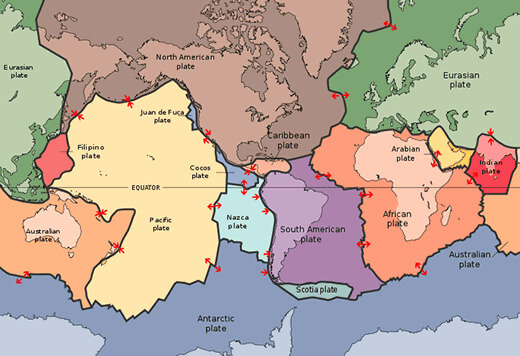
Map illustrating the major tectonic plates of the world.