
Llanos de Moxos: A Legacy of Ancient Engineering and Agriculture
The Llanos de Moxos, located in the Beni Department of northern Bolivia, is one of South America's most significant archaeological regions. A 2022 LIDAR survey revealed that its dense earthworks concealed genuine cities, complete with monumental pyramids, built by the Casarabe culture over a thousand years ago.

Llanos de Moxos: The Lost Cities LIDAR Found
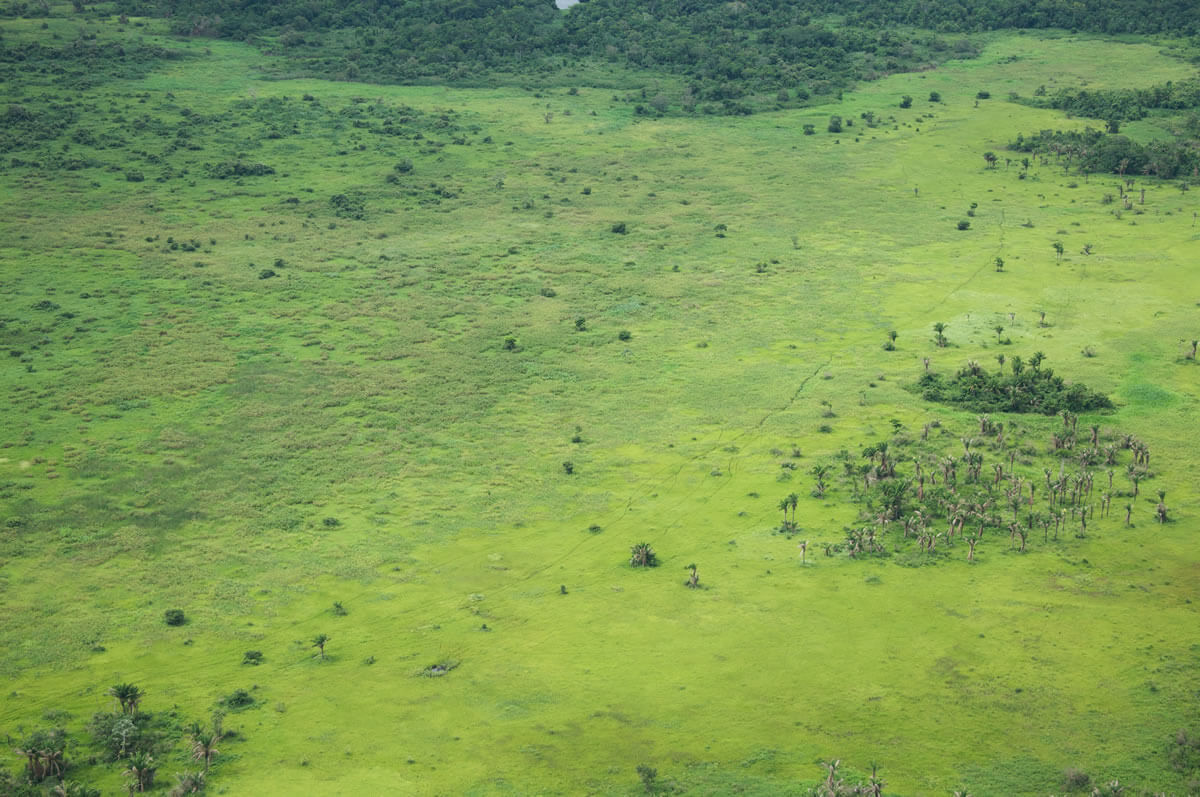
The Llanos de Moxos, located in the Beni Department of northern Bolivia, is one of South America's most significant archaeological regions, offering an unparalleled window into the lives of pre-Columbian societies that thrived in the tropical savanna. Spanning an expansive 128,000 square kilometers (49,400 square miles), the Llanos de Moxos, known as the Beni Savanna, is the third-largest savanna complex in South America. What sets this region apart is its vastness and the extraordinary density of archaeological sites within the Amazon basin, revealing a sophisticated history of landscape engineering and agricultural innovation.
Archaeological Significance and Discovery
The Llanos de Moxos is renowned as a center of pre-Columbian agriculture and early plant domestication. The region's significance emerged in the 1960s, when petroleum company geologists and geographer William Denevan identified extensive prehistoric earthworks. This discovery marked a turning point in understanding the rich cultural heritage of the Llanos de Moxos, highlighting the advanced engineering capabilities of its ancient inhabitants.
One of the most remarkable aspects of the Llanos de Moxos is the extensive landscape modification carried out by its early inhabitants. A comprehensive study by the University of Bern uncovered a fascinating landscape-engineering project that began about 10,850 years ago. This ambitious endeavor involved the creation of around 4,700 artificial "forest islands" within the vast, treeless, and seasonally flooded savannah. These forest islands and other earthworks demonstrate the ancient ingenuity and adaptability of the people who lived in the Llanos de Moxos.
The Ingenious Earthworks of the Llanos de Moxos
The Llanos de Moxos is adorned with a diverse array of earthworks, each reflecting the advanced engineering skills of its ancient inhabitants. These earthworks include monumental mounds, raised agricultural fields, natural and constructed forest islands, canals, causeways, ring ditches, and fish weirs. These features were not merely functional; they also reflected a deep understanding of the local environment and the ability to manipulate it for agricultural and societal needs.
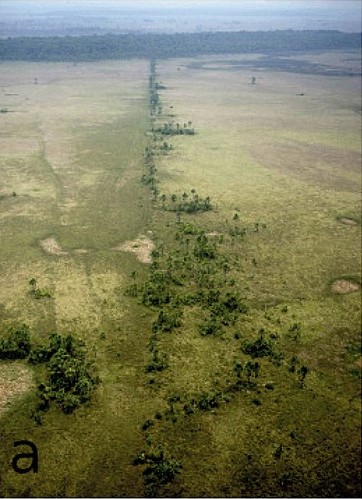
A key element of landscape engineering in the Llanos de Moxos was the strategic use of natural lagoons formed by oxbow lakes. An intricate canal network connected these lagoons to major rivers such as the Rio Mamoré. This network facilitated transportation and communication and served as a crucial irrigation system, allowing the inhabitants to sustain agriculture in the challenging environment of the Amazonian savanna.
Similar earthworks have been identified along other major South American rivers, including the Paraná, Paraguay, and Amazon rivers, which suggests that the ancient civilizations of the Llanos de Moxos were part of a broader network of interconnected societies that shared knowledge and technologies across the continent.
Cities Hidden Beneath the Canopy: The 2022 LIDAR Discovery
In May 2022, a team led by archaeologist Heiko Prümers of the German Archaeological Institute published findings in the journal Nature that transformed scientific understanding of the Llanos de Moxos almost overnight. Using airborne LIDAR, a laser-based scanning technology capable of digitally stripping away forest canopy to reveal the terrain and structures beneath it, the team mapped two previously known but unexplored settlement sites, Cotoca and Landívar, in unprecedented detail, along with 24 smaller sites in total, nine of which had never been documented before.
The results revealed a civilization far more sophisticated and populous than previously understood. Cotoca and Landívar turned out to be the central hubs of the Casarabe culture, which flourished across roughly 4,500 sq km (1,700 sq mi) of the southwestern Llanos de Moxos between approximately 500 and 1400 CE. Each site featured artificial terraced platforms up to 22 hectares in area and 5 m (16 ft) high, topped with U-shaped civic-ceremonial structures and conical pyramids reaching as high as 22 m (72 ft); constructing Cotoca alone required moving an estimated 570,000 cubic meters of earth, roughly ten times the volume used to build the largest known structure at the highland Tiwanaku civilization. These major centers were linked to dozens of smaller settlements by straight causeways stretching for kilometers, alongside an extensive network of canals and reservoirs for water management, all combining into what the study's authors described as clear evidence of a distinct form of low-density urbanism, one not previously documented anywhere in Amazonia and comparable to similar low-density urban patterns found in Southeast Asia and Central America.
The discovery reframed the Llanos de Moxos not merely as a landscape of scattered agricultural earthworks but as the site of genuine cities, complete with monumental architecture and a settlement hierarchy connecting them, adding a new and considerably more urban chapter to the region's already remarkable ten-thousand-year human history.
Agricultural Practices and Crop Domestication
The agricultural practices of the Llanos de Moxos were both innovative and highly effective, enabling the region's inhabitants to thrive in an environment that was both seasonally flooded and prone to drought. The ancient inhabitants cultivated staple crops such as manioc, squash, and maize, which were well suited to local conditions. Genetic studies show that the domesticated crops in the Llanos de Moxos are closely related to their wild counterparts in the region, suggesting local domestication.
The raised agricultural fields, known as "camellones," were a key feature of the Llanos de Moxos agricultural landscape. These fields were elevated above the surrounding floodplains, allowing them to remain productive even during the wet season. Canals separated the fields and served as irrigation channels and fish traps, providing a diverse and sustainable food source for the local population.
Cultural Practices and Artifacts
Beyond their agricultural achievements, the ancient inhabitants of the Llanos de Moxos were skilled artisans and cultural practitioners. They crafted intricately decorated pottery and woven cotton cloth and engaged in distinctive burial practices. One notable burial custom involved interring the dead in large urns, often placed within the artificial mounds that dot the landscape.
The pottery of the Llanos de Moxos is particularly significant, as it provides valuable insights into the cultural and artistic traditions of the region's ancient societies. The pottery is often decorated with intricate patterns and motifs, reflecting the complex social and religious beliefs of the people who created them.
A Biocultural Landscape of 10,000 Years
Human presence in the Llanos de Moxos spans an impressive 10,000 years, creating a biocultural landscape that reflects the deep and enduring interaction between people and their natural environment. Construction efforts in the region, dating from approximately 8850 BCE to 1450 CE, highlight the remarkable legacy of human innovation in the heart of the Amazonian savanna.
This legacy is visible not only in the earthworks and artifacts left behind by the ancient inhabitants but also in the ongoing cultural practices of the Indigenous communities that continue to live in the region today. These communities maintain a deep connection to the land and their ancestors' traditions, preserving the cultural heritage of the Llanos de Moxos for future generations.
Conclusion
The Llanos de Moxos is a testament to the ingenuity and adaptability of the ancient societies that once thrived in the heart of the Amazonian savanna. Through advanced engineering, innovative agricultural practices, monumental urban centers revealed only recently by modern technology, and rich cultural traditions, the inhabitants of the Llanos de Moxos transformed the landscape into a complex, sustainable ecosystem that supported their way of life for millennia. Today, the Llanos de Moxos stands as a vital archaeological and cultural region, offering valuable insights into the history of pre-Columbian South America and the enduring relationship between humans and their environment.