
Manú National Park: Where the Andes Meet the Amazon
Manú National Park in Peru, where the Andes meet the Amazon, is one of Earth's most remarkable wild regions. Its protected area ranges from snow-capped mountains to tropical jungles, supporting diverse life and safeguarding Indigenous peoples who have lived there for thousands of years.


Manú: Peru's Ultimate Biodiversity Sanctuary
Deep in the heart of Peru, where the towering Andes Mountains give way to the steamy Amazon Rainforest, lies one of the world's most extraordinary wilderness areas. Manú National Park protects over 1.7 million hectares (4.2 million acres) of pristine habitat, ranging from snow-capped peaks at 4,200 meters (13,780 feet) to lowland rainforests at just 350 meters (1,150 feet) above sea level. This vast sanctuary harbors more biodiversity than almost anywhere else on Earth while protecting Indigenous communities who have called these forests home for thousands of years.
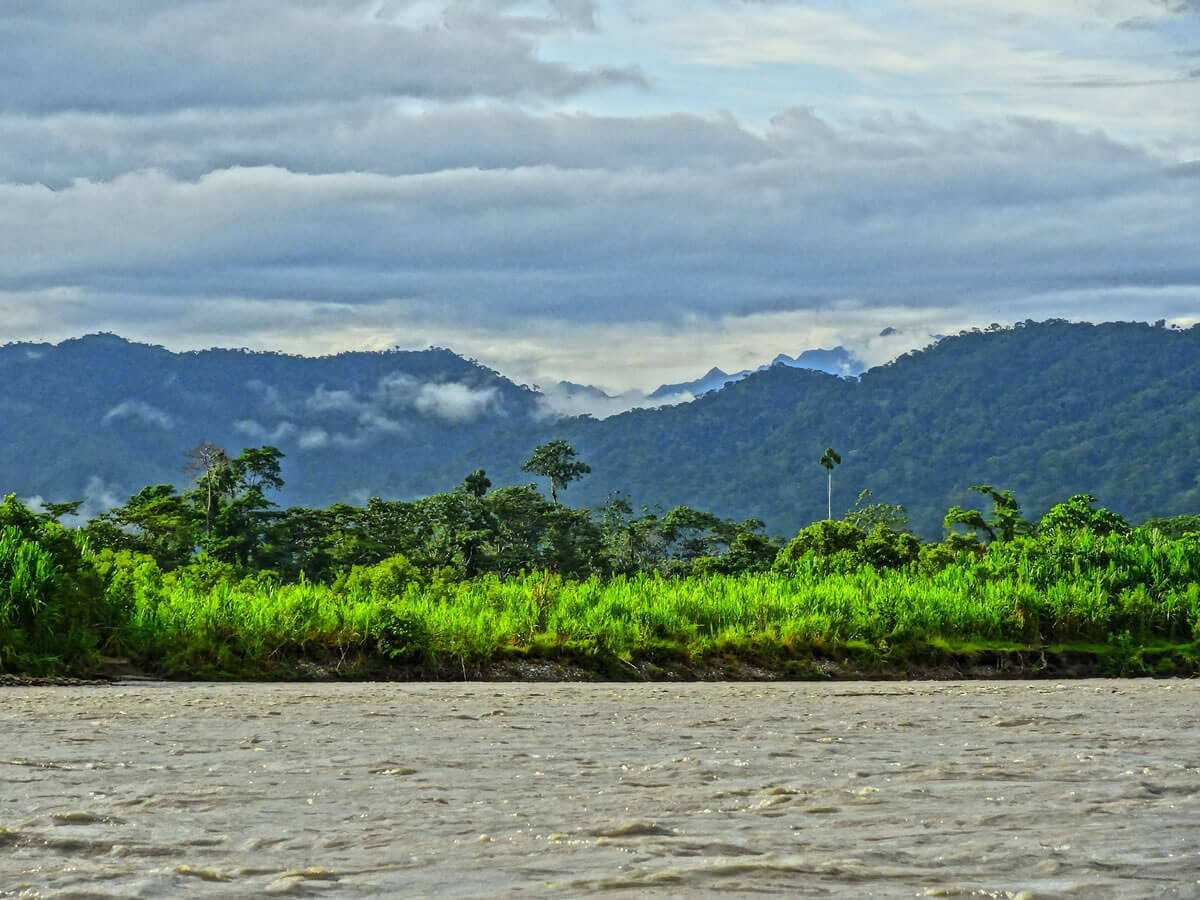
Manú represents nature at its most spectacular and untouched. No roads penetrate its interior, and much of the park remains unexplored by scientists. This isolation has preserved ecosystems exactly as they existed before human impact, making Manú a living laboratory for understanding how tropical environments function when left undisturbed. From the mysterious cloud forests shrouded in perpetual mist to the winding chocolate-colored rivers teeming with giant otters, Manú offers a window into the Amazon as it existed centuries ago.
Global Recognition and Protection Status
Manú's conservation story began in 1968 when Peru established the Manú Nature Reserve to protect this irreplaceable wilderness. The area gained national park status in 1973, establishing the legal framework for its current protection and management. International recognition followed quickly, with UNESCO designating it as a Biosphere Reserve in 1977 and achieving the ultimate recognition as a World Heritage Site in 1987. This progression reflects growing international awareness of Manú's extraordinary value to global biodiversity conservation.
The multiple UNESCO designations underscore Manú's global significance. As a Biosphere Reserve, it serves as a model for balancing conservation with sustainable human use. The World Heritage Site designation recognizes both its outstanding universal value for biodiversity and its cultural importance to Indigenous peoples.
What makes Manú truly unique is its three-zone management system designed to balance conservation with Indigenous rights and scientific research. The park's core zone remains completely off-limits to tourists, preserving 1.5 million hectares (3.7 million acres) of untouched wilderness where Indigenous communities live in voluntary isolation. The buffer zone allows limited scientific research and Indigenous use, while the cultural zone permits sustainable tourism and traditional activities by local communities.
This careful zoning ensures that Manú serves multiple purposes simultaneously: protecting pristine wilderness, supporting Indigenous rights, advancing scientific knowledge, and providing sustainable economic opportunities through carefully managed ecotourism. This integrated approach exemplifies the UNESCO Biosphere Reserve model, which links conservation with sustainable development.
The Meeting of Mountains and Jungle
Manú's most remarkable feature is its dramatic altitudinal gradient, which creates a natural staircase of ecosystems descending from the high Andes to the Amazon lowlands. This elevation change occurs over remarkably short distances, creating one of the world's most compressed examples of ecological diversity.
At the highest elevations, alpine grasslands known as puna stretch across windswept plateaus, where temperatures can drop below freezing, even at the equator. Vicuñas (Vicugna vicugna) graze these high meadows, while Andean condors (Vultur gryphus) ride thermals rising from the valleys below.
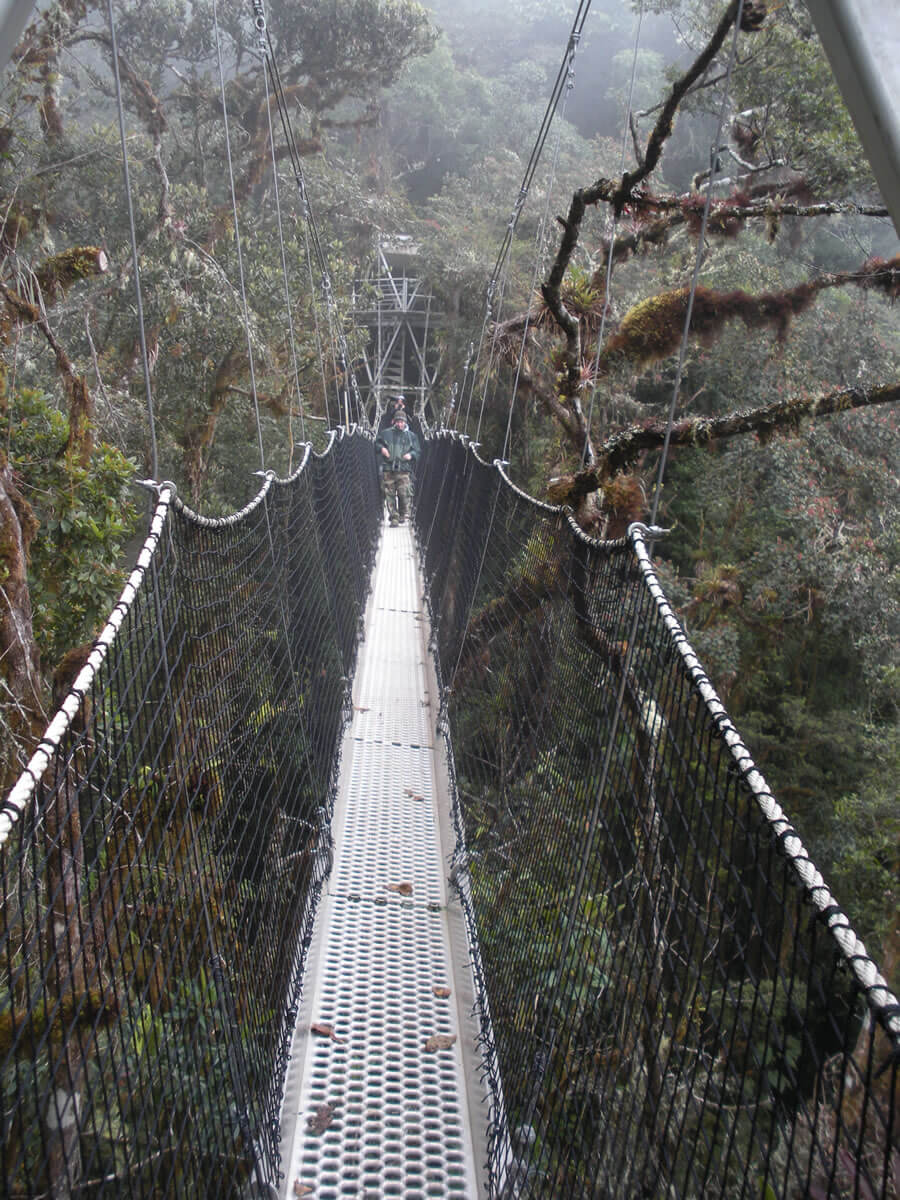
Descending into the cloud forest zone, between 1,500 and 3,500 meters (4,900 and 11,500 feet), the landscape transforms into a mystical world of moss-draped trees perpetually shrouded in mist. These cloud forests capture moisture directly from passing clouds, creating some of the most species-rich plant communities on Earth. Spectacled bears (Tremarctos ornatus) forage for bromeliads and tree fruits in these misty forests, while hundreds of hummingbird and tanager species create a living rainbow among the epiphyte-laden branches.
The montane forests, located between 800-1,500 meters (2,600-4,900 feet), represent a transition zone where Andean and Amazonian species meet and mingle. This ecotone supports unique assemblages of plants and animals found nowhere else, contributing significantly to Manú's overall biodiversity.
Finally, the lowland rainforests below 800 meters (2,600 feet) contain the classic Amazon ecosystem that most people envision – towering emergent trees over 50 meters (164 feet) tall, dense understory vegetation, and the winding Manu River, which serves as the area's lifeline.
Biodiversity Beyond Imagination
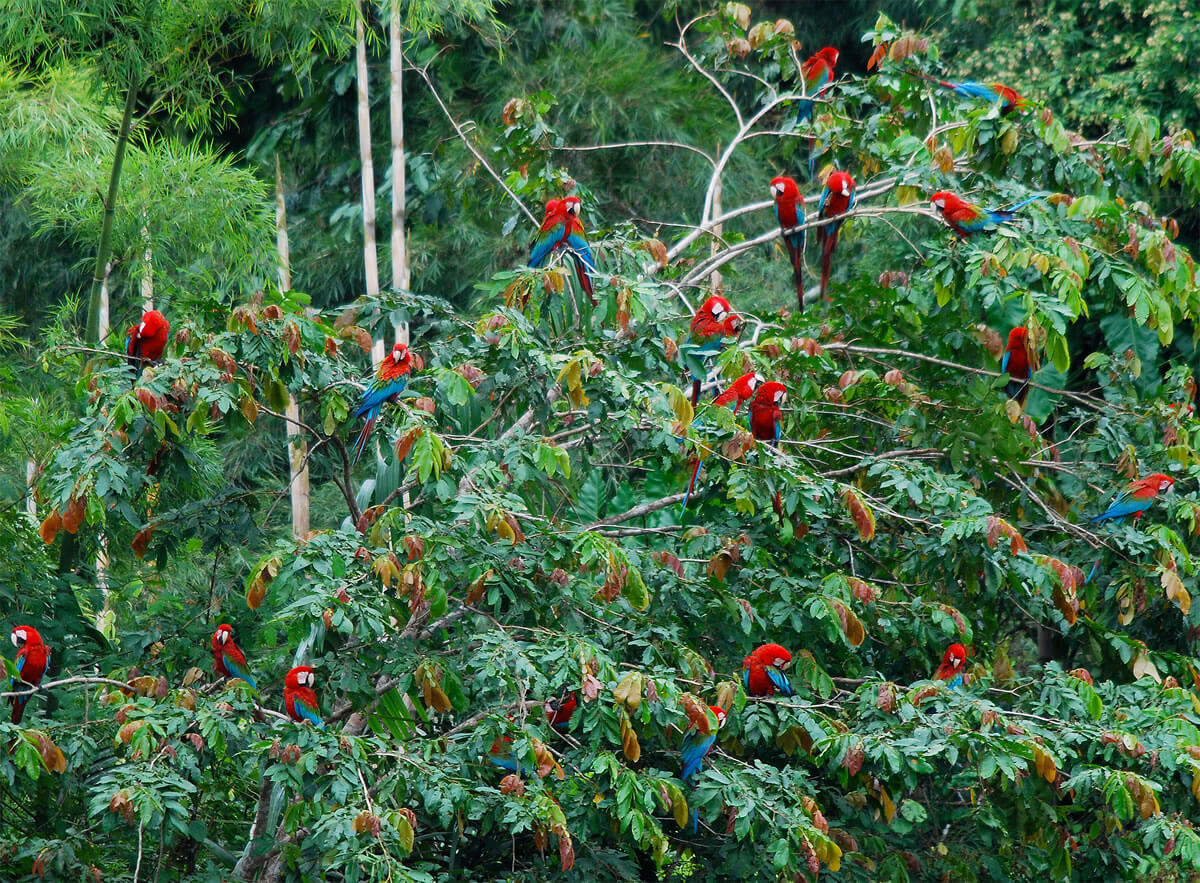
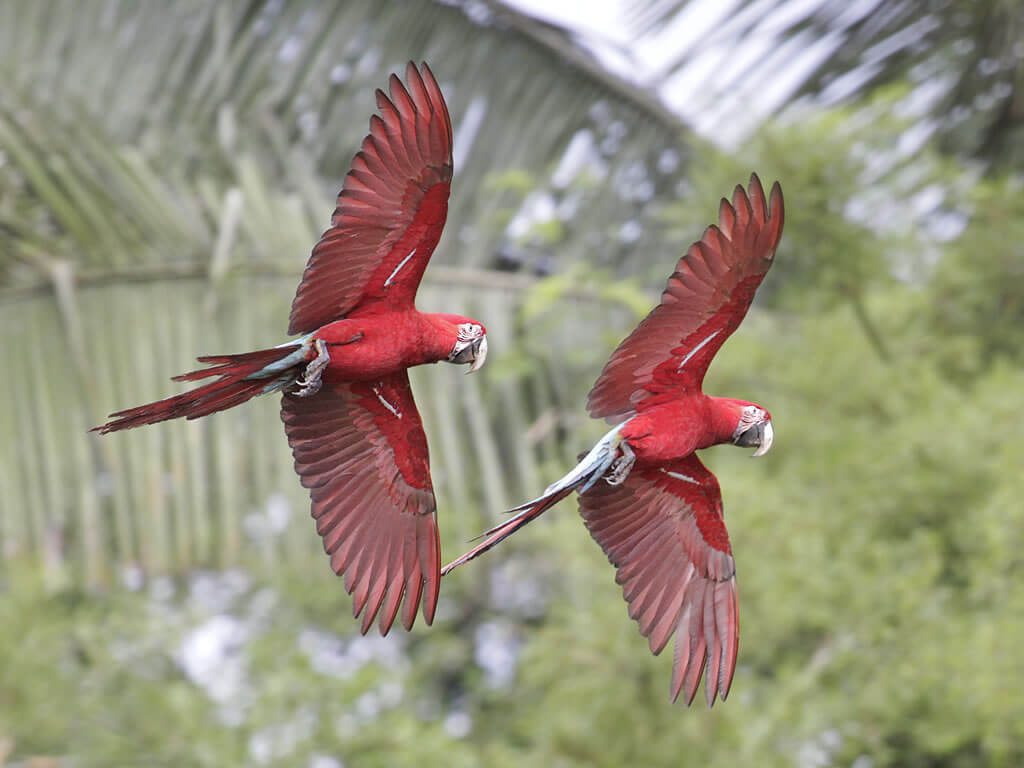
The numbers associated with Manú's biodiversity are staggering and continue to grow as scientists discover new species. Current estimates include over 1,000 bird species – more than the total number found in the entire United States and Canada combined. The park protects at least 200 mammal species, including 13 different primates, ranging from the tiny pygmy marmosets (Cebuella pygmaea), which weigh less than 140 grams (5 ounces), to the powerful howler monkeys (Alouatta species), whose calls can be heard over 5 kilometers (3 miles) away.
Manú's big cats represent one of the most complete predator assemblages anywhere in the Americas. Jaguars (Panthera onca) patrol the riverbanks and forest floors, while pumas (Puma concolor) range from the high Andes down to the lowland forests. Smaller cats include ocelots (Leopardus pardalis), margays (Leopardus wiedii), jaguarundis (Puma yagouaroundi), oncillas (Leopardus tigrinus), Andean mountain cats (Leopardus jacobita), and pampas cats (Leopardus colocola).
The rivers and oxbow lakes support populations of giant otters (Pteronura brasiliensis), one of South America's most endangered mammals. These social predators can reach 2 meters (6.6 feet) in length and live in extended family groups that work together to catch fish and defend their territories. Their presence indicates healthy aquatic ecosystems, making them important indicator species for conservation.
Plant diversity estimates range from 4,000 to over 15,000 species, with discoveries made during virtually every scientific expedition. The variation in estimates reflects the extent to which Manú remains unexplored, particularly in the remote headwater regions and the strictly protected core zone.
Rivers as Highways of Life
The Manu River system serves as the park's circulatory system, connecting different elevations and ecosystems while providing habitat for countless aquatic species. The river begins as crystal-clear mountain streams fed by glacial melt and cloud forest precipitation. As tributaries merge and the river descends, it transforms into the meandering, sediment-rich waterway that eventually joins the Madre de Dios River.
These waterways support incredible fish diversity, with over 850 documented species including massive catfish, electric eels (Electrophorus electricus), and the legendary piranha. River dolphins (Inia geoffrensis) navigate the murky waters using echolocation, while black caimans (Melanosuchus niger) – the Amazon's apex aquatic predator – lurk in quiet backwaters.
The river's seasonal flood cycles create a dynamic landscape of temporary islands, shifting channels, and seasonal wetlands. During high-water periods, fish disperse into flooded forests, where they feed on fallen fruits and seeds, creating crucial ecological connections between aquatic and terrestrial systems.
Oxbow lakes formed by the river's meandering course become isolated aquatic ecosystems that support unique communities of plants and animals. These quiet waters provide ideal habitat for giant otters, rare birds like the zigzag heron (Zebrilus undulatus), and countless species of water plants and aquatic invertebrates.
Indigenous Guardians of the Forest
Manú's human history stretches back thousands of years, with archaeological evidence revealing complex pre-Columbian civilizations that managed forest resources sustainably. Today, several Indigenous groups continue this tradition, serving as the park's most effective guardians while maintaining their traditional ways of life.
The Matsigenka people represent the largest Indigenous group within the park, with communities practicing traditional swidden agriculture, hunting, and fishing. Their deep ecological knowledge enables scientists to understand forest dynamics and species behavior, while their sustainable practices demonstrate how humans can coexist in harmony with pristine wilderness.
Other Indigenous groups include the Yine, Harakmbut, and Quechua peoples, each with distinct cultures and traditional territories within the broader Manú landscape. Some communities maintain regular contact with the outside world and participate in ecotourism activities, while others choose voluntary isolation to preserve their traditional lifestyles.
The presence of uncontacted Indigenous groups in Manú's core zone adds another layer of complexity to park management. These communities have the legal right to maintain their isolation, and their territories receive strict protection from outside interference. Their continued presence demonstrates that large wilderness areas can support human communities when traditional lifestyles remain in balance with natural systems.
The Legend of Paititi
Manú holds a special place in Peruvian mythology as the rumored location of Paititi, the legendary "Lost City of the Incas." According to local legends, Inca nobles fled to this remote wilderness carrying vast treasures when Spanish conquistadors invaded their empire. While no definitive archaeological evidence has confirmed the existence of Paititi, the legend adds mystique to an already extraordinary landscape.
Archaeological sites throughout Manú reveal sophisticated pre-Columbian civilizations that built elaborate stone structures, created intricate petroglyphs, and managed forest resources through complex agroforestry systems. These discoveries suggest that Manú supported larger human populations in the past, all while maintaining the ecological integrity that makes the area so valuable today.
The search for Paititi continues to inspire expeditions and research, though modern archaeologists focus more on understanding how ancient peoples lived sustainably in these forests rather than seeking treasure. These investigations reveal sophisticated Indigenous knowledge systems that could inform contemporary conservation and sustainable development efforts.
Scientific Discovery and Research
Manú serves as one of the world's most important natural laboratories for tropical ecology research. The park's pristine condition and protection from human disturbance make it ideal for studying natural ecosystem processes, species interactions, and evolutionary biology.
Research stations within the park facilitate long-term studies of forest dynamics, animal behavior, and plant ecology. Scientists have utilized Manú to gain insight into how tropical forests respond to climate change, how species adapt to varying elevation zones, and how ecosystems maintain stability over time.
The park continues to yield new species discoveries at a remarkable rate. Recent discoveries include new species of birds, mammals, reptiles, amphibians, fish, and numerous invertebrates. Botanists regularly discover new plant species, particularly orchids, bromeliads, and other epiphytes in the cloud forest zones.
Many research projects focus on understanding how elevation gradients influence biodiversity patterns. Manú's compressed altitudinal range allows scientists to study how species adapt to different climate conditions over relatively short distances, providing insights relevant to conservation planning under climate change scenarios.
Conservation Challenges and Successes
Despite its protected status and remote location, Manú faces several conservation challenges. Climate change threatens to shift suitable habitat zones upslope, potentially eliminating high-elevation species with nowhere left to go. Warming temperatures could also alter cloud forest dynamics by changing precipitation patterns and cloud formation.
External pressures include proposed road construction that could fragment the park's buffer zones and provide access for illegal activities. Gas exploration concessions in the surrounding areas raise concerns about potential impacts on water quality and the movement of wildlife.
Illegal gold mining in nearby watersheds poses threats to water quality and could introduce mercury contamination into Manú's river systems. Deforestation outside the park reduces connectivity with other protected areas and increases edge effects along park boundaries.
However, Manú conservation success stories far outweigh these challenges. The park's zonation system effectively balances conservation with Indigenous rights and sustainable use. Collaborative management involving Indigenous communities, government agencies, and international organizations has maintained the park's ecological integrity while supporting local livelihoods.
Ecotourism provides economic incentives for conservation while raising international awareness of Manu's importance. Carefully managed tourism generates revenue for local communities and demonstrates that pristine wilderness has economic value beyond extractive uses.
International support, provided through UNESCO and other organizations, helps fund research, management, and community development programs. This global recognition ensures continued attention and resources for the protection of Manú National Park.
Climate Change and Future Challenges
Climate change poses perhaps the greatest long-term threat to Manú ecosystems. Rising temperatures could force species to migrate upslope to track suitable climate conditions, but many high-elevation species may have nowhere left to go. Cloud forests are particularly vulnerable since they depend on specific temperature and humidity conditions that could shift dramatically with changing climate patterns.
Research in Manú helps scientists understand how tropical ecosystems might respond to climate change. The park's elevation gradient provides a natural laboratory for studying the adaptive capacity and migration patterns of species. This research informs conservation strategies not just for Manú but for protected areas throughout the tropics.
Maintaining connectivity between Manú and other protected areas becomes increasingly important as species need to track and adapt to changing climate conditions. Corridor conservation efforts help ensure that wildlife can move between suitable habitats as environmental conditions shift.
The park's Indigenous communities may prove crucial for climate adaptation strategies. Their traditional ecological knowledge encompasses an understanding of how species and ecosystems respond to environmental variability, providing valuable insights that could inform conservation planning under uncertain future conditions.
A Global Treasure Worth Protecting
Manú National Park represents one of conservation's greatest successes – a vast wilderness area that maintains its ecological integrity while supporting Indigenous communities and advancing scientific knowledge. The park demonstrates that it's possible to protect pristine ecosystems when there's sufficient political will, adequate resources, and respect for Indigenous rights.
For global biodiversity conservation, Manú serves as an irreplaceable reservoir of species and genetic diversity. Its pristine condition makes it an ideal reference site for understanding how undisturbed tropical ecosystems function. The park's scientific value extends far beyond its boundaries, informing conservation efforts throughout the Amazon Basin and beyond.
As one of the world's most biodiverse protected areas, Manú holds secrets that could benefit humanity in countless ways. New medicines, sustainable technologies, and conservation strategies may emerge from research in these pristine forests. The park's Indigenous communities maintain traditional knowledge systems that offer alternatives to unsustainable development models.
Manú's future depends on continued international support, effective management, and recognition of its global importance. The park faces challenges from climate change, external development pressures, and limited resources for management and research. However, its track record of successful conservation provides hope that this incredible wilderness will continue to thrive.
The park serves as a testament to the fact that large-scale wilderness conservation is feasible when conservation goals are aligned with Indigenous rights and sustainable development. Manú offers a model for protecting other threatened ecosystems while supporting local communities and advancing human knowledge.
In a world where pristine wilderness becomes increasingly rare, Manú National Park represents hope for the future. It demonstrates that, with proper planning, adequate resources, and respect for traditional knowledge, humanity can safeguard the planet's most precious natural heritage for generations to come.