
From Andes to Amazon: High-Altitude Connectivity Corridors
High-altitude connectivity corridors linking the Andes Mountains to the Amazon Rainforest serve as critical wildlife highways connecting snow-capped peaks to humid rainforests. Key corridors protect vital migration routes for spectacled bears, mountain tapirs, jaguars, and hundreds of bird species.
Bridging Biodiversity: The Critical Corridors Linking Andes and Amazon
High-altitude connectivity corridors linking the Andes Mountains to the Amazon Rainforest serve as critical wildlife highways connecting snow-capped peaks to humid rainforests. Key corridors, such as Peru's Manu-Tambopata, protect vital migration routes for spectacled bears, mountain tapirs, jaguars, and hundreds of bird species. These corridors facilitate the movement of wildlife, genetic exchange, and climate adaptation, while providing essential ecosystem services such as water regulation and carbon sequestration. However, road construction, agricultural expansion, and climate change threaten these natural highways, making their conservation critical for South America's biodiversity.
What Are Connectivity Corridors and Why Do They Matter?
Think of connectivity corridors as nature's highways. Just as people need roads to travel between cities, wildlife needs continuous stretches of natural habitat to move between different areas. These corridors serve three main purposes:
1. Wildlife Movement: Animals need to travel to find food, water, shelter, and mates. A jaguar might need to roam across hundreds of kilometers, while birds migrate seasonally between feeding and breeding areas.
2. Genetic Mixing: When animal populations are isolated, they can become inbred and weak. Corridors enable animals from different areas to meet and breed, thereby maintaining healthy and robust populations.
3. Climate Adaptation: As temperatures change, many species need to move to cooler or warmer areas. Mountain corridors act like escape routes, allowing animals to move uphill when it gets too hot or downhill when they need resources.
Key Corridors: Nature's Most Important Highways
Several major corridors connect the Andes to the Amazon, each supporting different species and ecosystems:
The Manu-Tambopata Corridor (Peru): This corridor spans from Peru's highest peaks to the Amazon lowlands, protecting a diverse range of ecosystems, including glacial lakes and tropical rainforests. It's home to over 1,000 bird species and serves as a critical pathway for spectacled bears, mountain tapirs, and countless other animals. The corridor includes Manú National Park and connects to Tambopata National Reserve, creating one of the most biodiverse protected areas on Earth.
The Cordillera Azul Corridor (Peru): This corridor protects the transition zone between the high Peruvian Andes and the upper Amazon Basin. It's crucial for maintaining water sources for millions of people downstream while providing habitat for endangered species, such as the yellow-tailed woolly monkey.
The Manu-Madidi Corridor (Peru-Bolivia): This international corridor extends the Manu-Tambopata system across the Peru-Bolivia border, creating one of the most biodiverse protected networks on Earth. It spans from glacial peaks over 6,000 meters (19,700 feet) high down to lowland rainforests at 200 meters (650 feet), protecting complete ecosystem gradients and supporting jaguar populations that move freely across national boundaries.
The Sangay-Podocarpus Corridor (Ecuador): Running along Ecuador's eastern Andes, this corridor connects high-altitude páramo grasslands with the Amazon Rainforest. It's especially important for cloud forest species and serves as a migration route for birds traveling between North and South America. The corridor protects headwaters that feed major Amazon tributaries.
The Palora-Pastaza Connectivity Corridor (Ecuador): Running along Ecuador's eastern Andean slopes, this corridor connects high-altitude páramo grasslands with the upper Amazon Basin. It protects critical cloud forest habitat and serves as a vital link for species moving between the high Andes and lowland rainforests, including spectacled bears and numerous endemic bird species.
The Chocó-Andes Corridor (Colombia-Ecuador): Though smaller, this corridor connects some of the world's most biodiverse ecosystems. It links the species-rich Chocó forests with Andean cloud forests, supporting numerous endemic species found nowhere else on Earth.
The Picachos–Tinigua–Macarena–Chiribiquete Corridor (Colombia): This corridor represents a remarkable conservation success story in Colombia's post-conflict regions. Connecting four national parks along the eastern Andes and upper Amazon, it provides crucial habitat for jaguars, tapirs, and hundreds of bird species while demonstrating how peace and conservation can work together to restore natural connectivity.
How These Corridors Work: From Mountains to Jungle
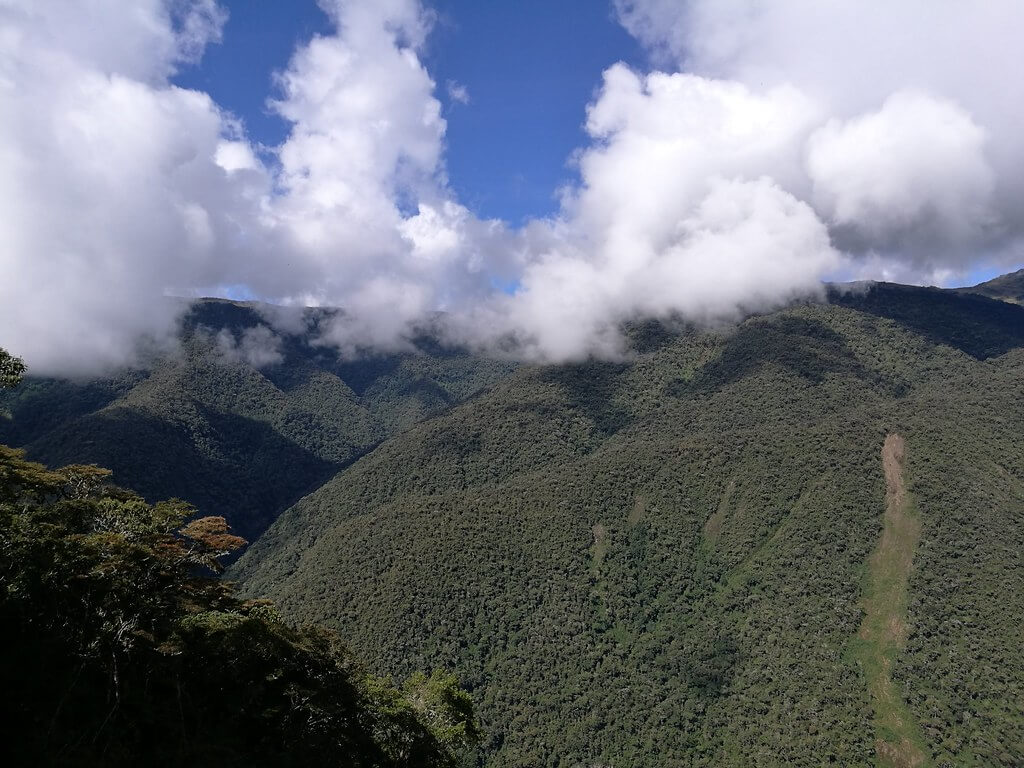
The corridors work like a giant staircase connecting different worlds. Starting high in the Andes at over 4,000 meters (13,100 feet), you'll find páramo grasslands - cold, windy areas that look almost like the Scottish highlands. As you descend, you enter cloud forests around 2,000-3,500 meters (6,600-11,500 feet) elevation. These mysterious forests are constantly wrapped in mist and fog, creating a fairyland environment filled with orchids, bromeliads, and hummingbirds.
Continue down and you reach montane forests, then gradually transition into the warm, humid Amazon Rainforest at an elevation of around 500 meters (1,600 feet). Each level has different temperatures, rainfall, and species, but the continuous forest connection allows animals and plants to move freely between all these zones.
The cloud forests are particularly important because they act like giant sponges, capturing water from fog and feeding the streams that eventually become part of the Amazon River system. They're also incredibly rich in species - some cloud forest areas have more plant species per square kilometer than anywhere else on Earth.
Animals That Depend on These Highways
Spectacled Bears (Tremarctos ornatus): South America's only bears use these corridors like seasonal migration routes. They climb up to high-altitude areas to feed on certain fruits and plants, then descend to cloud forests when food is scarce above. Without corridors, bear populations would be too small to survive.
Mountain Tapirs (Tapirus pinchaque): These strange-looking relatives of horses and rhinos are excellent climbers. They move up and down mountains, following the seasons, and eat different plants at varying elevations. Tapirs are also "ecosystem engineers" - they create trails that other animals use and spread seeds in their droppings.
Migrating Birds: Hundreds of bird species utilize these corridors, much like interstate highways. Some tiny hummingbirds migrate from high mountain meadows down to the Amazon, following the blooming seasons of flowers. Large raptors, such as hawks, ride air currents along mountain ridges during their continental migrations.
Jaguars (Panthera onca): While primarily lowland animals, jaguars sometimes use corridors to move between different forest areas, especially males looking for mates or new territory. A single male jaguar needs an enormous home range - sometimes over 100 square kilometers (39 square miles).
Andean Cock-of-the-Rock (Rupicola peruvianus): Peru's national bird depends on corridors to move between its high-elevation breeding sites and lower-elevation feeding areas. Males perform elaborate mating displays in cloud forest clearings.
Threats to Connectivity
Despite their ecological importance, Andes-Amazon connectivity corridors face severe threats from human activities. Road construction represents one of the most significant challenges, as transportation infrastructure often follows natural valleys and ridgelines that serve as wildlife corridors. The fragmentation caused by roads creates barriers to animal movement while facilitating further development and habitat conversion.
Agricultural expansion poses another major threat, particularly in the cloud forest zone, where favorable climate conditions attract farming activities. Coffee cultivation, cattle ranching, and crop production have converted large areas of natural habitat, creating gaps in the connectivity network. Climate change compounds these pressures by shifting suitable habitat zones upslope, forcing species to navigate increasingly fragmented landscapes to track their optimal environmental conditions.
Mining activities, including both large-scale operations and small-scale gold mining, damage corridor habitats while introducing pollution that affects entire watershed systems. The cumulative impact of these threats has resulted in significant habitat loss and degradation throughout many corridor areas.
Conservation Strategies and Success Stories
Recognizing the critical importance of maintaining connectivity, conservation organizations and governments across South America have implemented various strategies to protect and restore Andes-Amazon corridors. Protected area networks, including national parks and reserves, have been strategically placed to encompass key corridor areas and maintain continuous habitat connections.
The establishment of private reserves and conservation easements has proven particularly effective in protecting corridors that cross multiple land ownership boundaries. Local communities and Indigenous groups have played crucial roles in these efforts, often serving as corridor guardians while benefiting from sustainable use of corridor resources.
Restoration projects focus on reconnecting fragmented habitats through reforestation and natural regeneration programs. These efforts prioritize native species that provide food and habitat for corridor-dependent wildlife, while restoring ecosystem services such as watershed protection and carbon storage.
Payment for ecosystem services programs have emerged as innovative financing mechanisms that compensate landowners for maintaining forest cover and connectivity. These programs recognize the economic value of ecosystem services provided by intact corridors and provide financial incentives for conservation.
The Future of High-Altitude Connectivity
The future of Andes-Amazon connectivity corridors depends on continued recognition of their ecological and economic importance. Climate change will likely increase the significance of these corridors as species seek to track suitable habitat conditions across elevation gradients. Maintaining and restoring connectivity will be essential for ecosystem resilience in the face of changing environmental conditions.
Technological advances, including remote sensing and genetic analysis, are enhancing our understanding of how species utilize corridors and where connectivity is most crucial. This information helps guide conservation investments and management decisions to maximize the effectiveness of limited resources.
International cooperation will become increasingly important as corridor conservation extends across national boundaries. Many of the most significant corridors span multiple countries, requiring coordinated management approaches and shared conservation goals.
The integration of corridor conservation with sustainable development represents both a challenge and an opportunity. Finding ways to maintain connectivity while supporting local livelihoods and economic development will be essential for long-term conservation success.
Conclusion
The high-altitude connectivity corridors linking the Andes to the Amazon represent some of South America's most ecologically important and threatened landscapes. These transitional zones support extraordinary biodiversity, facilitate critical species movements, and provide essential ecosystem services that benefit both local communities and the global environment.
As human pressures continue to intensify and climate change alters environmental conditions, the importance of maintaining these natural corridors becomes increasingly critical. The success of corridor conservation efforts will largely determine the future of South America's interconnected mountain and lowland ecosystems, making their protection one of the continent's highest conservation priorities.
Through continued research, innovative conservation strategies, and international cooperation, it may be possible to preserve these vital connections between the peaks of the Andes and the heart of the Amazon, ensuring that future generations can benefit from the remarkable ecological richness that these corridors support.