Natural Landmarks in Bolivia

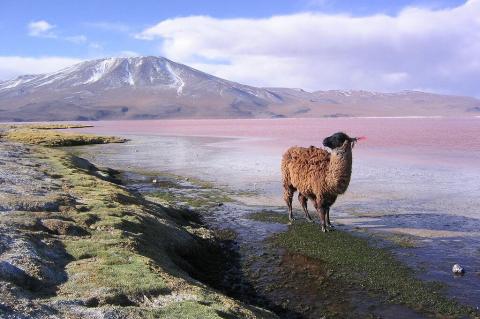
A High-Altitude Sanctuary: Exploring the Eduardo Avaroa Andean Fauna National Reserve

Nestled in Bolivia's far southwestern region, the Eduardo Avaroa Andean Fauna National Reserve stands as a breathtaking testament to the country's natural wonders. This vast protected area is a realm of contrasts and extremes, where volcanic mountain peaks, simmering hot springs, and kaleidoscopic lakes coexist with windswept deserts and fragile ecosystems. As Bolivia's most visited protected area, the Eduardo Avaroa Reserve offers a captivating journey through the heart of the Andes.
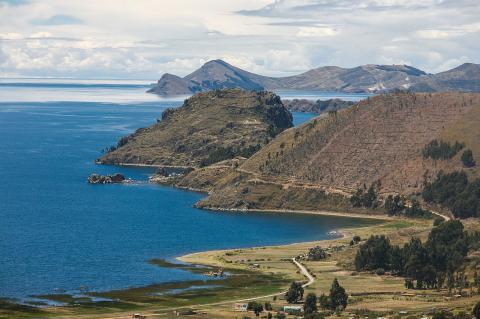
Lake Titicaca: Ancient Waters of the Andes

Lake Titicaca lies in the northern Altiplano, between Peru's Puno Region and Bolivia's La Paz Department, within the Central Andean wet puna. It covers 8,372 sq km and is the largest lake in South America by volume. It is often called the world's highest navigable lake, a title that refers to commercial vessels rather than altitude alone, and despite its elevation, it never freezes. The Andes that enclose the basin rise on both sides, and the lake itself occupies a tectonic depression.

Salar de Uyuni: A Mesmerizing Salt Expanse in the Heart of Bolivia

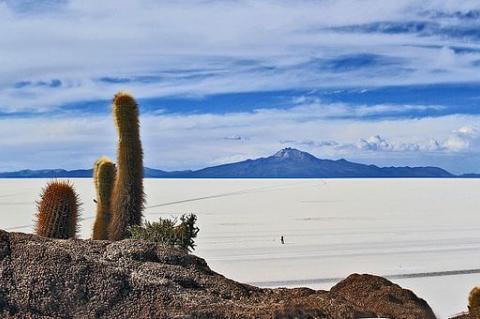
Located in the southwestern corner of Bolivia, the Salar de Uyuni is one of the most remarkable and captivating natural wonders on Earth. This salt flat is the largest in the world and is a testament to the incredible geological and climatic forces that have shaped the Andean region over millennia. The vast expanse of the Salar de Uyuni is home to Isla Incahuasi. This hilly and rocky outcrop was once a fully submerged island during the area's prehistoric lake period.