World Heritage Sites in Uruguay

Exploring Colonia del Sacramento: A Journey Through History and Architecture

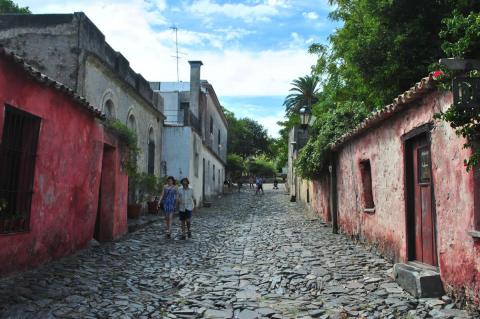
Colonia del Sacramento is a charming city that showcases Uruguay's rich historical tapestry. Established in 1680 by the Portuguese, it played a vital role in the colonial era as a strategic stronghold amid the territorial struggles between European powers in South America. Despite enduring sieges, battles and shifting allegiances, Colonia del Sacramento offers visitors a glimpse into the cultures and influences that have shaped Uruguay's identity over the centuries.

Fray Bentos: Where Industry, History, and Nature Converge

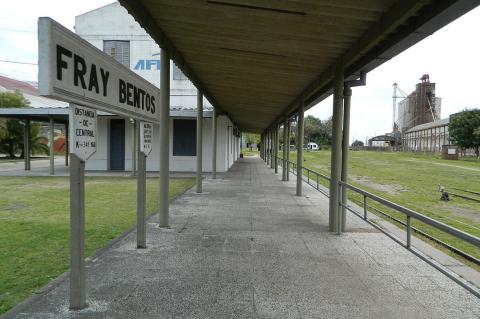
Located in the southwestern region of Uruguay, Fray Bentos, the capital of the Río Negro Department, is a city steeped in industrial heritage and cultural richness. Once a bustling hub of global meat production, Fray Bentos has evolved into a vibrant town that weaves together its industrial past with natural beauty and modern charm. Known for its meatpacking industry, Fray Bentos played a critical role in shaping Uruguay's economy and reputation on the global stage.

The Church of Atlántida: Eladio Dieste's Brick Revolution in Uruguay

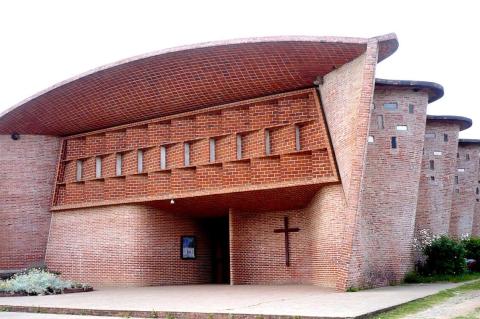
In the modest semi-rural community of Estación Atlántida, east of Montevideo, stands one of the 20th century's most remarkable architectural achievements—a church that revolutionized what could be built with the humblest of materials. The Church of Cristo Obrero y Nuestra Señora de Lourdes, designed by engineer Eladio Dieste, transforms simple fired bricks into soaring, undulating walls and double-curved vaults that seem to defy gravity. UNESCO recognizes it as an outstanding example of structural innovation and modern architecture.