
The Isthmus of Panama: Where Continents Collide and Biodiversity Flourishes
The Isthmus of Panama, once known as the Isthmus of Darien, is a significant landform connecting North and South America and separating the Atlantic and Pacific oceans. Its formation over the past 60 million years has greatly influenced climate, ocean currents, and life distribution globally.
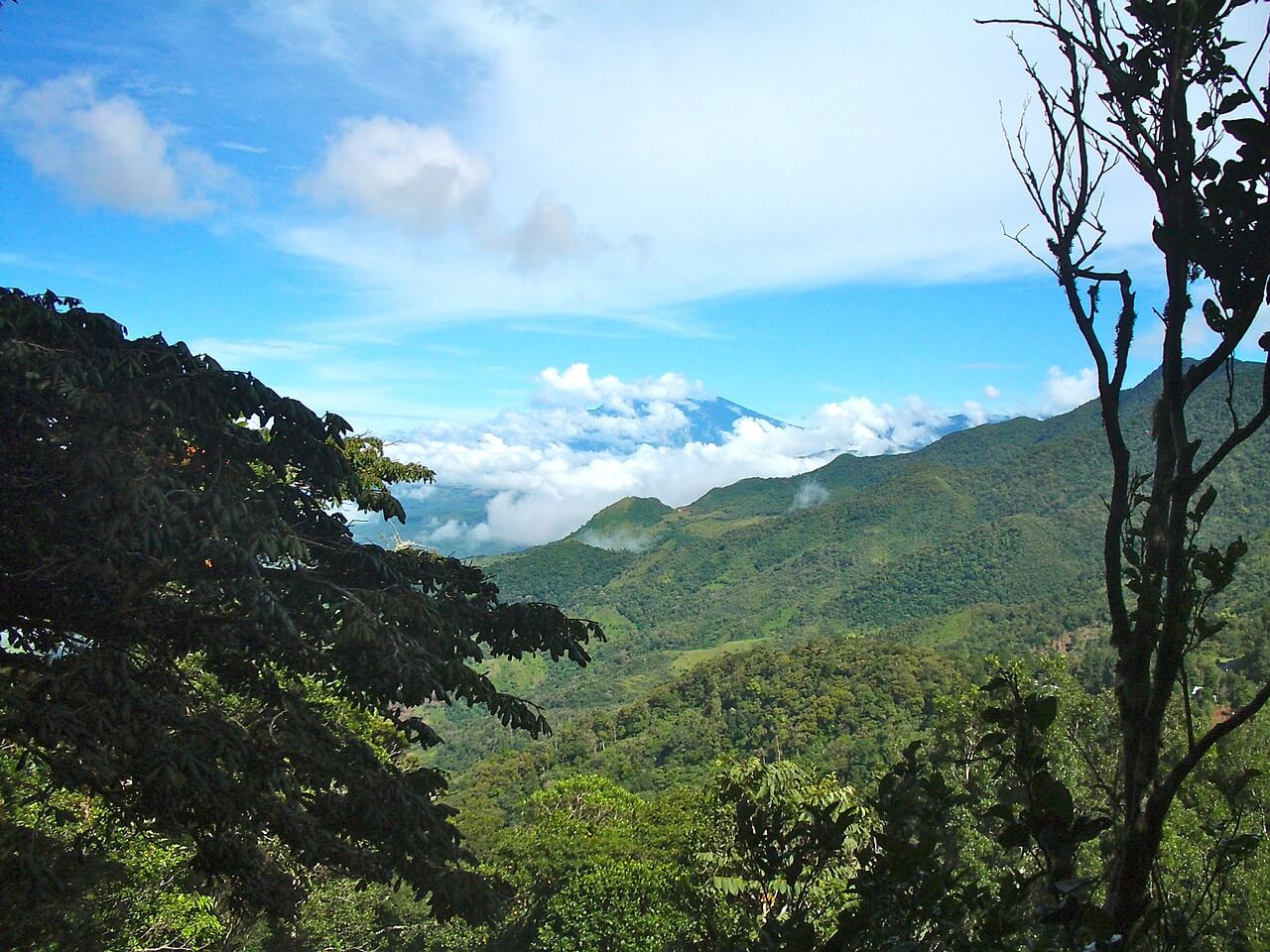
Panama's Land Bridge: How a Geological Event Reshaped Global Climate and Biodiversity
The Isthmus of Panama, historically known as the Isthmus of Darién, stands as one of Earth's most geologically significant landforms—a narrow bridge connecting North and South America while separating the Atlantic and Pacific Oceans. This slender strip of territory, spanning approximately 640 kilometers (400 miles) from Costa Rica to Colombia and varying in width from 50 to 200 kilometers (30 to 120 miles), represents far more than a geographic curiosity. Its formation ranks among the most consequential geological events of the past 60 million years, fundamentally reshaping global climate patterns, ocean circulation, and the distribution of life across two continents.
The story of the Isthmus encompasses millions of years of volcanic activity and tectonic collision, profound impacts on biodiversity through the Great American Interchange, and dramatic alterations to oceanic systems that continue to influence Earth's climate today.
Geological Formation: Rising from the Deep
The formation of the Isthmus of Panama began approximately 73 million years ago as the Pacific-Farallon Plate (whose remnants today form the Cocos and Nazca plates) was forced beneath the Caribbean Plate through subduction. As the descending plate melted under intense heat and pressure, magma rose toward the surface, creating a volcanic arc—the Panama Arc—beginning approximately 73 million years ago.
Recent geological research reveals the process was more complex than previously understood. Southern Central America first existed as a peninsula extending from North America, possibly as early as 19 million years ago. Fossils of land mammals closely related to North American species—including rhinoceroses (Diceratherium), horses (Merychippus), and early canids—have been discovered in Panama Canal sediments, demonstrating terrestrial connections during the Miocene epoch.
However, a seaway still separated this peninsula from South America. Known as the Central American Seaway, this oceanic passage allowed waters from the Atlantic and Pacific Oceans to intermingle freely. The peninsula gradually collided with South America due to ongoing tectonic movement, with final closure occurring approximately 2.8 million years ago during the Pliocene epoch.
Volcanism played a crucial role in building the landmass. The Galápagos mantle plume—a hotspot of magma rising from deep within Earth's mantle—became active more than 100 million years ago under what is now Central America, contributing massive lava outpourings. Sediment accumulation complemented volcanic and tectonic processes, as strong ocean currents deposited materials stripped from both continents.
The resulting landform displays a generally east-west oriented S-shaped curve, measuring approximately 80 kilometers (50 miles) at its narrowest point, with terrain ranging from mountains exceeding 100 meters (328 feet) at the continental divide to swamps and coastal plains.
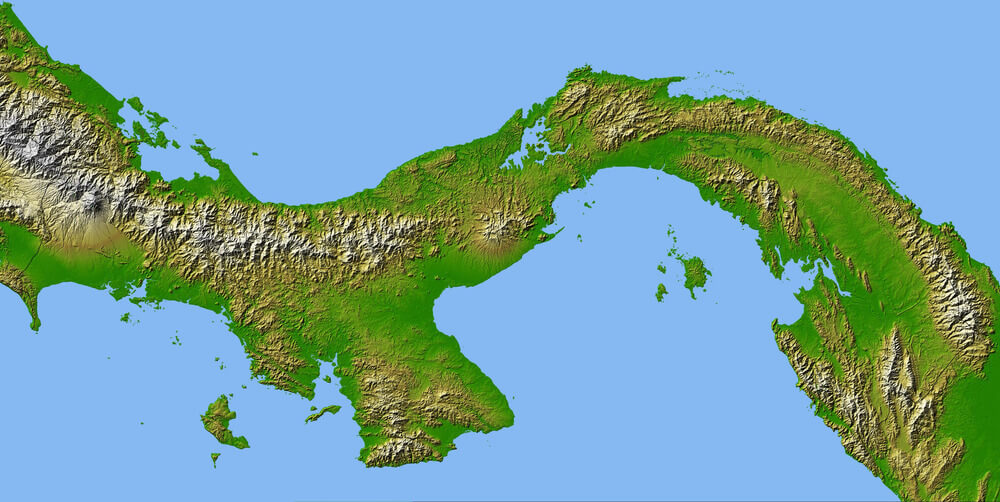
Isthmus of Panama (NASA).
Climatic and Oceanographic Impacts
The closure of the Central American Seaway triggered cascading effects on global climate and ocean circulation that continue to shape Earth's environmental systems today.
The Gulf Stream and Northern Hemisphere Glaciation
Before the Isthmus formed, equatorial ocean currents could spill over into the Pacific through the Central American Seaway. As the complete Isthmus formed, this passage was cut off, forcing warm Caribbean waters northward into what became a strengthened Gulf Stream. This current transports enormous quantities of heat from the tropics toward the North Atlantic, making winters substantially milder across much of Europe than would otherwise occur at those latitudes.
The strengthened Gulf Stream delivered enough moisture to facilitate the formation and expansion of glaciers across North America and Eurasia. The formation of the Isthmus is considered one of several primary factors—along with decreasing atmospheric carbon dioxide and orbital variations—that contributed to the intensification of Northern Hemisphere glaciation beginning approximately 2.7 million years ago.
The closure also affected ocean salinity patterns. The Atlantic became saltier and warmer as it could no longer exchange waters with the Pacific, affecting the thermohaline circulation that distributes heat around the planet. These changes continue to influence global climate systems today.
The Great American Interchange: A Biological Revolution
The emergence of the Isthmus as a complete land bridge facilitated one of the most dramatic biological events of the Cenozoic Era—the Great American Biotic Interchange (GABI). This massive migration of land mammals and other organisms between previously isolated continents fundamentally reshaped the ecological landscapes of both landmasses.
Pre-Interchange Isolation
For approximately 60 million years following the breakup of Gondwana, South America existed as an isolated island continent. South American fauna before GABI included remarkable groups now extinct or greatly reduced: South American native ungulates (bizarre hoofed mammals unrelated to true ungulates); giant ground sloths (Megatherium and others) reaching heights of 6 meters (20 feet); glyptodonts, massive armored mammals resembling automobile-sized armadillos; phorusrhacids or "terror birds," flightless predators standing up to 3 meters (10 feet) tall; and marsupial predators including Thylacosmilus, which evolved saber-like canine teeth.
North America maintained connections to Eurasia via the Bering Land Bridge, hosting ancestors of modern bears (Ursidae), cats (Felidae), dogs (Canidae), horses (Equidae), camels (Camelidae), deer (Cervidae), and proboscideans, including gomphotheres—extinct relatives of elephants.
The Main Interchange
The formation of a complete land bridge approximately 2.7 million years ago dramatically accelerated migration rates, triggering the main phase of GABI during the Pliocene and continuing through the Pleistocene.
Northward Migration: Successful South American colonizers included ground sloths reaching as far north as Alaska; glyptodonts reaching Texas and Florida; armadillos, with the nine-banded armadillo (Dasypus novemcinctus) currently ranging to Nebraska; porcupines (Erethizontidae); the Virginia opossum (Didelphis virginiana), North America's only marsupial; and capybaras, which briefly colonized the southern United States.
Southward Migration: North American mammals that colonized South America included multiple carnivoran families—bears represented today by the spectacled bear (Tremarctos ornatus); cats, including the jaguar (Panthera onca) and puma (Puma concolor); dogs, with South America now hosting the world's highest diversity of canid genera; weasels and raccoons. Ungulates diversified extensively: deer (Cervidae) produced numerous endemic species; peccaries (Tayassuidae) established across tropical forests; and camelids (Camelidae) evolved into llamas (Lama glama), alpacas (Vicugna pacos), guanacos (Lama guanicoe), and vicuñas (Vicugna vicugna). Gomphotheres, horses, tapirs, rabbits, and squirrels also successfully colonized South America.
The Asymmetry Puzzle
One intriguing aspect of GABI is its asymmetrical outcome: almost half of living South American mammal genera descend from North American immigrants, whereas only about 10 percent of North American genera derive from South American ancestors. Recent analyses reveal asymmetry resulted primarily from disproportionately high extinction of native South American mammals during and after the interchange.
Several factors likely contributed: North American carnivorans may have been more efficient predators than native South American groups; Pleistocene climate fluctuations may have challenged species evolved in stable environments; South American herbivores may have lacked behavioral defenses against novel predators; and climatic barriers limited northward expansion more than southward expansion.
Despite extinctions, some South American groups proved remarkably successful, with ground sloths, armadillos, and opossums adapting to diverse North American environments until human arrival approximately 13,000 years ago.
The Great American Schism
While terrestrial organisms mixed, the isthmus formation had the inverse effect on marine biota—the "Great American Schism." Marine species that once ranged continuously across the Central American Seaway became isolated on either the Pacific or Caribbean sides, driving significant diversification and speciation. Molecular clock studies of marine organisms provide precise dating evidence for final isthmus closure, generally supporting a date around 2.8 to 3.1 million years ago.
Contemporary Significance and Conservation
The Isthmus continues to hold immense significance today as a region of extraordinary biodiversity facing contemporary conservation challenges.
Biodiversity Hotspot
The Isthmus harbors more than 10,000 plant species, approximately 1,000 bird species, and hundreds of mammal, reptile, and amphibian species. Tropical forests represent critical habitat for endangered mammals like jaguars (Panthera onca), Baird's tapirs (Tapirus bairdii), and spider monkeys (Ateles). However, deforestation driven by agriculture, cattle ranching, and development threatens these ecosystems.
The Panama Canal Connection
The construction of the Panama Canal across the Isthmus, beginning in 1904, created an artificial waterway connecting the Atlantic and Pacific Oceans, essentially reversing one of the Isthmus's primary effects. While the canal's locks initially maintained some separation between oceanic waters, organisms have increasingly migrated through the system. The 2016 expansion may facilitate even more marine organism exchange, with scientists monitoring ecological impacts.
Conservation Priorities
Protecting the Isthmus's remaining natural areas ranks as a conservation priority for both regional and global biodiversity. Panama has established numerous protected areas, including Darién National Park, a UNESCO World Heritage Site protecting 579,000 hectares (1,430,600 acres) of diverse ecosystems. International cooperation between Panama and Colombia aims to maintain connectivity for large mammals. The Isthmus serves as a bottleneck for animal movements between continents, making habitat protection especially critical.
Climate change poses additional threats through altered precipitation patterns, sea level rise affecting coastal ecosystems, and potential changes to ocean circulation patterns. Long-term conservation requires addressing both local pressures and global environmental changes.
Conclusion
The Isthmus of Panama stands as one of Earth's great geological and biological wonders—a narrow strip whose formation reshaped global climate, ocean circulation, and the distribution of life across two continents. Born from volcanic eruptions and tectonic collisions over tens of millions of years, the Isthmus emerged approximately 2.8 million years ago to create a bridge between previously isolated worlds.
Its impacts extended far beyond the immediate region. The closure strengthened the Gulf Stream, contributing to Northern Hemisphere glaciation. The Great American Interchange transformed the fauna of both continents, creating the distinctive assemblages we recognize today. The marine separation drove diversification in countless ocean species.
Today, the Isthmus continues to shape our world, hosting extraordinary biological diversity while facing pressures from development and climate change. Understanding its formation and cascading effects on Earth systems provides context for contemporary conservation challenges and demonstrates how geological processes and biological evolution interact over deep time to create the living world we inhabit.