
ESMA: Where Memory Confronts Terror
In Buenos Aires' Núñez neighborhood, a complex of white structures once known as the Escuela Superior de Mecánica de la Armada (ESMA) served from 1976 to 1983 as Argentina's largest clandestine detention, torture, and extermination center during the military dictatorship.
ESMA Museum and Site of Memory: Argentina's UNESCO Testament to Terror
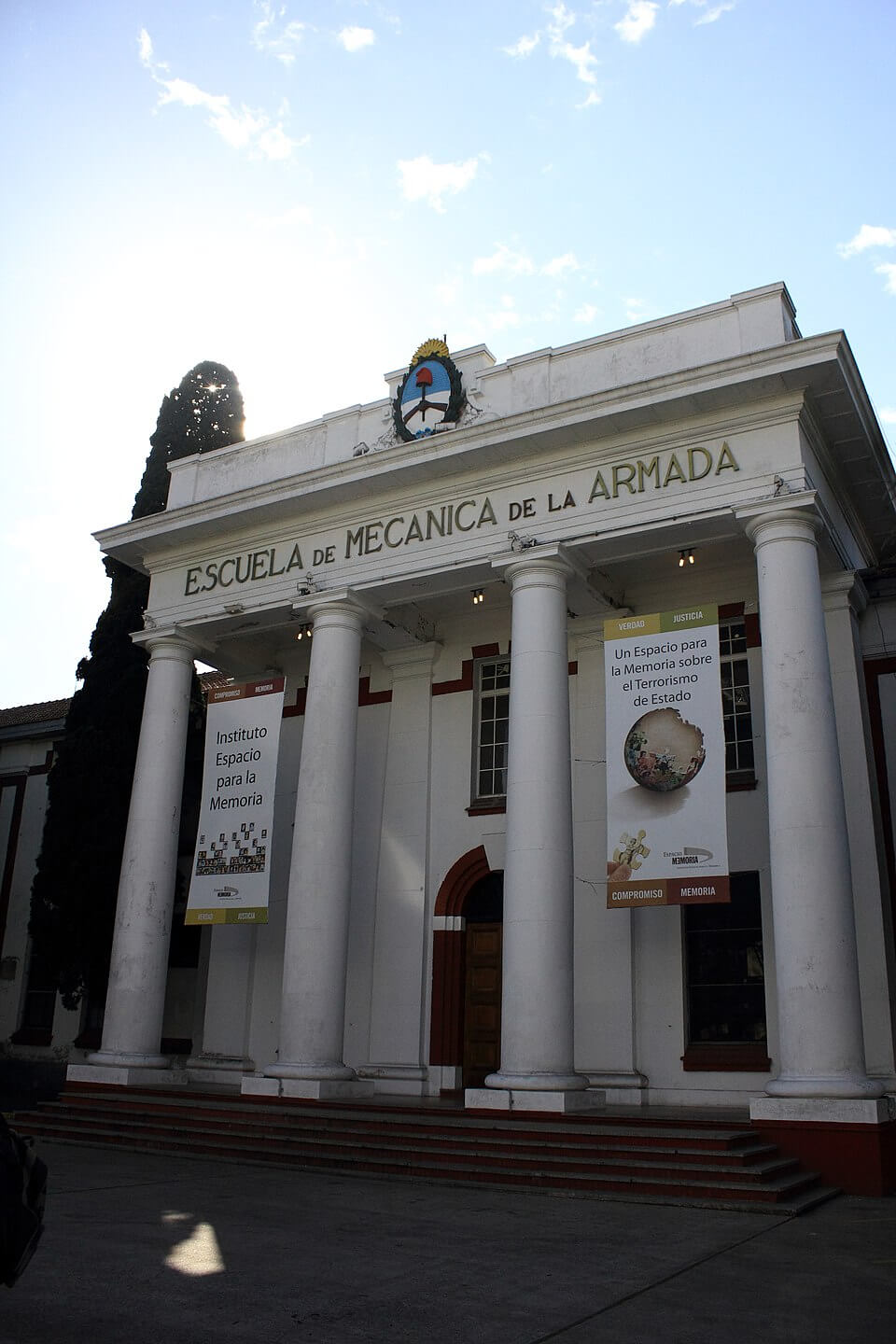
In the Núñez neighborhood of Buenos Aires, amid tree-lined streets and residential buildings, stands a complex of white structures that witnessed some of the darkest crimes of the 20th century. The former Escuela Superior de Mecánica de la Armada (Navy School of Mechanics), known by its acronym ESMA, operated from 1976 to 1983 as Argentina's largest clandestine detention, torture, and extermination center during the brutal military dictatorship that ruled the country. Within these buildings, approximately 5,000 people—students, workers, activists, artists, pregnant women—were imprisoned, tortured, and in most cases, murdered. Only about 200 survived. In September 2023, UNESCO inscribed the ESMA Museum and Site of Memory on the World Heritage List, recognizing it as a site of "outstanding universal value" that serves as testimony to state terrorism and a reminder that such atrocities must never be repeated. Today, the preserved Officers' Quarters building stands as judicial evidence, a memorial to the disappeared, and a space for reflection on human rights, memory, and the fragility of democracy.
Historical Context: Argentina's Dirty War
On March 24, 1976, the Argentine military overthrew the constitutional government of President Isabel Perón in a coup d'état, installing a junta that called itself the "National Reorganization Process" (Proceso de Reorganización Nacional). The military leaders—General Jorge Rafael Videla, Admiral Emilio Eduardo Massera, and Brigadier Orlando Ramón Agosti—claimed they were saving Argentina from chaos and subversion. In reality, they launched a systematic campaign of state terrorism unprecedented in the nation's history.
The dictatorship implemented what became known as the "Dirty War" (Guerra Sucia)—a clandestine campaign to eliminate anyone perceived as a threat to the regime or the established order. The victims included armed guerrillas, but the vast majority were unarmed civilians: union organizers, students, teachers, journalists, artists, psychologists, lawyers, human rights activists, and anyone who questioned authority or advocated for social change. Many were targeted simply for having the "wrong" books, attending the "wrong" meetings, or being related to suspected dissidents.
Rather than openly arresting and trying these perceived enemies, the regime employed disappearance—abduction by unmarked cars filled with armed men in civilian clothes, detention in secret centers, torture to extract information about others, and ultimately, execution. Bodies were burned, buried in unmarked graves, or disposed of at sea. Families searching for their loved ones encountered official denial—the government claimed no knowledge of the disappeared. This systematic disappearance created a particular horror: families never knew if their relatives were alive or dead, suffering or already gone, held in some underground cell or long since murdered.
Human rights organizations estimate that approximately 30,000 people were killed or forcibly disappeared during Argentina's dictatorship. The regime operated more than 500 clandestine detention centers throughout the country. ESMA was the largest and most notorious.
The ESMA Complex: From Naval School to Chamber of Horrors
The ESMA complex occupies approximately 17 hectares (42 acres) in the Núñez neighborhood, a peaceful residential area of northern Buenos Aires. The facility was established in 1924 (officially opened in 1928) to train naval officers and sailors, with various buildings constructed over subsequent decades. The main structures included barracks, classrooms, administrative buildings, recreational facilities, and the Officers' Quarters—a three-story white building with a red-tiled roof constructed in 1948 to house the officers' mess and living quarters, known as the "Casino de Oficiales" (Officers' Casino).
When the dictatorship began on March 24, 1976—the very day of the coup—ESMA immediately began serving its new, sinister purpose. The Navy established Task Force 3.3.2 (Grupo de Tareas 3.3.2), commanded by Alfredo Astiz and others under the ultimate authority of Navy Commander Emilio Eduardo Massera. This unit operated the clandestine detention center within the Officers' Casino, while the naval school continued to function normally in surrounding buildings. Cadets attended classes, officers lived in quarters, and recreational activities proceeded as usual—even as prisoners were tortured floors above and below.
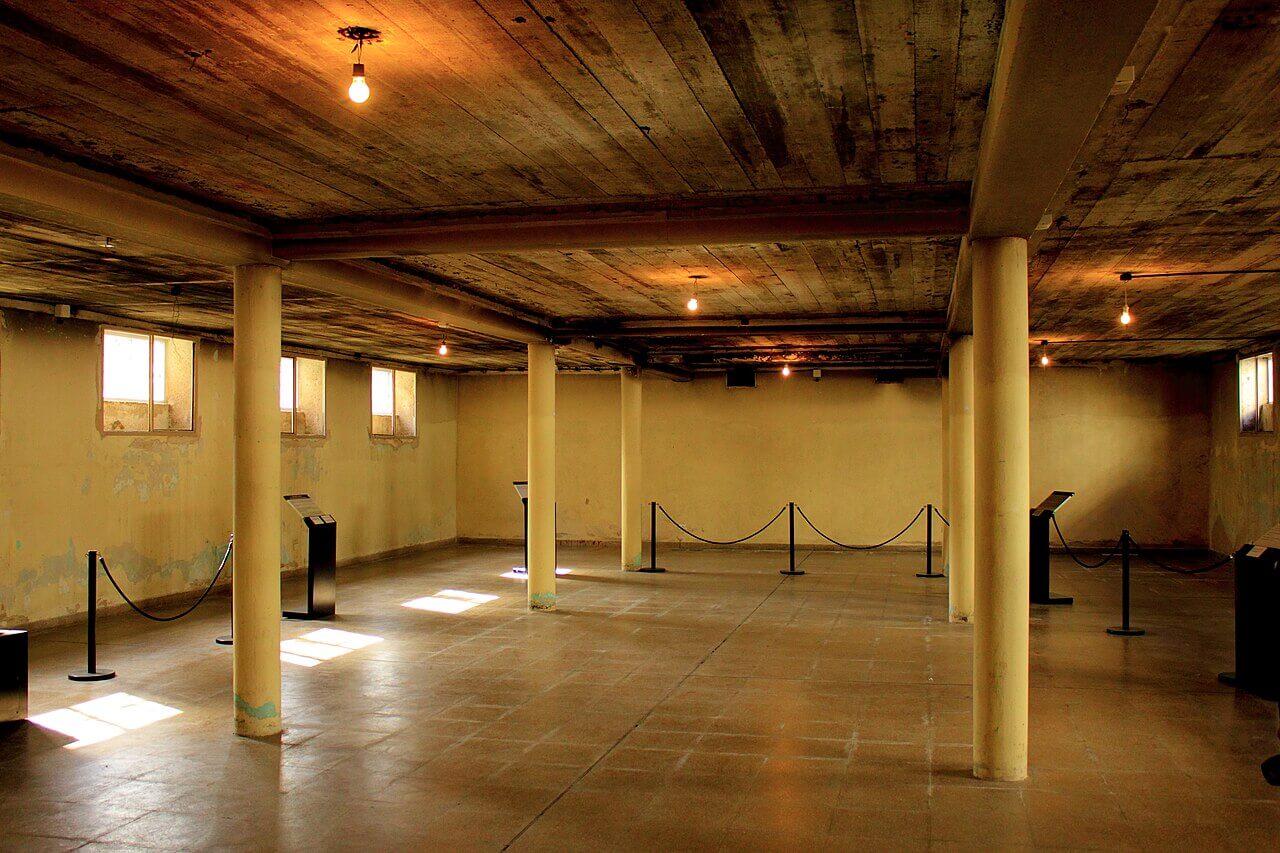
The Officers' Casino became the operational heart of ESMA's terror apparatus. The building's layout facilitated the regime's clandestine operations while maintaining plausible deniability. The basement housed interrogation and torture chambers. The third floor and attic contained detention areas called "Capucha" (hood) and "Capuchita" (little hood)—sealed spaces where prisoners, identified only by numbers, were kept blindfolded and shackled, hearing the screams of others being tortured. The second floor contained administrative offices where Task Force members coordinated kidnappings and processed intelligence extracted through torture.
The Machinery of Disappearance
ESMA's operations followed a systematic pattern refined over seven years. Task Force 3.3.2 was responsible for abductions in Buenos Aires proper and the northern metropolitan area. Officers received strict orders not to reveal their identities or military affiliation during operations. They traveled in unmarked Ford Falcon cars—vehicles that became synonymous with terror in Argentina—wearing civilian clothes and often carrying false identification.
Abductions typically occurred at night, though some happened in broad daylight. Armed men would surround a target's home or workplace, forcing entry, ransacking the premises for documents and address books, and dragging the victim away. Family members and neighbors who witnessed the kidnappings could do nothing—calling the police was useless since many police collaborated with the military, and resistance meant death.
Upon arrival at ESMA, prisoners were hooded, stripped, and taken to interrogation rooms. The torture was systematic and brutal: electric shocks administered to sensitive body parts (a method called "picana"), beatings, near-drownings, sexual violence, psychological torment, and mock executions. The purpose was to extract information about other dissidents, break prisoners psychologically, and create terror that would radiate outward to silence opposition.
For women prisoners, the horror took additional forms. Sexual violence was systematic and used as both torture and a demonstration of total power over captives' bodies. Pregnant women, often abducted specifically because they were carrying children of disappeared fathers, were held in a makeshift maternity ward until they gave birth. Immediately after delivery, babies were taken from their mothers, who were typically murdered shortly thereafter. The infants were given to military families or families allied with the regime, their identities erased, raised as children of the dictatorship. The Grandmothers of Plaza de Mayo have worked for decades to identify these stolen children—now adults—through DNA testing, recovering 133 identities as of 2024.
Most prisoners were held at ESMA for weeks or months. When authorities decided they had extracted all useful information or simply wanted to eliminate them, prisoners were told they were being "transferred" to another facility or released. Prisoners understood this meant execution. They were taken to the basement, sedated with injections, loaded into trucks, driven to an airfield, and loaded onto aircraft—Navy planes or helicopters. Over the Atlantic Ocean or the Río de la Plata estuary, still alive though drugged, they were pushed from the aircraft into the water. These "death flights" (vuelos de la muerte) murdered an estimated 3,000-5,000 people. Bodies periodically washed ashore on beaches south of Buenos Aires, bearing evidence of violence and sometimes still showing signs that victims had been alive when thrown into the sea.
Concealment and Denial
The regime took elaborate measures to conceal ESMA's true function. In 1979, when the Inter-American Commission on Human Rights visited Argentina to investigate human rights violations, ESMA authorities removed the staircase leading to the basement torture chambers, preventing inspectors from accessing that area. They emptied detention areas and told the few prisoners they allowed to remain that they would be killed if they revealed anything. The commission saw a functioning naval school and received official assurances that no illegal detentions occurred there.
Meanwhile, normal life continued just outside ESMA's walls. The complex is located near the Monumental Stadium, where Argentina hosted the 1978 FIFA World Cup final. Prisoners held in ESMA reported hearing the roar of crowds celebrating Argentina's victory over the Netherlands—normal life so close yet utterly unreachable. Children walked to school past ESMA's walls. Neighbors went about their daily routines. The dictatorship operated its machinery of death in plain sight, protected by fear, denial, and the complicity of silence.
Aftermath: From Impunity to Justice
When democracy returned to Argentina in December 1983 following the dictatorship's collapse after the disastrous Falklands War, the nation confronted the legacy of state terrorism. President Raúl Alfonsín created the National Commission on the Disappearance of Persons (CONADEP) to investigate the crimes. The commission's 1984 report, "Never Again" (Nunca Más), documented the systematic nature of the repression and confirmed the existence of hundreds of clandestine detention centers.
Trials began in 1985 against the top military leaders. Videla and Massera received life sentences, though the full extent of justice was limited by subsequent amnesty laws and presidential pardons in the late 1980s and early 1990s—measures implemented under pressure from military sectors still powerful enough to threaten democracy.
Meanwhile, ESMA continued operating as a naval school through 2004, though this deeply troubled many Argentines who felt the Navy should not occupy a site of such horror. Human rights organizations, particularly the Mothers and Grandmothers of Plaza de Mayo, campaigned for decades to recover ESMA as a site of memory.
On March 24, 2004—the 28th anniversary of the coup—President Néstor Kirchner ordered the Navy to evacuate ESMA. In a powerful symbolic gesture, he ordered the portraits of Videla and other dictatorship leaders removed from military installations and replaced with portraits of disappeared heroes. The government designated the ESMA complex as a "Space for Memory and for the Promotion and Defense of Human Rights."
In the early 2000s, Argentina's Congress annulled the amnesty laws, and trials resumed against perpetrators of dictatorship-era crimes. Unlike most Latin American countries that pursued truth commissions and amnesties rather than prosecutions, Argentina recommitted to criminal justice. Hundreds of former military and police officers have been tried and convicted in civilian courts for crimes against humanity—crimes that under international law have no statute of limitations.
The Museum and Site of Memory
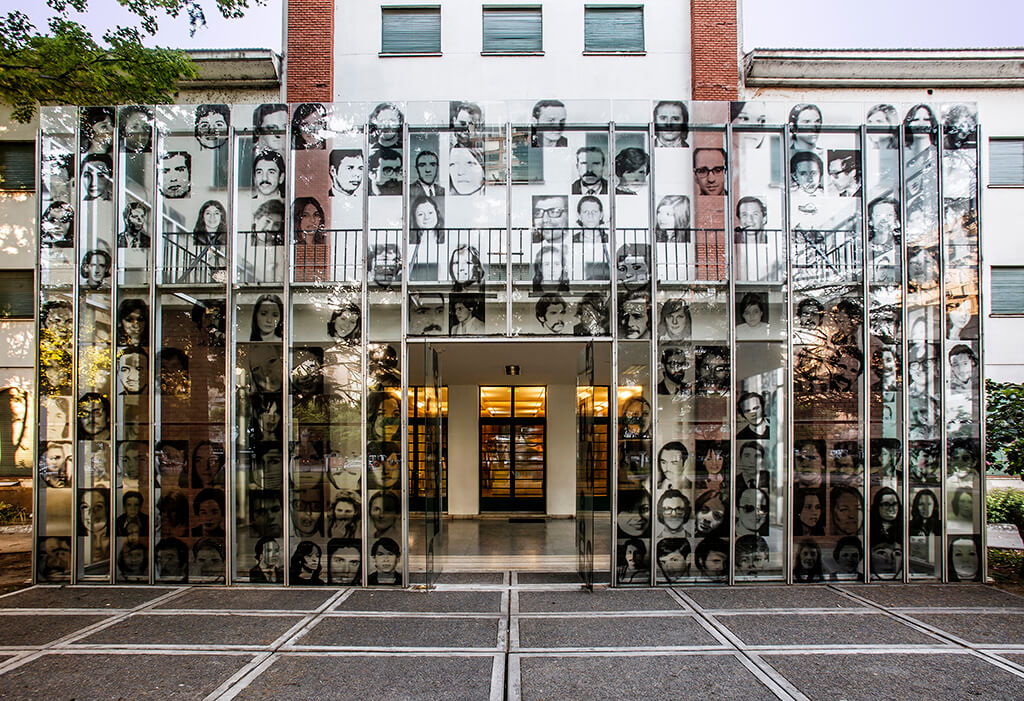
In 2013, work began transforming the Officers' Casino into a museum. The ESMA Museum and Site of Memory opened in 2015, preserving the building in its entirety as it existed during the dictatorship while adding interpretive materials to help visitors understand what occurred there.
The museum's approach is deliberately confrontational rather than comforting. Visitors walk through spaces where torture occurred, see the tiny detention cells, and stand in rooms where people spent their final hours. Photographs of hundreds of disappeared line the walls—many were teenagers or young adults, their lives cut short. Personal testimonies from the approximately 200 survivors provide first-person accounts of the horror.
The permanent exhibition explains how the clandestine center operated, the systematic nature of the repression, and the broader context of state terrorism in Argentina and Latin America during the Cold War. Special exhibitions address specific topics, including the stolen children, sexual violence as a weapon of repression, and the complicity of civilian sectors—businesses, churches, judges—in sustaining the dictatorship.
Beyond the museum building, the broader 17-hectare site now houses offices of various human rights organizations, government agencies, cultural institutions, and educational centers. This active use fulfills the vision of ESMA as a living space for memory rather than merely a static monument—a place where memory work, human rights advocacy, and education continue daily.
UNESCO World Heritage Inscription
On September 19, 2023, at the 45th extended session of the UNESCO World Heritage Committee meeting in Riyadh, Saudi Arabia, ESMA was inscribed on the World Heritage List. The inscription recognized the site's "outstanding universal value" as testimony to the systematic violation of human rights during Argentina's dictatorship and as a symbol relevant to humanity's struggle against authoritarianism and state terrorism.
The designation was particularly significant given the political context. At the time of inscription, Argentina was approaching presidential elections in which right-wing candidate Javier Milei—who subsequently won—and his running mate Victoria Villarruel had made statements downplaying the dictatorship's crimes and questioning the human rights trials. The UNESCO recognition arrived as a powerful international affirmation that what happened at ESMA was undeniable, that the crimes must be remembered, and that justice must continue.
President Alberto Fernández, in a video message to UNESCO, stated: "Collective memory is what keeps people from repeating their histories and allows them to move forward towards a better future." Human Rights Secretary Horacio Pietragalla Corti—himself one of the stolen babies who grew up under a false identity before learning his true history through the Grandmothers' work—called the inscription "a strong response to those who deny or seek to downplay state terrorism."
Visiting ESMA
The ESMA Museum and Site of Memory is located in the Núñez neighborhood of Buenos Aires and is accessible by public transportation. Approximately 150,000 people visit annually, including Argentine students on school trips, international tourists, and groups engaged in human rights education.
Guided tours are available in Spanish and English. The museum is free to enter, reflecting the principle that this history belongs to all people and access should not be restricted by the ability to pay. Visiting the site is emotionally demanding—confronting spaces where torture and murder occurred, seeing photographs of the disappeared, and reading testimonies of survivors. Museum staff are trained to support visitors in processing difficult emotional reactions.
The site serves multiple functions beyond tourism. It serves as judicial evidence in ongoing trials against perpetrators of the dictatorship era. It hosts educational programs for schools and universities. It provides space for human rights organizations to conduct their work. Cultural events, concerts, film screenings, and public discussions occur regularly, making ESMA a living center for memory work rather than a static memorial.
A Site That Speaks
Ricardo Coquet, a 70-year-old ESMA survivor, has returned many times to the site where he was tortured. He told journalists after the UNESCO inscription: "Having survived at ESMA is luck. The important thing now is to bear witness." For Coquet and other survivors, the building serves as material proof of what happened—tangible evidence against those who would deny or minimize the crimes.
ESMA's preservation and transformation into a site of memory represent Argentina's commitment to remembrance, truth, and justice—a model that has influenced the development of memory sites globally. The site demonstrates that societies can confront even the darkest chapters of their histories, that places of horror can be reclaimed for human dignity, and that memory work is essential to democratic citizenship.
The white buildings of ESMA stand in Buenos Aires as a testament to humanity's capacity for evil and also to our capacity for resistance, survival, and commitment to never repeating such atrocities. The disappearance of ESMA has not been forgotten. Their memory lives in the preserved spaces where they suffered, in the ongoing trials of their torturers, in the education of new generations, and in Argentina's determination that "Never Again" (Nunca Más) is not merely a slogan but a sacred commitment.