
The Fortress of the Immaculate Conception: Nicaragua's Sentinel on the San Juan River
The Fortress of the Immaculate Conception, built by the Spanish between 1673 and 1675, is a key colonial landmark in Nicaragua. Now a museum, it features military history, colonial architecture, and rainforest, accessible by boat via the historic river route used by pirates, colonists, and navies.
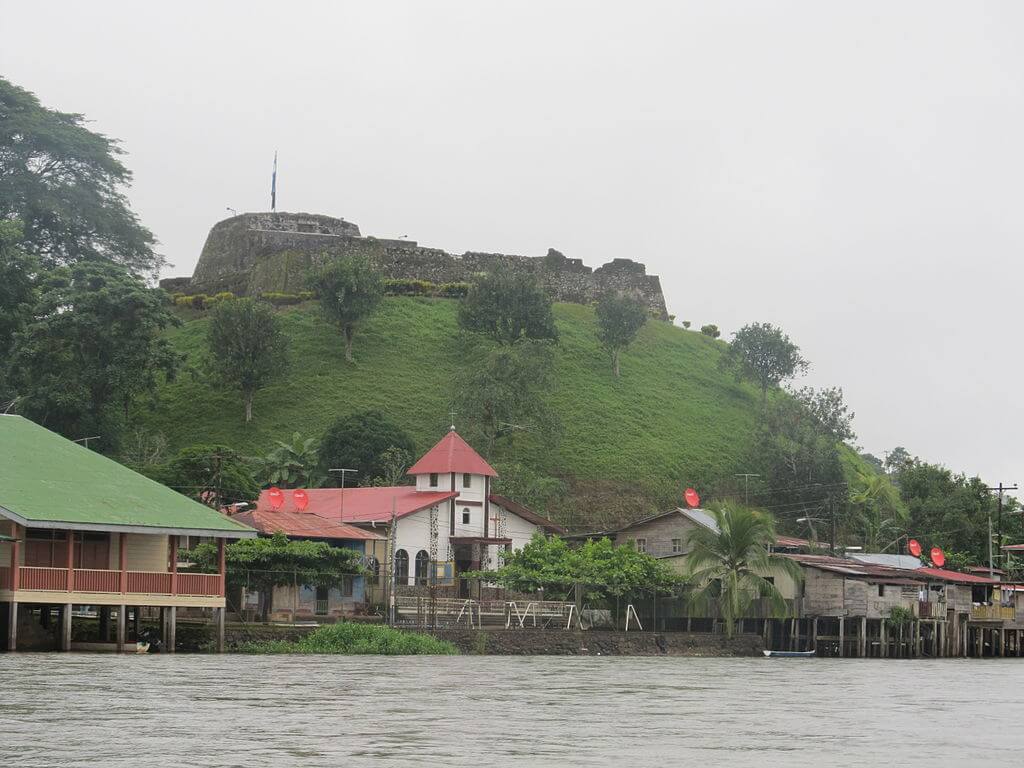
El Castillo: Where Spanish Stone Meets Tropical Jungle on Nicaragua's Historic River
Along the serpentine curves of Nicaragua's San Juan River, where tropical jungle meets rushing water, stands one of Central America's most remarkable colonial fortifications. The Fortress of the Immaculate Conception—known locally as El Castillo de la Inmaculada Concepción—rises from the southern riverbank like a weathered guardian, its moss-covered stone walls bearing witness to centuries of conflict, heroism, and the relentless passage of time.
Nestled within the village of El Castillo in southern Nicaragua's Río San Juan department, this 17th-century fortress occupies a strategic promontory that commands sweeping views of the river corridor. The site encompasses 375 hectares (927 acres) of protected area, including portions of the lake and marsh regions at the southeastern edge of Lake Nicaragua, also known as Lake Cocibolca. This positioning was no accident—Spanish colonial engineers understood that controlling this waterway meant controlling access to Granada and the heart of their Central American empire.
Birth of a Bastion
The fortress's origins trace back to a moment of colonial vulnerability that would forever reshape Nicaragua's defensive landscape. Construction of the fortress, initially named Fortaleza de la Limpia Pura e Inmaculada Concepción (now known as the Castillo de la Inmaculada Concepción, or Fortress of the Immaculate Conception), was begun on March 10, 1673, and completed in 1675. Construction began shortly after the pirate Gallardino attacked the port of Granada. This brazen assault on one of Spain's most important colonial cities sent shockwaves through the imperial administration and prompted immediate action to fortify the river approach.
Spanish military engineers selected this particular bend in the San Juan River with tactical precision. The elevated position provided clear sightlines downriver toward the Caribbean approaches, while the natural geography created a bottleneck that no vessel could pass undetected. The fortress is situated approximately 6 kilometers from the river's connection to Lake Nicaragua, positioning it as the final defensive barrier before any attacking force could reach the lake's vulnerable ports.
The construction itself represented a monumental undertaking in the harsh tropical environment. Workers hauled massive stone blocks through dense jungle, carved gun emplacements from solid rock, and erected walls thick enough to withstand cannon fire from the largest ships of the era. The fortress's full name—Fortaleza de la Limpia Pura e Inmaculada Concepción—reflected both Spanish religious devotion and their hope that divine protection would supplement military engineering.
Rafaela's Cannon: A Daughter's Defiance
The fortress earned its place in military history not through grand sieges or massive battles, but through the extraordinary courage of a young woman whose quick thinking saved Spanish Nicaragua from foreign conquest. In 1762, as tensions between European powers spilled into colonial conflicts, a British naval expedition sailed up the San Juan River with Granada in its sights. The timing could hardly have been worse for the Spanish garrison—their commandant had died just before the attack, leaving the fortress without experienced leadership.
Into this crisis stepped Rafaela Herrera, the late commandant's daughter, whose actions would elevate her to legendary status in Nicaraguan history. From the fortress, Rafaela Herrera, the daughter of the late commandant, requested and received permission to fire a cannon. Her shot, loaded with ball and shrapnel, struck with remarkable accuracy, scattering the enemy and reportedly killing several, including a prominent British officer. This single, perfectly aimed shot not only repelled the immediate assault but demonstrated that Spanish resolve remained unbroken despite the garrison's tragic loss.
The psychological impact of Herrera's defiance extended far beyond the immediate military victory. Word of the young woman's heroism spread throughout the colony, inspiring resistance efforts and proving that Spanish America's defense rested not merely on professional soldiers but on the courage of its people. Her story became a rallying cry for colonial patriots and established a template of civilian resistance that would echo through later independence struggles.
Nelson's Tropical Campaign
Eighteen years after Herrera's heroic defense, the fortress faced its greatest test when one of history's future naval legends set his sights on capturing this strategic position. In 1780, a young British captain named Horatio Nelson—destined to achieve immortality at the Battle of Trafalgar—arrived at El Castillo with a force of over 2,000 British and Miskito soldiers. The 22-year-old Nelson, in command of HMS Hinchinbrook, was responsible for leading his men through dense jungle to attack the fortress from a hill in the rear.
Nelson's campaign represented one of the most ambitious British operations in Central America during the American Revolutionary War period. The young captain's strategy demonstrated tactical innovation, as he recognized that a land-based assault from the jungle-covered hills behind the structure could circumvent the fortress's river-facing defenses. This required his forces to hack their way through miles of tropical rainforest, contending with disease, insects, and the constant threat of ambush.
The British captured the fortress and occupied it for nine months, finally abandoning it in January 1781. However, Nelson's tactical victory proved strategically meaningless. The tropical climate that had helped protect the fortress for over a century now became the British garrison's greatest enemy. Disease decimated the occupying force, rendering the position untenable despite its military value. The jungle that Spanish engineers had viewed as a natural ally proved equally hostile to any European force attempting to maintain a permanent presence.
Nelson's experience at El Castillo profoundly influenced his later naval career. The young captain contracted what was likely malaria during the campaign, an illness that would plague him for years afterward. More importantly, the operation taught him valuable lessons about the relationship between tactical success and strategic sustainability—knowledge he would later apply during his Mediterranean campaigns and ultimately at Trafalgar.
Architectural Legacy
Today's visitors to the Fortress of the Immaculate Conception encounter a structure that bears the patina of centuries while retaining its essential military character. The Fortress of the Immaculate Conception is a historic landmark in Nicaragua, currently housing a museum and library. The transformation from an active military installation to a cultural site reflects Nicaragua's evolution from a colonial battleground to a modern nation. Yet, the fortress's original purpose remains unmistakable in every stone.
The fortress's design embodies Spanish colonial military engineering at its most practical and effective. Massive stone walls, some reaching heights of over 4 meters (13 feet), create a roughly triangular footprint that maximizes defensive coverage while minimizing the structure's profile when viewed from the river. Gun ports positioned at strategic intervals provided overlapping fields of fire, ensuring that no approaching vessel could find shelter from the fortress's artillery.
Within the walls, visitors can explore chambers that once housed cannons, ammunition, and the daily lives of Spanish soldiers who served far from home in this tropical outpost. The fortress's museum displays artifacts recovered from archaeological excavations, including cannon balls, musket parts, and everyday items that illuminate the realities of colonial garrison life. These objects tell stories of boredom and terror, routine maintenance and desperate combat, homesickness and professional duty.
Ecological Guardian
The fortress's modern role extends beyond historical preservation to environmental protection, as it sits within one of Nicaragua's most biodiverse regions. The Fortress of the Immaculate Conception is a 17th-century Military Campaign Fortress located in the Indio-Maiz Biosphere Reserve. The fortifications were made by the Spanish in their battle against pirates and in defense of the city of Granada. Indio Maiz is a lowland rainforest reserve. This protected status ensures that the fortress remains surrounded by the same type of tropical ecosystem that challenged every military force that attempted to control this strategic position.
The Indio-Maíz Biosphere Reserve encompasses some of Central America's last remaining pristine rainforest, creating a living laboratory where visitors can experience the environmental conditions that shaped the fortress's history. Howler monkeys call from the same trees that once concealed British soldiers, while toucans and parrots add vibrant colors to the green canopy that provided both protection and peril for colonial garrisons. The reserve's biodiversity includes over 200 bird species, numerous mammal species, and countless varieties of tropical plants that have remained largely unchanged since Spanish colonists first arrived.
World Heritage Aspirations
Recognition of the fortress's universal value continues to grow, as evidenced by its inclusion on international preservation lists. It is on a list of sites pending approval as a World Heritage Site by the United Nations Educational, Scientific, and Cultural Organization (UNESCO). This potential designation would place El Castillo alongside humanity's most treasured cultural landmarks, acknowledging both its architectural significance and its role in the broader narrative of colonial resistance and adaptation.
UNESCO recognition would bring increased resources for preservation while highlighting the fortress's importance beyond Nicaragua's borders. The site represents a unique intersection of military history, colonial architecture, and environmental conservation, resonating with global themes of cultural heritage preservation. Such recognition would also support the local community of El Castillo, whose approximately 1,500 residents serve as the fortress's guardians and interpreters.
Visiting the Fortress Today
Modern visitors to El Castillo encounter a remarkably preserved example of Spanish colonial military architecture set within one of Central America's most pristine natural environments. The journey to reach the fortress—typically by boat along the San Juan River—retraces the same route taken by pirates, British naval expeditions, and Spanish supply convoys over the centuries. This approach by water allows visitors to appreciate the fortress's commanding position and understand why Spanish engineers chose this particular bend in the river for their defensive installation.
The fortress museum offers comprehensive exhibits explaining the site's military history, architectural evolution, and ecological significance. Guided tours provide detailed accounts of Rafaela Herrera's heroism, Nelson's campaign, and the daily life of Spanish colonial soldiers. The museum's collection includes original artifacts, historical documents, and interpretive displays that bring the fortress's complex history to life for visitors of all ages.
Beyond its historical significance, El Castillo serves as a gateway to the Indio-Maíz Biosphere Reserve, offering opportunities for wildlife observation, nature photography, and ecological education. The combination of cultural tourism and environmental awareness creates a sustainable model for heritage preservation that benefits both the local community and the broader goals of historical and ecological conservation.
The Fortress of the Immaculate Conception stands as more than a historical monument—it represents the enduring human struggle to adapt, defend, and ultimately transcend the circumstances of its creation. From Spanish colonial fears to British imperial ambitions, from individual heroism to collective memory, this moss-covered bastion on the San Juan River continues to teach lessons about resilience, strategy, and the complex relationships between human ambition and natural environment. In its weathered stones and overgrown ramparts, visitors can read the story not just of Nicaragua, but of the broader human experience in the Americas.