
Lago Argentino: The Crown Jewel of Patagonian Glacial Lakes
In the remote and windswept Argentine Patagonia lies Lago Argentino, Argentina's largest freshwater lake. This magnificent glacial lake represents the intersection of geological forces, climatic phenomena, and ecological diversity that has captivated scientists, explorers, and visitors for generations.
Argentina's Glacial Giant: Exploring the Wonders of Lago Argentino
In the remote and windswept landscapes of Argentine Patagonia lies one of South America's most spectacular natural wonders: Lago Argentino (Lake Argentino). This magnificent glacial lake represents the intersection of geological forces, climatic phenomena, and ecological diversity that has captivated scientists, explorers, and visitors for generations. As Argentina's largest freshwater lake and a UNESCO World Heritage site component, Lago Argentino stands as a testament to the raw power and beauty of nature in one of Earth's most pristine wilderness areas.
Geographic Setting and Physical Characteristics
Nestled within the boundaries of Los Glaciares National Park in Santa Cruz Province, Lago Argentino occupies a commanding position in the southern Andes Mountains of Patagonia. Its level is 187 meters above sea level (614 feet), positioning it strategically within the dramatic landscape where the Patagonian steppe meets the towering peaks of the Andes.
The lake's impressive dimensions establish it as a geographical giant. It is the biggest freshwater lake in Argentina, with a surface area of 1,415 km² (546 sq mi), though some sources indicate it spans an area of 1,560 km² (602 square miles). The discrepancy in measurements likely reflects seasonal variations in water levels influenced by glacial melt patterns. The lake stretches approximately 60 km long and between 14 and 20 km wide (37 miles long and 9-12 miles wide), creating an elongated body of water that follows the natural contours of the glacially carved valley.
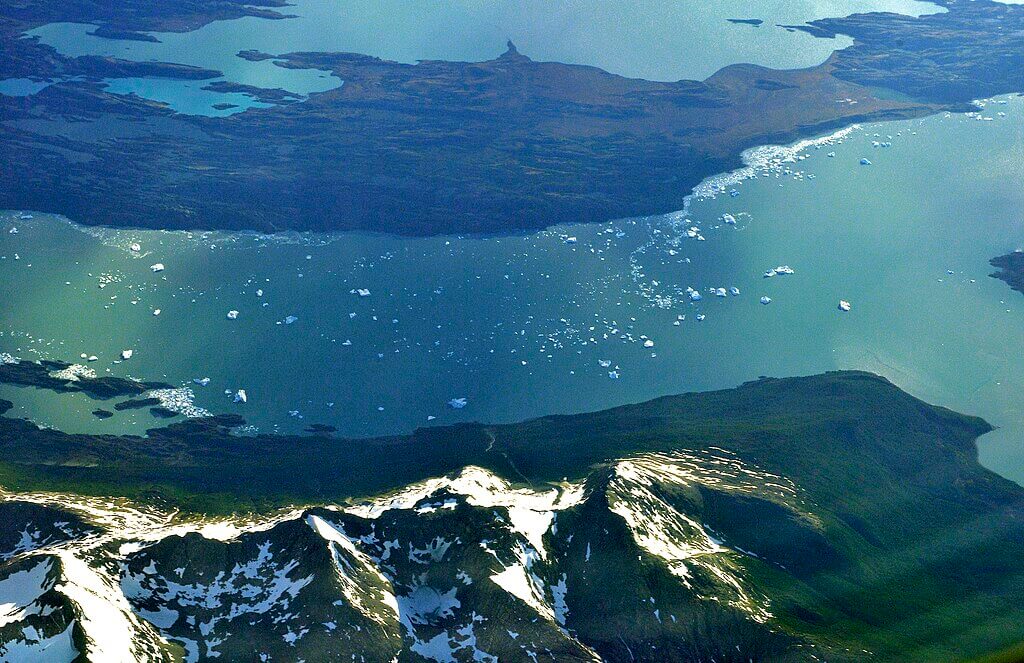
Perhaps most remarkable are the lake's depth characteristics. The lake's waters have an average depth of 155 m (509 ft), with a maximum depth of 719 m (2,359 ft). The deepest point of the lake is situated at the end of its narrow north-northwestern arm, in front of the retreating Upsala Glacier, where the lake reaches 541 m (1,775 ft) below mean sea level. This extraordinary depth makes Lago Argentino one of the deepest lakes in South America and reflects the powerful erosive forces of glacial action over millennia.
Hydrological System and Water Characteristics
Lago Argentino functions as the central component of an extensive hydrological network. Its water volume totals 219.9 billion m³, with a basin covering 15,500 km² (5,985 square miles), a drainage area that encompasses significant portions of the Southern Patagonian Ice Field. The lake is the source of the Santa Cruz River, which flows eastward past the town of El Calafate and continues to the Atlantic Ocean, connecting this remote Patagonian lake to the vast Atlantic drainage system.
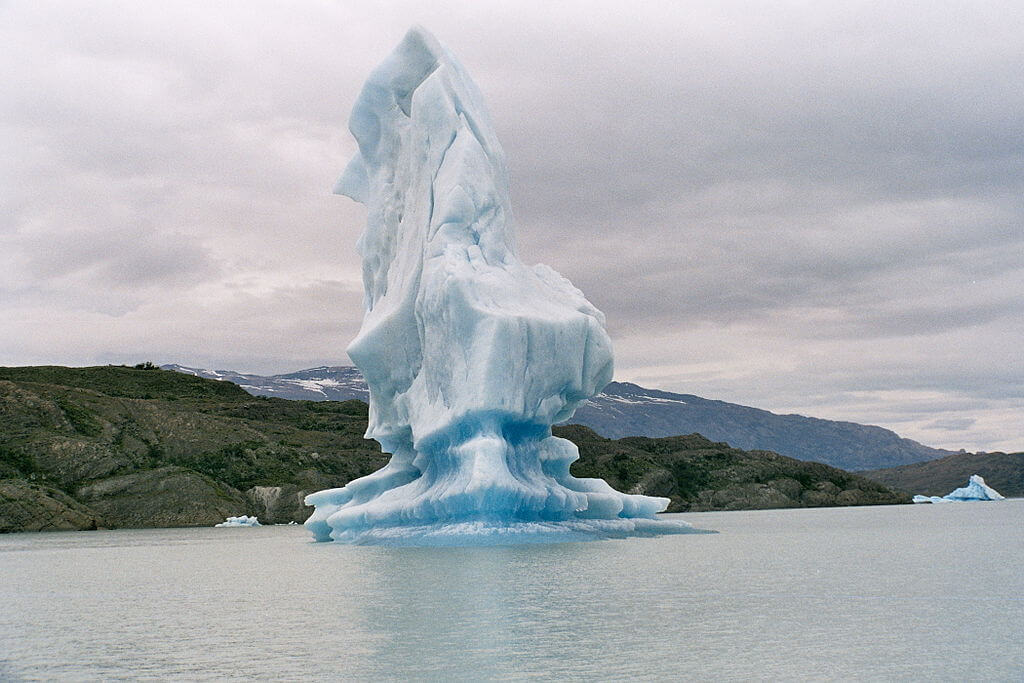
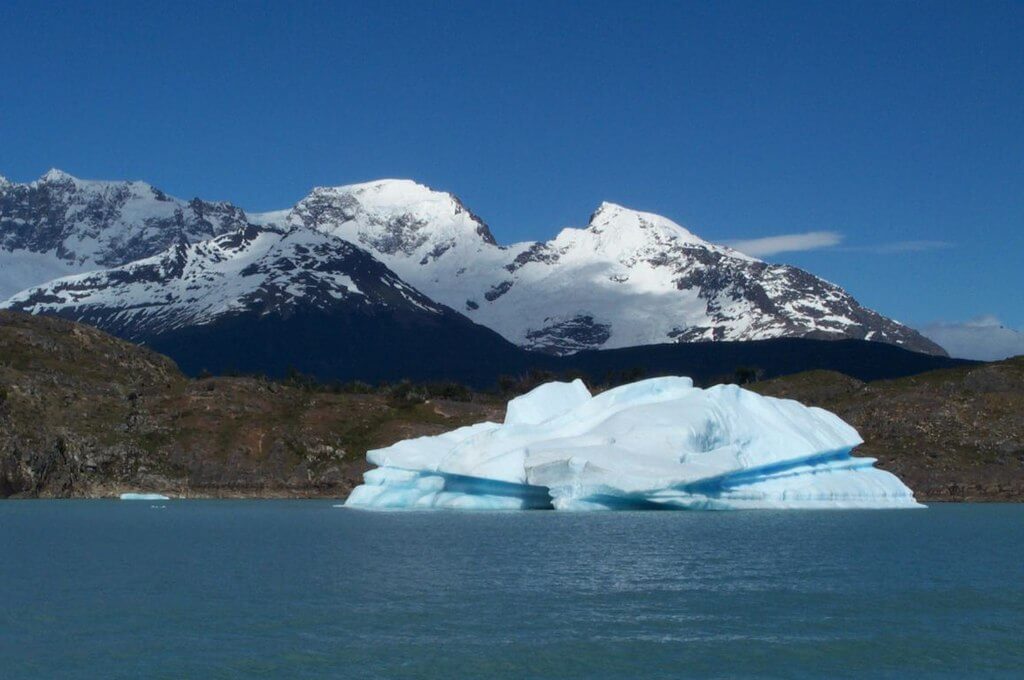
The lake's distinctive appearance results from its glacial origins and ongoing glacial input. The special color of the water is due to a very fine powder produced by glacier abrasion, called "glacial meltwater". This glacial flour, consisting of ultra-fine rock particles ground by glacial movement, gives the water its characteristic milky turquoise appearance that varies from deep blue in the deepest sections to pale gray-green where glacial input is most concentrated.
Multiple glacial systems feed into Lago Argentino, creating a dynamic hydrological environment. It receives inflows from several glaciers, prominently including the Perito Moreno and Upsala glaciers. The Upsala Glacier, located near the northern arm of Lago Argentino, is 50 kilometers (31 mi) long, 10 kilometers (6.2 mi) wide, and hundreds of meters thick, representing one of the most significant glacial tributaries to the lake system.
Glacial Dynamics and Ice-Water Interface
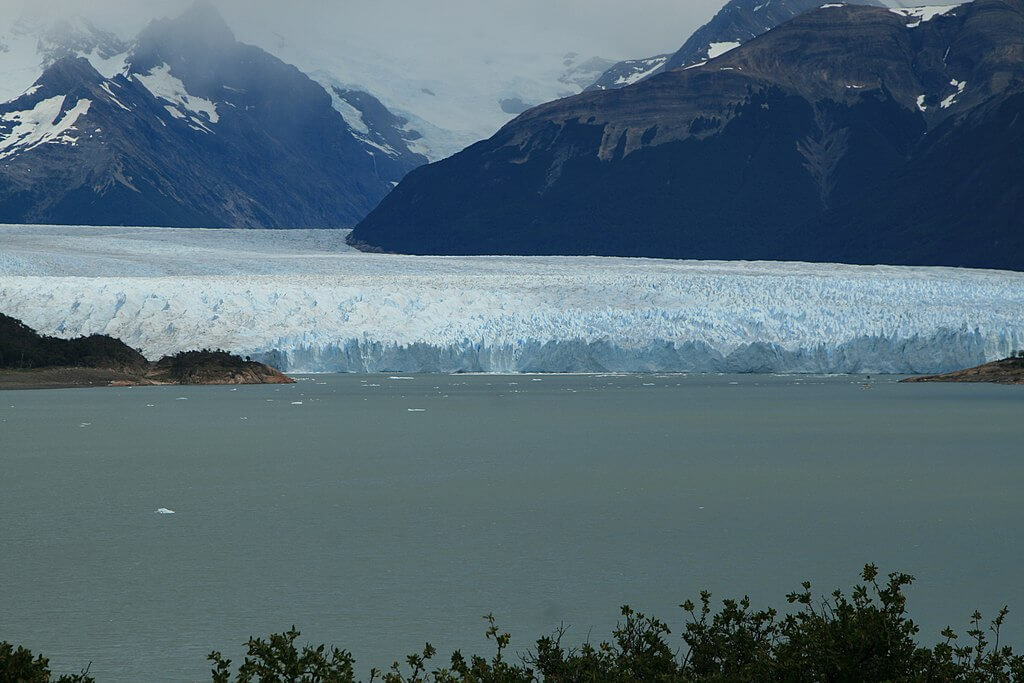
The relationship between Lago Argentino and its glacial tributaries creates one of the world's most spectacular displays of glacial dynamics. The Perito Moreno Glacier, perhaps the most famous of the lake's glacial feeders, demonstrates the dramatic interaction between ice and water. The terminus of the Perito Moreno Glacier is 5 km (3.1 mi) wide, with an average height of 74 m (240 ft) above the surface of Lago Argentino, creating a massive ice wall that regularly calves enormous icebergs into the lake.
The Perito Moreno is one of the most important glaciers that break off from the Southern Patagonian Ice Field located in the southern chain of the Andes (Argentina and Chile). This icefield is the last relic of the greatest glacial expansions that occurred from the late Miocene to the late Pleistocene. The glacier's terminus extends directly into the lake, where the glaciers debouche into the lake at these sites, making "trenches" in the bedrock, creating the lake's remarkable depth variations.
The glacial influence extends beyond mere water input. The constant grinding action of glaciers against bedrock continues to shape the lake's morphology, while the periodic advance and retreat of glacial termini create dynamic changes in the lake's shoreline and depth profile. These glacial dynamics make Lago Argentino a living laboratory for studying glacial-lacustrine interactions in real time.
Ecological Environment and Biodiversity
Despite its harsh Patagonian environment, Lago Argentino supports a diverse aquatic ecosystem adapted to cold, mineral-rich glacial waters. Lake trout, rainbow trout, perch, and common galaxias are among the fish that make the lake highly appreciated by both ecologists and recreational fishers. The presence of these species, particularly the native Galaxias species, indicates the lake's role as a refuge for endemic Patagonian aquatic fauna.
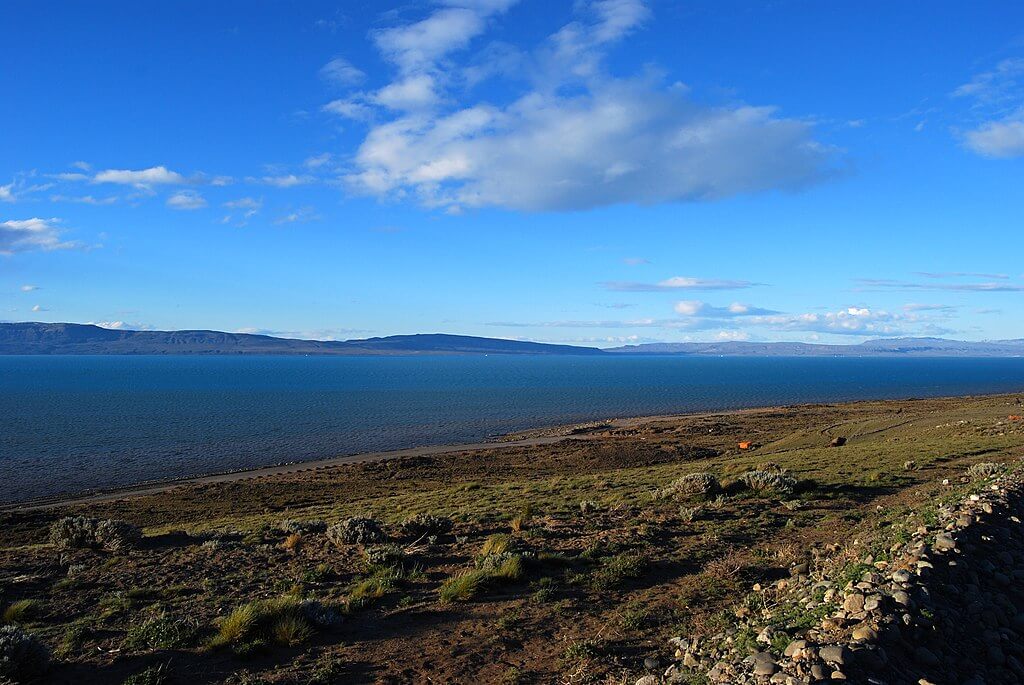
The lake's ecosystem operates within the broader context of the Patagonian steppe and Andean environments. The surrounding landscape transitions from high-altitude alpine environments near the glacial sources to the characteristic grasslands and shrublands of the Patagonian steppe. This ecological gradient supports diverse bird populations, including waterfowl that utilize the lake's extensive shoreline and numerous protected bays.
The cold, nutrient-rich waters of Lago Argentino create unique conditions for aquatic life. The constant input of glacial meltwater brings both nutrients from bedrock and challenges associated with temperature fluctuations and suspended sediments. Species that thrive in this environment demonstrate remarkable adaptations to these extreme conditions.
Geological Formation and Evolution
The formation of Lago Argentino reflects millions of years of geological processes, with the most dramatic shaping occurring during the Pleistocene glacial periods. The lake occupies a classic glacial valley, carved by massive ice sheets that advanced and retreated multiple times over the past several million years. The current lake basin represents the most recent phase of this long geological evolution.
The bedrock underlying the lake consists primarily of sedimentary rocks from the Mesozoic era, with additional volcanic and metamorphic components reflecting the complex geological history of the Andes Mountains. The extreme depths reached by the lake, particularly the areas extending below sea level, demonstrate the incredible erosive power of glacial ice moving under tremendous pressure.
Ongoing geological processes continue to shape the lake. Glacial isostatic rebound, the gradual rising of land masses following the retreat of heavy ice sheets, slowly alters the lake's elevation and drainage patterns. Seismic activity associated with the tectonically active Andes also influences the lake's geological environment, though major earthquakes are relatively rare in this region.
Climate and Environmental Conditions
Lago Argentino exists within a harsh but spectacular climatic environment characteristic of Patagonian weather patterns. The area experiences a cold semi-arid climate, with strong westerly winds, significant temperature variations, and precipitation patterns heavily influenced by the Andes Mountains' orographic effects.
The lake's large surface area creates its own microclimate, moderating temperature extremes in the immediate vicinity while generating local weather patterns. The presence of massive glacial systems adds another climatic influence, creating cold air drainage patterns and influencing local precipitation through orographic lifting of moisture-laden air masses.
Seasonal variations in the lake are dramatic, with summer months bringing glacial melt that raises water levels and increases the milky glacial flour content, while winter months see reduced flow and clearer water conditions. These seasonal cycles profoundly influence both the lake's appearance and its ecological dynamics.
Human History and Cultural Significance
The region surrounding Lago Argentino has been inhabited by Indigenous peoples for thousands of years, with archaeological evidence suggesting human presence dating back to the end of the last ice age. The Tehuelche people and other Patagonian Indigenous groups developed sophisticated knowledge of the lake's seasonal patterns and utilized its resources as part of their nomadic lifestyle across the Patagonian steppes.
European exploration of the lake began in the late 19th and early 20th centuries, with early explorers documenting its impressive dimensions and glacial features. The lake was named "Argentino" (Argentine) to emphasize its location within Argentine territory, reflecting the nationalistic sentiments of the era when Argentina was establishing its presence in remote Patagonian regions.
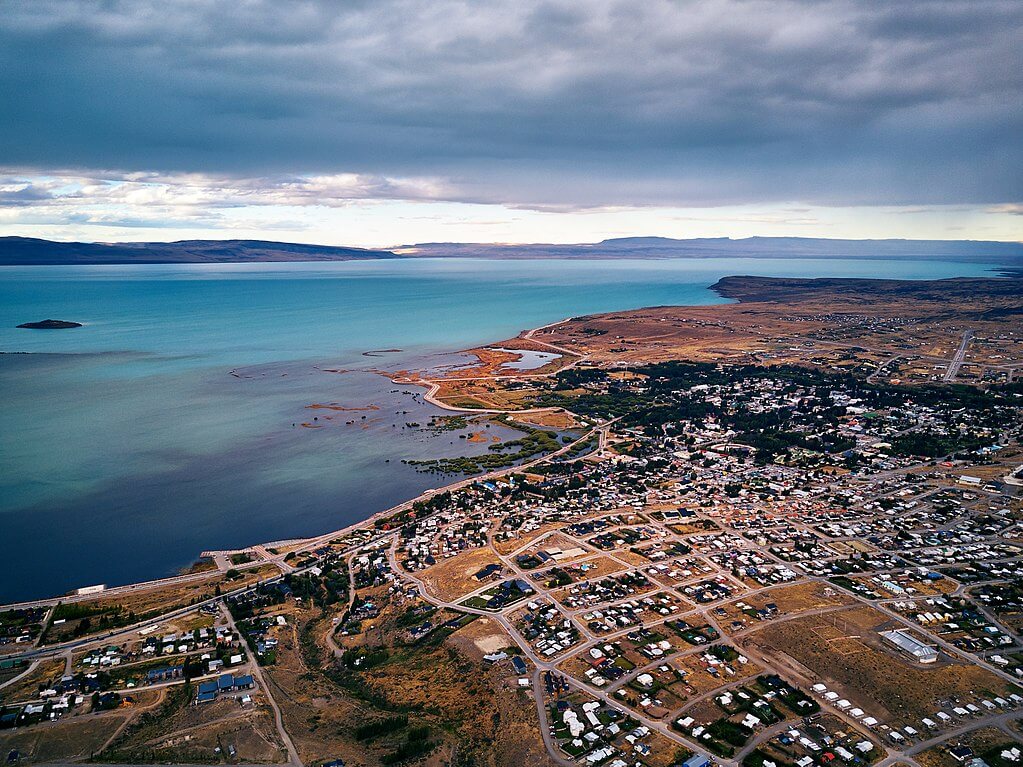
The southern shore of the lake is adorned by the city of El Calafate, serving as the primary tourist base for exploring the region. This small city has grown from a remote frontier settlement to an international tourism destination, providing access to the lake and its glacial attractions while maintaining its character as a gateway to the Patagonian wilderness.
Conservation and Environmental Protection
Lago Argentino's inclusion within Los Glaciares National Park, established in 1937 and designated a UNESCO World Heritage Site in 1981, provides comprehensive protection for this remarkable ecosystem. The park status ensures that the lake and its surrounding environment remain protected from development pressure while allowing for controlled scientific research and sustainable tourism.
The lake faces environmental challenges common to glacial systems worldwide, particularly those related to climate change. Glacial retreat throughout the region affects water input patterns, sediment loads, and overall lake dynamics. Scientific monitoring programs track these changes to understand both natural variability and anthropogenic influences on the system.
Tourism pressure represents both an economic opportunity and a conservation challenge. The spectacular nature of the lake and its glacial environment attracts visitors from around the world, generating revenue that supports conservation efforts while requiring careful management to prevent environmental degradation.
Scientific Research and Global Significance
Lago Argentino serves as a crucial site for glaciological and climatological research. The lake's glacial tributaries provide accessible opportunities to study glacial dynamics, while the lake itself offers insights into glacial-lacustrine interactions and paleoclimate reconstruction through sediment core analysis.
The lake's position at the interface between the Southern Patagonian Ice Field and the Atlantic drainage system makes it an important indicator of regional climate change. Changes in glacial input, water temperature, and seasonal patterns provide valuable data for understanding broader climate trends in the Southern Hemisphere.
International research collaborations utilize Lago Argentino as a natural laboratory for studying processes relevant to glaciated regions worldwide. The knowledge gained from research at this site contributes to global understanding of glacial systems and their responses to environmental change.
Tourism and Economic Impact
The town of El Calafate, which is close to Lake Argentino, the glaciers, and the lake itself are popular tourist destinations. The tourism industry built around Lago Argentino has become a significant economic driver for the region, supporting local communities while showcasing one of Argentina's most spectacular natural attractions.
Visitors to El Calafate and the lake can experience its grandeur through various activities, including boat excursions to view calving glaciers, hiking along shoreline trails, and photography expeditions to capture the dramatic interplay of ice, water, and mountain landscapes. The tourism infrastructure centered in El Calafate has developed sophisticated offerings while maintaining environmental sensitivity.
The economic impact extends beyond direct tourism revenue to include research funding, conservation support, and international recognition that enhances Argentina's natural heritage profile globally. This economic dimension provides crucial support for ongoing conservation efforts and scientific research programs.
Future Challenges and Opportunities
Lago Argentino faces an uncertain future shaped by global climate change, evolving tourism pressures, and changing regional economic conditions. The retreat of glacial systems throughout Patagonia will inevitably alter the lake's characteristics, potentially affecting its ecological dynamics, visual appeal, and scientific value.
Climate adaptation strategies must balance the need to preserve the lake's natural character with recognition that some changes are inevitable. Research programs continue to monitor these changes while developing management approaches that can respond to evolving conditions.
The lake's role as a global destination for glacial tourism provides opportunities to support both conservation and regional economic development. Sustainable tourism models developed at Lago Argentino may serve as examples for other glacial regions facing similar challenges worldwide.
Conclusion
Lago Argentino stands as one of Earth's most remarkable natural phenomena, where the dramatic forces of glacial dynamics, geological evolution, and ecological adaptation converge in spectacular fashion. This magnificent Patagonian lake represents far more than a geographical feature; it embodies the raw power of natural processes, the delicate balance of environmental systems, and the profound beauty that emerges from the interaction between ice, water, and stone.
As Argentina's largest freshwater lake and a centerpiece of Los Glaciares National Park, Lago Argentino serves multiple roles: a vital ecosystem supporting unique biodiversity, a natural laboratory for scientific research, a spectacular destination attracting global tourism, and a reminder of nature's capacity to create landscapes of extraordinary beauty and complexity.
The lake's future depends on our collective ability to balance human activities with environmental protection, to understand and adapt to changing climate conditions, and to maintain the delicate equilibrium that has created this Patagonian jewel. In preserving and studying Lago Argentino, we preserve not only a remarkable natural wonder but also our opportunity to understand the fundamental processes that shape our planet's most spectacular landscapes.
Through its glacial tributaries, diverse ecosystems, and stunning beauty, Lago Argentino continues to inspire wonder and scientific curiosity while standing as a testament to the enduring power of natural forces to create landscapes of incomparable grandeur in one of Earth's last great wilderness regions.