
Volcán de Fuego and Acatenango: Guatemala's Dynamic Volcanic Complex
In Guatemala's Central Highlands, two volcanoes form one of Central America's most scientifically significant volcanic partnerships. Volcán de Fuego and Acatenango represent contrasting stages of volcanic evolution, providing insights into the geological processes that have shaped the region.
From Dormancy to Devastation: The Geological History of Guatemala's Twin Volcanoes
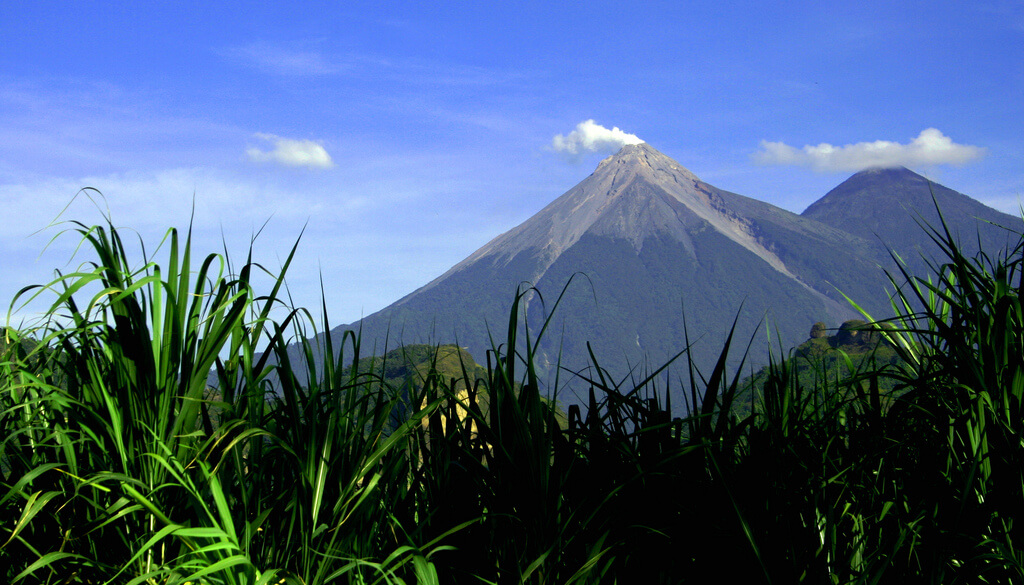
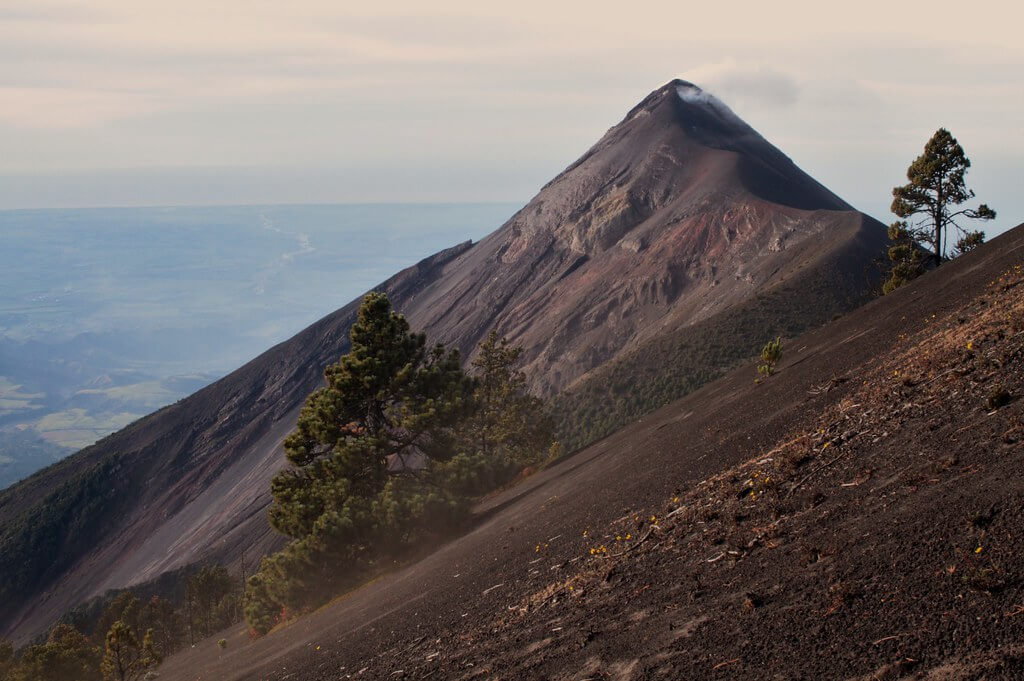
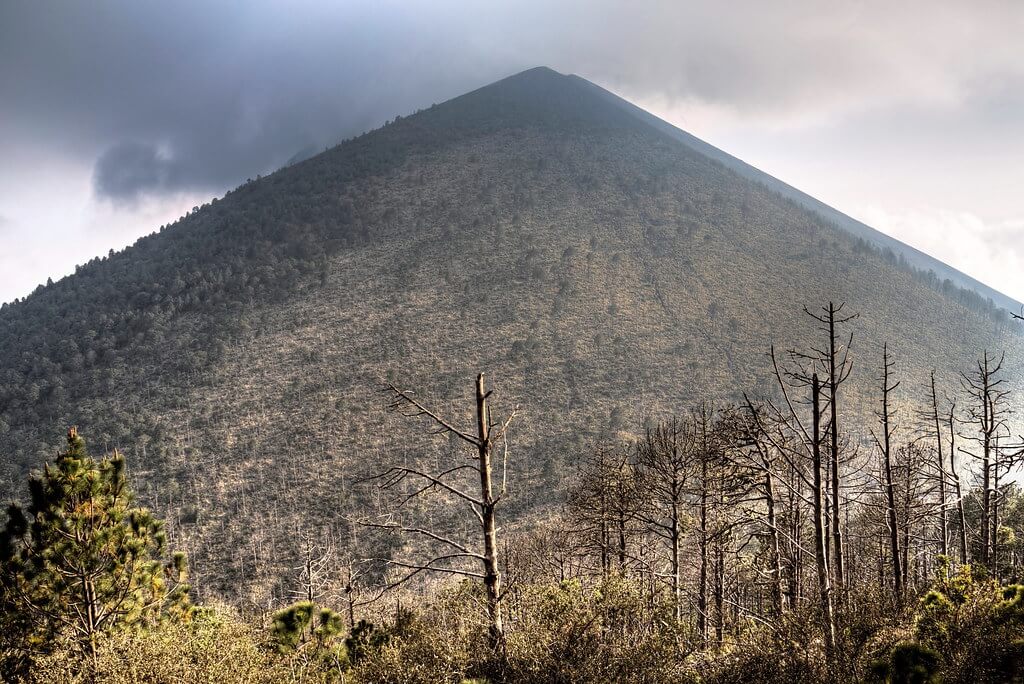
In Guatemala's Central Highlands, two magnificent volcanoes form one of Central America's most scientifically significant volcanic partnerships. Volcán de Fuego and Acatenango, standing just 5 kilometers (3 miles) apart, represent contrasting stages of volcanic evolution and provide crucial insights into the geological processes that have shaped the region for millennia. While Fuego remains one of Guatemala's most active volcanoes, dormant Acatenango preserves a record of the complex volcanic history that characterizes this portion of the Central American Volcanic Arc.
Geological Setting and Formation
Regional Volcanic Context
The Fuego-Acatenango volcanic complex is situated within Guatemala's volcanic front, positioned along a northwest-trending line at the southern edge of the Tertiary volcanic rocks that comprise the Guatemalan highlands. This geological setting situates both volcanoes within the broader context of Central American volcanism, which results from the subduction of the Cocos Plate beneath the Caribbean Plate.
The volcanic complex represents a north-south trending alignment of five or more volcanic vents, oriented perpendicular to the general trend of the Central American Volcanic Arc in Guatemala. This unusual orientation suggests local tectonic influences that have controlled magma ascent and vent positioning over geological time.
Acatenango: The Ancient Giant
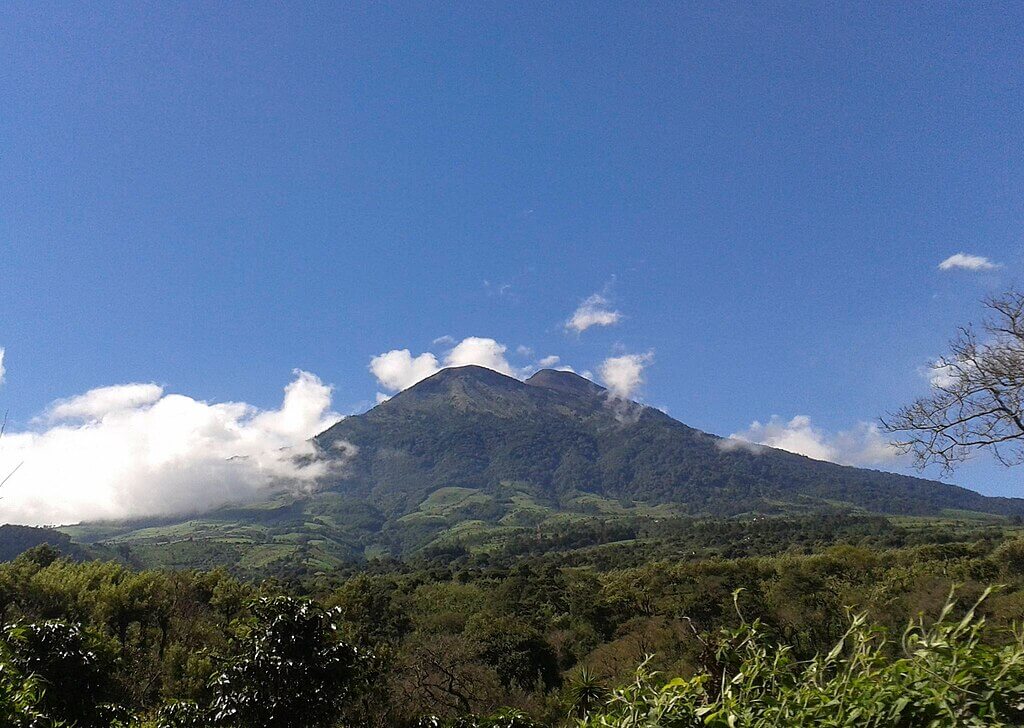
Acatenango, reaching 3,976 meters (13,045 feet) at Pico Mayor and 3,880 meters (12,730 feet) at its secondary peak, Yepocapa, represents the older and larger component of this volcanic pair. The massive edifice towers more than 3,500 meters (11,480 feet) above the Pacific coastal plain to the south and approximately 2,000 meters (6,560 feet) above the surrounding Guatemalan Highlands.
Geological investigations reveal that Acatenango's current form represents the second major phase of volcanic construction at this location. An earlier Acatenango edifice underwent catastrophic collapse approximately 43,000 years ago, generating the extensive La Democracia debris-avalanche deposit that covers a substantial area of the Pacific coastal plain. This collapse event removed a significant portion of the original volcanic structure, creating space for the subsequent construction of the modern Acatenango cone.
The stratigraphy of Acatenango reveals construction through multiple eruptive episodes, characterized by lava flows, pyroclastic deposits, and laharic sequences, which record the volcano's complex evolutionary history. Radiometric dating of volcanic materials indicates that the current edifice was built primarily during the late Pleistocene and Holocene epochs, with construction continuing episodically over tens of thousands of years.
Fuego: The Active Successor
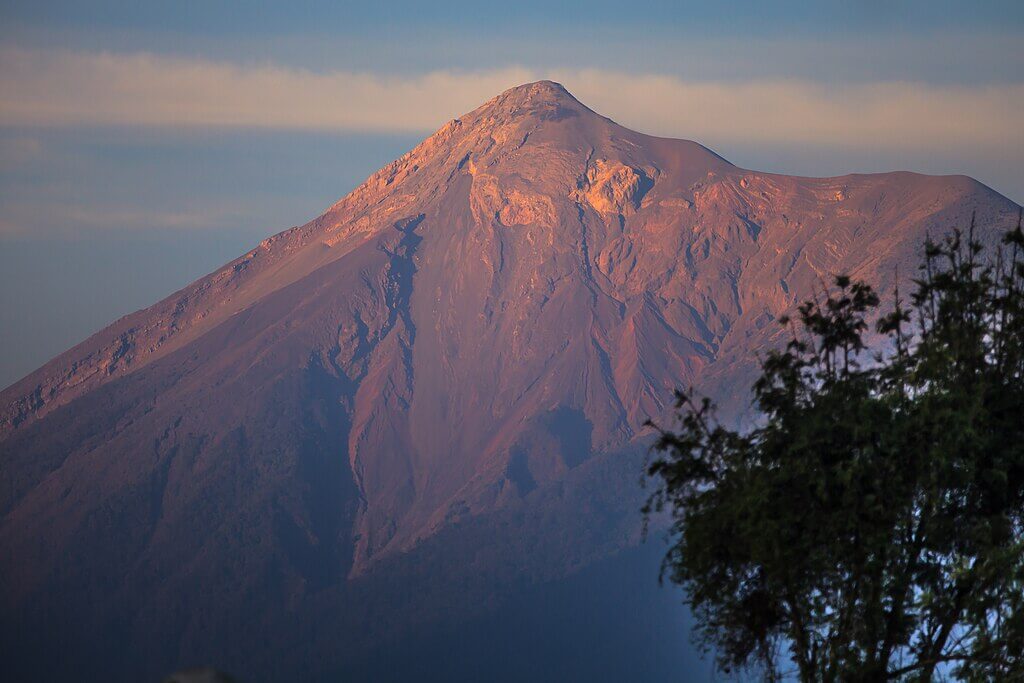
Volcán de Fuego, standing at 3,763 meters (12,346 feet), represents the youngest and most active component of the volcanic complex. Like other volcanoes along Guatemala's volcanic front, Fuego is built on a foundation of Tertiary volcanic rocks that include lava flows and laharic units representing erosional remnants of older volcanic systems ranging in age from Miocene to Quaternary.
The geological record indicates that volcanism at the Fuego-Acatenango complex has migrated southward over time, with Fuego representing the most recent focus of magmatic activity. This migration pattern provides valuable insights into the evolution of magma supply systems and the influence of local structural controls on volcanic vent positioning.
Both volcanic edifices were constructed during three distinct eruptive periods that post-date the approximately 85,000-year-old Los Chocoyos tephra from the Atitlán caldera, establishing their relatively recent origins in the context of regional volcanic history.
Historical Eruptive Activity
Pre-Columbian and Colonial Records
Archaeological evidence suggests that both volcanoes have significantly influenced human settlement patterns in the region for thousands of years. Pre-Columbian civilizations, including various Maya groups, developed agricultural and settlement strategies adapted to the volcanic landscape and its associated hazards and benefits.
Spanish colonial records provide some of the earliest written accounts of volcanic activity in the region. These historical documents describe major eruptions and their impacts on colonial settlements, particularly the repeated destruction and relocation of colonial capitals in the area now known as Antigua Guatemala.
Fuego's Modern Activity Pattern
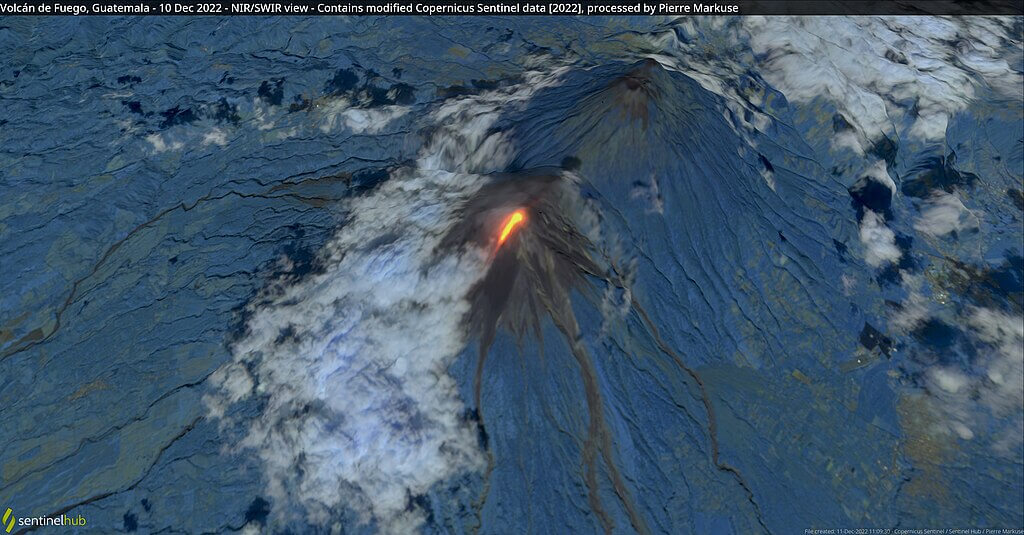
Volcán de Fuego has maintained near-constant activity throughout recorded history, earning recognition as one of Central America's most persistently active volcanoes. The volcano typically exhibits strombolian-style eruptions characterized by regular explosive episodes that produce incandescent projectiles, lava fountains, and small lava flows.
Historical records document major eruptive episodes in 1524, 1581-1582, 1623, 1705, 1717, 1730, 1732, 1737, 1799, 1826-1829, 1855-1860, 1880, 1896-1898, 1932, and 1944-1977. The 1974 eruption stands out as particularly significant in modern times, producing substantial pyroclastic flows and causing widespread evacuations.
Contemporary Eruptive Behavior
Since 2015, Fuego has exhibited increasingly intense paroxysmal eruptions occurring at intervals of 2-8 weeks, with longer repose periods generally correlating with more powerful subsequent eruptions. This pattern reached a catastrophic crescendo on June 3, 2018, when the volcano produced its largest eruption since 1974.
The 2018 eruption generated pyroclastic flows that traveled more than 8 kilometers (5 miles) from the summit, devastating the village of San Miguel Los Lotes and causing over 400 casualties. This event highlighted the ongoing hazards associated with Fuego's proximity to populated areas and the challenges of volcanic risk management in densely populated volcanic regions.
Current monitoring data indicate that Fuego maintains baseline activity with 3-10 explosions per hour, generating ash columns that typically rise 1.1 kilometers (0.7 miles) above the crater rim. Ash dispersal affects areas up to 30 kilometers (19 miles) from the volcano, creating ongoing agricultural and health impacts for regional communities.
Volcanic Hazards and Risk Assessment
Primary Hazards
The Fuego-Acatenango complex generates multiple types of volcanic hazards that affect both local and regional areas. Pyroclastic flows represent the most immediate and deadly threat, capable of traveling at speeds exceeding 100 kilometers per hour (62 mph) and reaching temperatures of over 800°C (1,472°F).
Volcanic ash poses widespread hazards extending far beyond the immediate volcanic area. Ash falls can affect areas more than 100 kilometers (62 miles) from the source, causing crop destruction, roof collapses from excessive loading, respiratory health problems, and contamination of water supplies.
Lahars (volcanic mudflows) present significant hazards during both eruptive and non-eruptive periods. These debris flows form when volcanic materials mix with water from rainfall, melting snow and ice, or the breaching of crater lakes, and can travel dozens of kilometers down volcanic slopes and river valleys.
Secondary Hazards
The volcanic complex also generates various secondary hazards that can persist long after eruptions cease. Volcanic gases, including sulfur dioxide, carbon dioxide, and hydrogen sulfide, can accumulate in topographic depressions, posing health risks to humans and livestock.
Post-eruptive erosion and remobilization of volcanic deposits create ongoing lahar hazards during periods of heavy rainfall, particularly in river systems draining volcanic slopes. These processes can persist for decades after major eruptions, posing long-term hazards to downstream communities.
Ecological Significance
Acatenango's Ecosystem Zones
Acatenango's extended period of dormancy has allowed the development of complex ecological communities across its elevation gradient. The volcano supports distinct vegetation zones that reflect the dramatic climatic changes associated with elevation gain from approximately 1,000 meters (3,280 feet) at the base to nearly 4,000 meters (13,120 feet) at the summit.
Lower elevations, typically between 1,500 and 2,500 meters (4,920 and 8,200 feet), support dense cloud forests characterized by high humidity, frequent fog, and relatively stable temperatures. These forests are dominated by broadleaf tree species, including various Quercus (oak) species, along with epiphytic communities that thrive in the consistently moist conditions.
Middle elevations, ranging from 2,500 to 3,200 meters (8,200 to 10,500 feet), transition to mixed coniferous-broadleaf forests, where Pinus species become increasingly dominant. The Guatemalan endemic Abies guatemalensis (Guatemalan fir) is found at these elevations, forming distinctive high-elevation forests that are adapted to cooler temperatures and seasonal moisture variations.
Upper elevations, above 3,200 meters (10,500 feet), support alpine shrublands and grasslands characterized by low-growing, cold-adapted vegetation. These ecosystems exhibit adaptations typical of tropical alpine environments, including rosette growth forms, waxy leaf surfaces, and specialized root systems that can survive freezing temperatures.
Faunal Communities
The elevation gradient on Acatenango supports corresponding changes in animal communities. Lower-elevation forests provide habitat for Neotropical bird species, including various members of the Trogon family, numerous Parulidae (New World warblers) species, and representatives of other tropical bird families.
Mammalian diversity reflects both the elevation gradient and the availability of different habitat types. Large mammals potentially present include Panthera onca (jaguar), Puma concolor (puma), and Tapirus bairdii (Baird's tapir), though populations of these species face significant pressure from habitat fragmentation and human activities.
The amphibian and reptile fauna includes species adapted to both tropical and temperate conditions, reflecting the dramatic climatic variation across the elevation gradient. High-elevation species often exhibit endemic characteristics, having evolved in isolation within the unique conditions of tropical alpine environments.
Scientific Research and Monitoring
Volcanic Monitoring Systems
Fuego ranks among the most intensively monitored volcanoes in Central America, with the Instituto Nacional de Sismología, Vulcanología, Meteorología e Hidrología (INSIVUMEH) maintaining a comprehensive network of monitoring instruments. Seismic stations detect and locate earthquakes associated with magma movement, while thermal cameras and gas sensors provide real-time data on eruptive activity and volcanic gas emissions.
Satellite-based monitoring systems complement ground-based instruments, providing thermal imagery and ash cloud tracking capabilities that extend monitoring coverage beyond the immediate volcanic area. These systems have proven particularly valuable for tracking ash dispersal and assessing the regional impacts of major eruptions.
Research Contributions
The Fuego-Acatenango complex serves as a natural laboratory for understanding volcanic processes and their environmental impacts. Research conducted at these volcanoes has made significant contributions to understanding the mechanisms of strombolian eruptions, the generation and behavior of pyroclastic flows, and the long-term evolution of volcanic systems.
Studies of Acatenango's collapse history have provided insights into large-scale volcanic hazards and the factors that control the stability of volcanic edifices. This research has implications for hazard assessment at other volcanoes worldwide and contributes to our understanding of how volcanic systems evolve over geological timescales.
Regional Impact and Significance
Geological Heritage
The Fuego-Acatenango volcanic complex is a crucial component of Guatemala's geological heritage, preserving a record of Central American volcanism that spans tens of thousands of years. The volcanic deposits and landforms associated with these volcanoes provide insights into regional geological processes and serve as reference sites for understanding similar volcanic systems throughout Central America.
Environmental Services
Despite the hazards they generate, both volcanoes provide important environmental services to the region. Volcanic soils, derived from weathered volcanic materials, support highly productive agricultural systems. The topographic relief created by volcanic edifices influences regional climate patterns and watershed characteristics.
The forests on Acatenango's slopes contribute to regional water resource management through their role in the hydrological cycle, while also providing carbon sequestration services and serving as habitats for biodiversity conservation.
Conclusion
Volcán de Fuego and Acatenango represent far more than prominent topographic features in Guatemala's landscape; they embody the complex geological processes that have shaped Central America for millions of years. Their contrasting states—one explosively active, the other quietly dormant—provide unique opportunities to study volcanic evolution, hazard generation, and the environmental impacts of volcanism.
The ongoing activity at Fuego demonstrates the continuing relevance of volcanic processes in shaping both the physical and human geography of the region, while Acatenango's rich ecological communities illustrate the potential for life to flourish in volcanic environments given sufficient time and stability. Together, these volcanic giants continue to influence everything from local weather patterns to regional economic development, serving as powerful reminders of the dynamic forces that operate beneath Earth's surface.
As scientific understanding of volcanic processes continues to advance, the Fuego-Acatenango complex will undoubtedly remain a crucial site for research and monitoring, contributing to our ability to assess volcanic hazards and understand the role of volcanism in Earth system processes. Their legacy extends far beyond their immediate geographic setting, offering insights relevant to volcanic regions worldwide and highlighting the complex relationships between geological processes, environmental systems, and human societies.