
The Sierra Madre Evergreen Forests: A Biodiversity Haven
The Sierra Madre evergreen forests are not a single mountain range but a shared vegetation classification, spanning both the Sierra Madre Occidental and Sierra Madre Oriental, where pine-oak forest, cloud forest, and mixed conifer forest each occupy their own elevational belt across two geologically distinct ranges on opposite sides of Mexico.
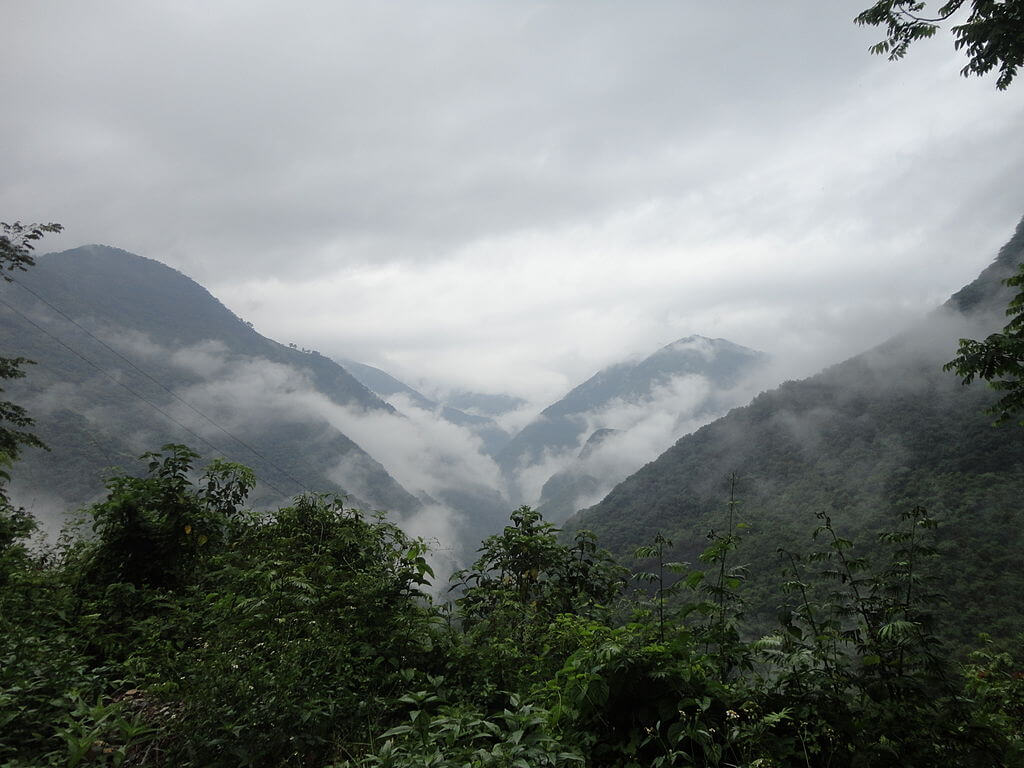
The Sierra Madre Evergreen Forests: Three Vegetation Belts, Two Mountain Systems
Rather than describing a single mountain range, "Sierra Madre evergreen forests" is a vegetation classification that spans two of Mexico's great mountain systems: the Sierra Madre Occidental in the west and the Sierra Madre Oriental in the east. Though geologically distinct and separated by hundreds of kilometers of central Mexican plateau, both ranges support a broadly similar sequence of evergreen forest types that shift with elevation, from pine-oak woodland through cloud forest to high-altitude mixed conifer stands, creating a shared ecological identity that transcends either range's individual geology. This piece focuses on that shared vegetation zonation and the species that depend on it across both ranges; each mountain system's geology, history, and range-specific details are covered in dedicated articles.
Elevation-Driven Zonation
Across both ranges, forest composition tracks elevation and moisture with remarkable consistency, even though the underlying rock, climate history, and specific species assemblages differ between the volcanic Occidental and the folded sedimentary Oriental. At mid-elevations, pine-oak forests dominate: a mix of pine (Pinus spp.) and oak (Quercus spp.) that together form the most extensive and widespread evergreen forest type in both ranges, providing critical habitat for most of the region's endemic wildlife. At the upper end of this same elevational band, particularly on east- or windward-facing slopes exposed to persistent moisture, cloud forests develop where fog and low cloud cover sustain a distinctive community of epiphytes, ferns, and orchids, exemplified by reserves such as the Sierra Madre Oriental's El Cielo Biosphere Reserve. At the highest elevations in both ranges, mixed conifer forests take over, combining pines with firs (Abies spp.) and, in wetter Oriental locations, spruces (Picea spp.), adapted to the coolest and wettest conditions either range experiences.
Shared Flora
Certain plant species and genera recur across both ranges' evergreen forests, unifying them ecologically despite their geographic separation. The sacred fir (Abies religiosa) forms a vital component of mixed conifer stands in both the Occidental and Oriental ranges, while Magnolia pacifica, a magnolia species found in the region's cloud and pine-oak forests, and the cycad Dioon edule, endemic to Mexico's evergreen forest belt, both illustrate the deep evolutionary history preserved within these forests. Genuinely important context here is that the celebrated monarch butterfly (Danaus plexippus) overwinters not in the Sierra Madre itself but in oyamel fir forests within the Trans-Mexican Volcanic Belt, a separate mountain system running east-west across central Mexico; the distinction matters, since the two systems are frequently and incorrectly conflated.
Fauna Adapted to the Forest Gradient
Many of the Sierra Madre's most notable animal species depend specifically on the pine-oak and mixed conifer zones described above rather than any single range. The thick-billed parrot (Rhynchopsitta pachyrhyncha) and the Mexican wolf (Canis lupus baileyi), both discussed in greater depth in our Sierra Madre Occidental article, rely on precisely this kind of high-elevation pine forest habitat, as does the jaguar (Panthera onca), which ranges through both evergreen forest systems in search of prey. The shared vegetation structure across both ranges, rather than each range's individual geology, makes this habitat suitable for these wide-ranging species in the first place.
Ecological Importance
Across both ranges, these evergreen forests perform the same essential functions. Their dense canopy and root systems protect watersheds, acting as natural sponges that absorb rainfall and release it gradually, sustaining river flows and limiting soil erosion in the valleys below, while their year-round photosynthetic activity makes them significant regional carbon sinks. Perhaps most importantly, the ecological continuity of the pine-oak, cloud, and mixed conifer belts across both the Occidental and Oriental ranges provides habitat connectivity for wide-ranging species, allowing populations to move and maintain genetic diversity across a broader landscape than either range could support in isolation.
Conservation Challenges
The evergreen forests of both ranges face similar pressures: deforestation from logging, agricultural expansion, and urban growth; the compounding effects of climate change on already stressed forest ecosystems; and invasive species that outcompete native flora and fauna. Because these pressures affect both mountain systems in broadly similar ways, coordinated conservation approaches, rather than range-by-range efforts alone, offer real potential for protecting the evergreen forest belt as a connected whole rather than a series of isolated fragments.
Conservation Efforts
Protected areas and biosphere reserves established across both ranges work to conserve these critical habitats and promote sustainable land use, with range-specific detail on individual reserves covered in the Sierra Madre Occidental and Sierra Madre Oriental articles. Community-based initiatives focused on sustainable agriculture, reforestation, and environmental education remain essential to long-term protection in both ranges, as does ongoing research and monitoring into species populations, ecosystem health, and the effects of a changing climate on forest composition at every elevation.
Conclusion
The Sierra Madre evergreen forests illustrate how a shared vegetation type can unite two geologically distinct mountain systems into a single ecological identity, one whose pine-oak, cloud, and mixed conifer belts support wide-ranging species and essential watershed functions across both the Occidental and Oriental ranges. Understanding this shared classification, alongside the individual geology and history of each range covered elsewhere on this site, offers a fuller picture of how Mexico's mountain forests function as an interconnected whole rather than two unrelated systems that merely happen to share a name.