
Nevado Illimani: Bolivia's Sacred Sentinel
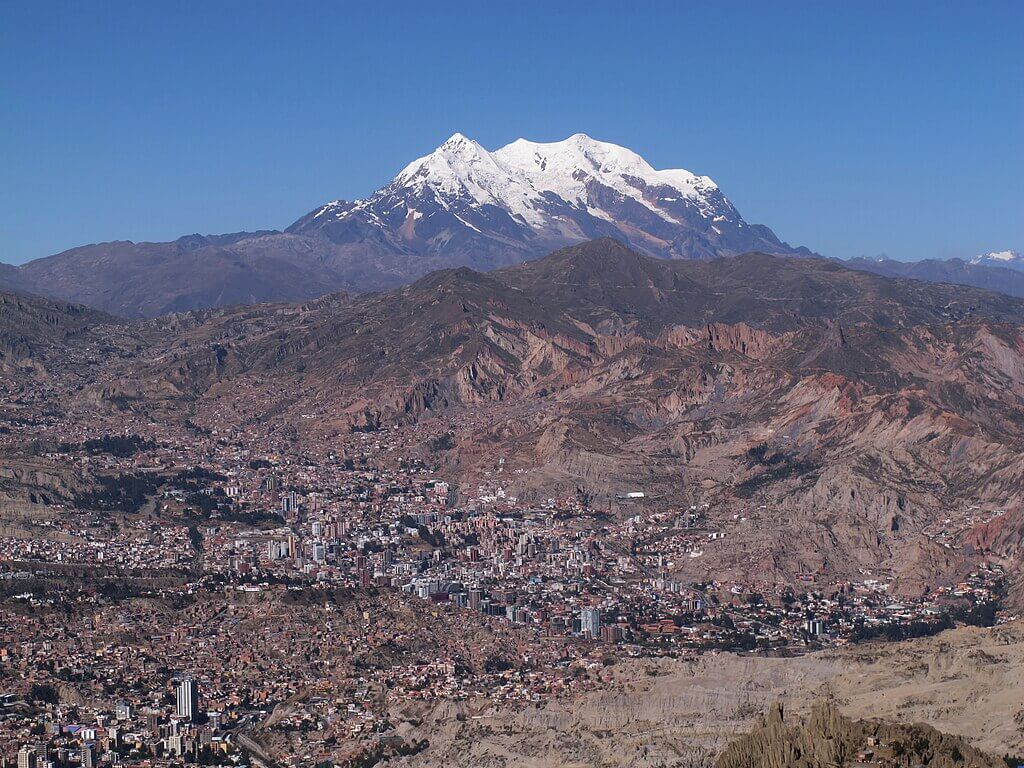
Illimani rises majestically from the Altiplano as a crystalline fortress, one of South America's iconic mountains. This glaciated peak dominates La Paz and its snow-capped summit symbolizes the intersection of natural grandeur, spirituality, and adventure that define the Bolivian Andes.
The Guardian of La Paz: Understanding Illimani's Natural and Cultural Legacy
Rising majestically from the Altiplano like a crystalline fortress, Illimani stands as one of South America's most iconic mountains. At 6,438 meters (21,122 feet) above sea level, this massive glaciated peak dominates the skyline of La Paz and serves as both a geographical landmark and spiritual guardian. The mountain's Aymara name translates roughly to "golden eagle," reflecting its soaring presence above Bolivia's highland plateau.
For centuries, Illimani has captured the imagination of Indigenous peoples, explorers, and mountaineers alike. Its snow-capped summit, visible from hundreds of kilometers away, represents the intersection of natural grandeur, ancient spirituality, and modern adventure that defines the Bolivian Andes. More than just a climbing destination, Illimani embodies the complex relationships between human culture and mountain environments, serving simultaneously as a sacred site, water source, national symbol, and gateway to understanding high-altitude ecosystems in a changing world.
Geographic Setting and Physical Characteristics
Located 72 kilometers (45 miles) southeast of La Paz, Illimani anchors the southern terminus of the Cordillera Real within Bolivia's eastern Andes. The massif consists of four main peaks, with the south summit reaching 6,438 meters (21,122 feet), making it Bolivia's second-highest peak after Nevado Sajama.
The mountain's distinctive pyramid-like profile results from extensive glacial sculpting over hundreds of thousands of years. Glaciers begin at remarkably low elevations due to altitude effects, with the snow line at about 4,570 meters (15,000 feet). These glaciers provide crucial water resources for surrounding communities, though they are retreating due to climate change.
Cultural and Spiritual Significance
For the Aymara people, Illimani transcends geography to become a sacred living entity. In Aymara cosmology, the mountain serves as an apu (mountain spirit), a powerful protector of the La Paz region. Traditional practitioners regularly perform ceremonies and make offerings to Illimani, seeking blessings for harvests, protection from disasters, and community prosperity.
The mountain's spiritual significance extends into contemporary Bolivian culture, appearing on currency and serving as a national symbol. Modern La Paz residents, regardless of ethnicity, often speak of Illimani with reverence that reflects centuries of Indigenous influence.
Biodiversity and Ecological Zones
Despite extreme altitudes, Illimani supports diverse life across distinct elevation zones. Lower slopes feature puna grasslands that provide grazing for llamas (Lama glama), alpacas (Vicugna pacos), and wild vicuñas (Vicugna vicugna). The middle elevations host cushion plants like Azorella species and Polylepis trees, among the world's tallest trees.
Upper elevations support specialized alpine plants, lichens, and mosses adapted to extreme conditions. Wildlife includes the magnificent Andean condor (Vultur gryphus), which soars around the peaks, and various high-altitude mammals like chinchillas (Chinchilla chinchilla).
Climbing History and Mountaineering
Archaeological evidence suggests ancient Aymara peoples reached extreme altitudes on Illimani, with rope fragments found above 6,000 meters (19,685 feet). The first recorded ascent by non-Indigenous climbers occurred in 1898 by British climber Sir William Martin Conway and his team.
Today's standard route follows the West Ridge, first climbed in 1940. The normal approach involves a multi-day expedition starting from Pinaya village at 3,800 meters (12,467 feet), trekking to base camp at 4,600 meters (15,090 feet), then establishing high camp at Nido de Condores (5,550 meters/18,209 feet). The final summit push requires navigating crevassed glaciers and steep snow slopes, typically taking 8-12 hours from high camp.
Climate and Environmental Challenges
Illimani experiences distinct wet (December-March) and dry (April-November) seasons. The dry season offers optimal climbing conditions with stable weather and spectacular visibility. However, the weather can change rapidly, with winds exceeding 100 kilometers per hour (62 mph) at high elevations.
Climate change poses the mountain's greatest long-term threat. Rapid glacial retreat threatens water security for La Paz and surrounding communities, while rising temperatures force species to migrate upward, potentially causing local extinctions of high-altitude specialists.
Economic Impact and Tourism
Illimani attracts hundreds of international climbers annually, contributing significantly to Bolivia's adventure tourism industry. Local Indigenous communities increasingly participate in this economy through guide services, porter work, and cultural experiences. The mountain's iconic status also boosts Bolivia's broader tourism appeal.
However, increased visitation creates environmental pressures and waste disposal challenges. Balancing economic opportunities with environmental protection and cultural respect remains an ongoing challenge.
Scientific Research
The mountain serves as an important research site for climate studies, with ice cores from its glaciers providing detailed records of past climate conditions. Ongoing monitoring tracks glacial retreat and ecosystem changes, contributing to the understanding of how tropical mountain environments respond to global change.
Contemporary Challenges and Future Outlook
Illimani faces multiple pressures from climate change, increasing tourism, and urban expansion. Managing these challenges requires cooperation between government agencies, Indigenous communities, and various user groups.
Despite physical and ecological changes ahead, the mountain's spiritual significance for Indigenous communities remains constant. This continuity, combined with growing international recognition of its natural values, ensures Illimani will continue inspiring reverence and wonder for future generations.
Conclusion
Illimani represents far more than a prominent Andean peak. It embodies the convergence of natural grandeur, cultural significance, and human aspiration. From its role as a sacred guardian in Aymara cosmology to its challenge for modern climbers, from water source to national symbol, Illimani demonstrates the multifaceted importance of mountain landscapes in human civilization.
As environmental change accelerates, mountains like Illimani serve as both indicators of global transformation and repositories of natural and cultural values. Whether viewed from La Paz's streets, experienced through Aymara spirituality, or encountered by climbers on its glaciated slopes, Illimani continues to demand respect and inspire awe—a testament to mountains' enduring power to shape human culture and remind us of our place within the natural world.