Latest Archaeological Entries

Monte Verde: Rewriting the Story of America's First People

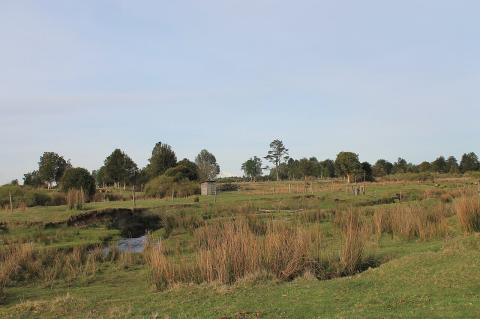
On the banks of Chinchihuapi Creek in southern Chile lies one of the most significant archaeological sites in the Americas. Monte Verde, a Paleolithic settlement preserved beneath a peat bog, fundamentally challenged long-held beliefs about when and how humans first reached the New World. Discovered in 1975, this remarkably well-preserved site revealed evidence of human occupation at the southern tip of South America at least 1,000 years before the previously accepted date for human arrival in the Americas.
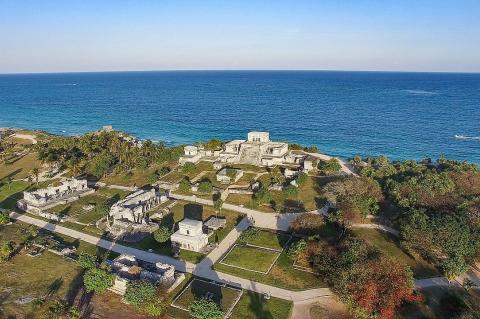
Unraveling the Secrets of Tulum: A Coastal Gem of the Maya Civilization

Nestled along Mexico's Caribbean coastline in Quintana Roo state, the ancient walled city of Tulum stands as a remarkable testament to the ingenuity and resilience of the Maya civilization. This pre-Columbian marvel, once a major port for the nearby city of Coba, has captured the imagination of visitors worldwide, offering a rare glimpse into the Maya people's strategic fortifications and architectural marvels. Originally known as Zamá, Tulum earned its current name from the Yucatec Maya word for "wall" or "fence," a fitting descriptor for one of the few fortified Maya cities.

The Qhapaq Ñan: Weaving an Empire Through Stone and Sky

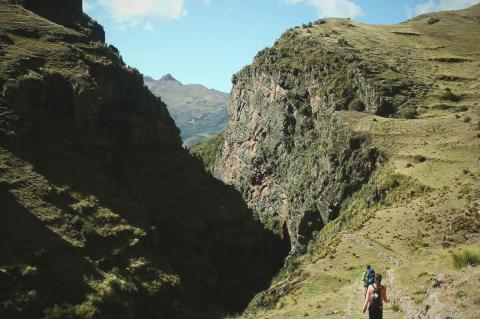
Stretching across the spine of South America, the Qhapaq Ñan represents one of humanity's most ambitious engineering achievements. This network of pathways once carried the footsteps of llamas laden with precious cargo, alpacas bearing the finest textiles, and chasqui messengers racing between distant provinces of the vast Inca Empire. More than mere roads, these ancient highways served as the nervous system of Tawantinsuyu, the "Land of the Four Quarters," binding together a realm that spanned from the emerald depths of the Amazon to the windswept altiplano.

Moray: The Inca Empire's Mountain Laboratory of Agricultural Innovation

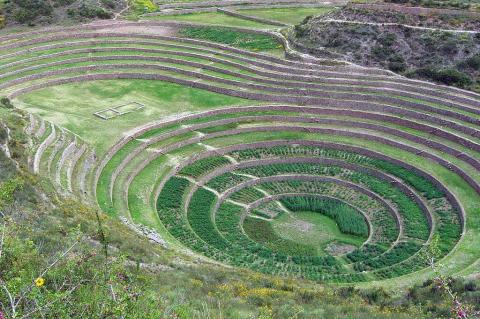
Located in the high-altitude plateau of Peru's Sacred Valley, the archaeological site of Moray features remarkable concentric circular terraces carved into natural limestone sinkholes, which create temperature differences between the levels. These amphitheater-like depressions enabled the cultivation of a multitude of crop varieties within a single complex. The site's sophisticated water management systems and precision stonework demonstrate an advanced understanding of microclimate manipulation that transformed natural geological formations into one of the ancient world's most innovative agricultural research facilities.

The Archaeological Ensemble of 17th Century Port Royal: Jamaica's Sunken Colonial Capital

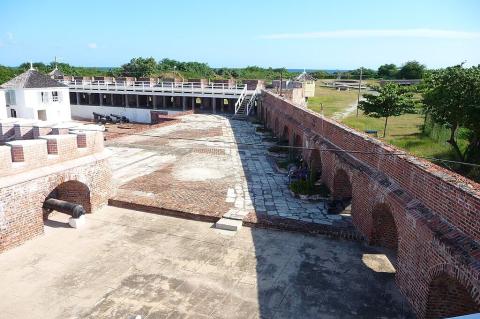
At Kingston Harbour in southeastern Jamaica lies the remains of Port Royal, once the most important English port in the Caribbean and the fourth largest city in the Americas. This colonial city, thriving in the late 17th century as a trade, naval, and piracy hub, was devastated in 1692 when an earthquake submerged two-thirds of its territory. The site, inscribed by UNESCO, offers rare insights into colonial urban life, maritime trade, and social dynamics, embodying a global archaeological treasure and a reminder of the power of natural disasters to reshape civilization.

The Wixárika Route through Sacred Sites to Wirikuta (Tatehuarí Huajuyé): Mexico's Sacred Pilgrimage Path

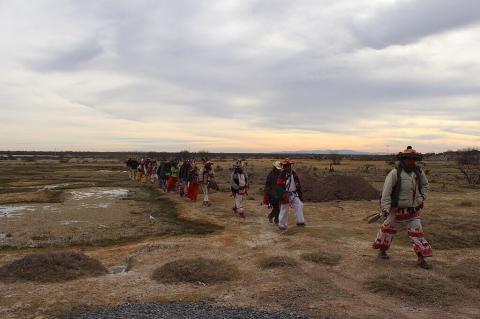
In north-central Mexico, an ancient network of sacred pathways connects mountains, deserts, and valleys, linking the spiritual heart of the Wixárika culture to their sacred site. The Wixárika Route through Sacred Sites to Wirikuta, called Tatehuarí Huajuyé in Wixárika, is a major pre-Columbian pilgrimage route still used today. Recently recognized by UNESCO, it spans five Mexican states with 20 sacred sites that form the cultural core of Wixárika civilization. More than a trail, it embodies a living cosmology where landscape, spirituality, agriculture, and community converge, maintaining a tradition over a millennium.

The Nazca Lines: Mysteries of Ancient Peru

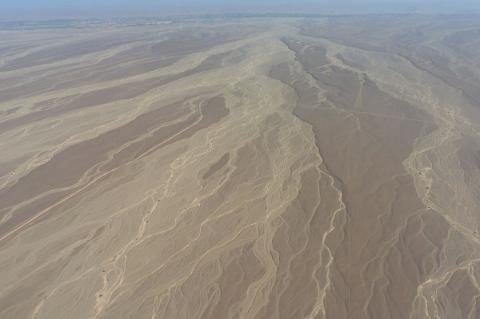
The arid plains of southern Peru, etched with a mesmerizing network of colossal geoglyphs, stand as a profound testament to the artistic and intellectual capabilities of the ancient Nasca and Paracas cultures. Stretching across the ochre-hued expanse known as the Nazca Desert, or Pampa Colorada (Red Plain), and extending into the neighboring Pampas de Jumana, these striking formations represent one of the world's most iconic and enduring archaeological enigmas.

Caral-Supe: The Birthplace of Andean Civilization

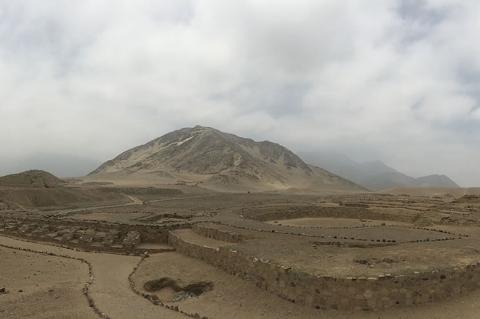
The Sacred City of Caral-Supe, commonly known as Caral, is an ancient archaeological marvel that offers profound insights into the origins of civilization in the Americas. Situated on a desert terrace overlooking Peru's lush Supe River Valley, this 5000-year-old site was declared a UNESCO World Heritage Site in 2009. Caral is celebrated not only for its antiquity but also for its advanced sociopolitical organization and architectural sophistication.

The Ancient Maya Sites of Belize: A Comprehensive Exploration

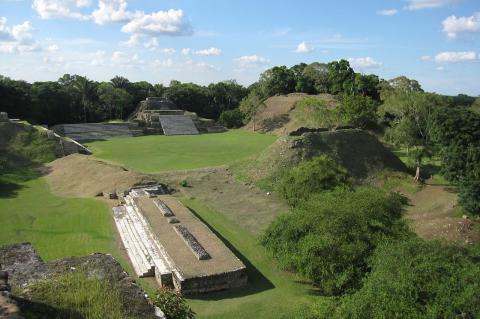
Belize is home to one of the most significant collections of ancient Maya archaeological sites, offering a window into the complex and sophisticated civilization that thrived for thousands of years. These sites span the Preclassic, Classic, and Postclassic periods, showcasing the Maya’s advancements in architecture, astronomy, agriculture, and social organization.

Tak'alik Ab'aj National Park: A Window into Mesoamerican Civilizations

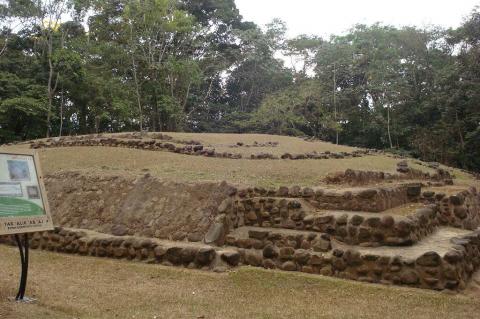
Tak'alik Ab'aj National Park in Guatemala's southwestern highlands is an important archaeological site that provides insight into Mesoamerica's cultural and historical evolution. With a blend of Olmec and Maya influences, it offers a crucial understanding of early civilizations in the region. Dating back to the 9th century BC, it was a significant hub for trade, ceremonies, and politics, and today stands as one of Central America's most important pre-Columbian sites.