
Unraveling the Secrets of Tulum: A Coastal Gem of the Maya Civilization
The ancient walled city of Tulum in Mexico's Quintana Roo state is a testament to the ingenuity and resilience of the Maya civilization. Once a major port for the nearby city of Coba, it offers a rare glimpse into the strategic fortifications and architectural marvels of the Maya people.
Tulum: A Fortified Masterpiece of the Maya World
Nestled along Mexico's Caribbean coastline in Quintana Roo state, the ancient walled city of Tulum stands as a remarkable testament to the ingenuity and resilience of the Maya civilization. This pre-Columbian marvel, once a major port for the nearby city of Coba, has captured the imagination of visitors worldwide, offering a rare glimpse into the strategic fortifications and architectural marvels of the Maya people. Originally known as Zamá—meaning "City of the Dawn" or "Place of the Dawning Sun"—Tulum earned its current name from the Yucatec Maya word for "wall" or "fence," a fitting descriptor for one of the few fortified Maya cities.
Geographic Setting and Strategic Location
The Clifftop Citadel
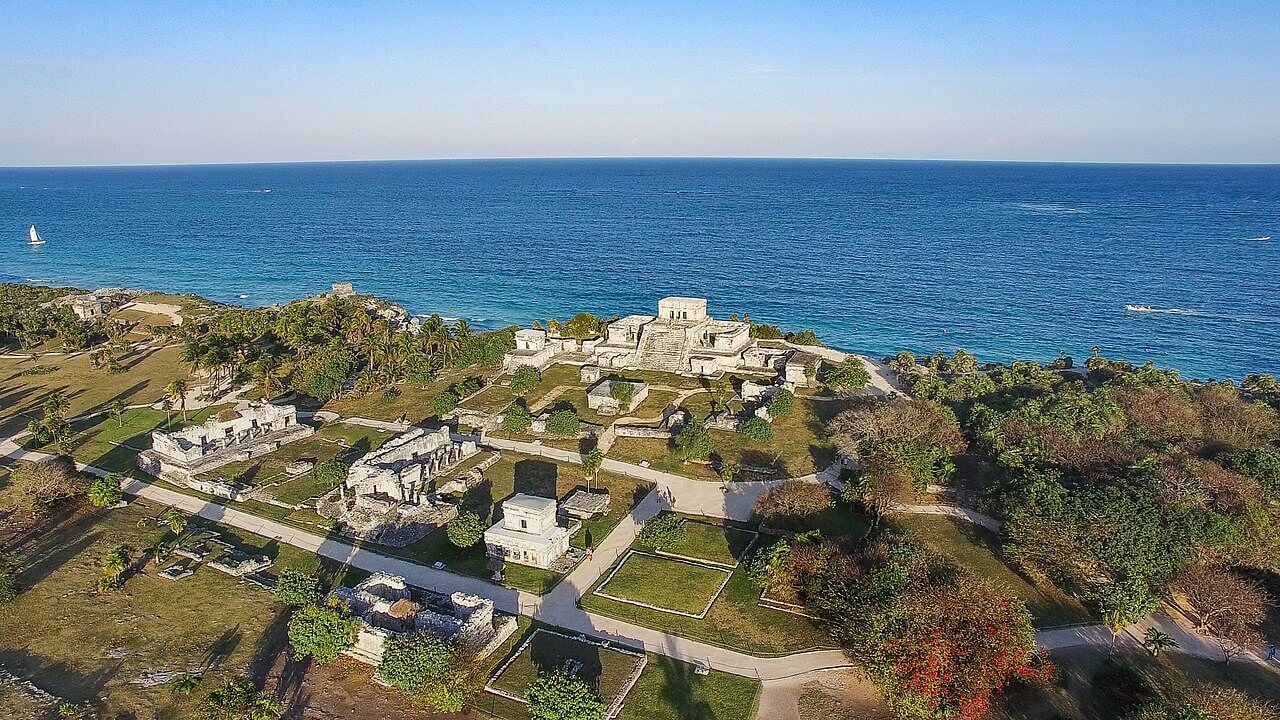
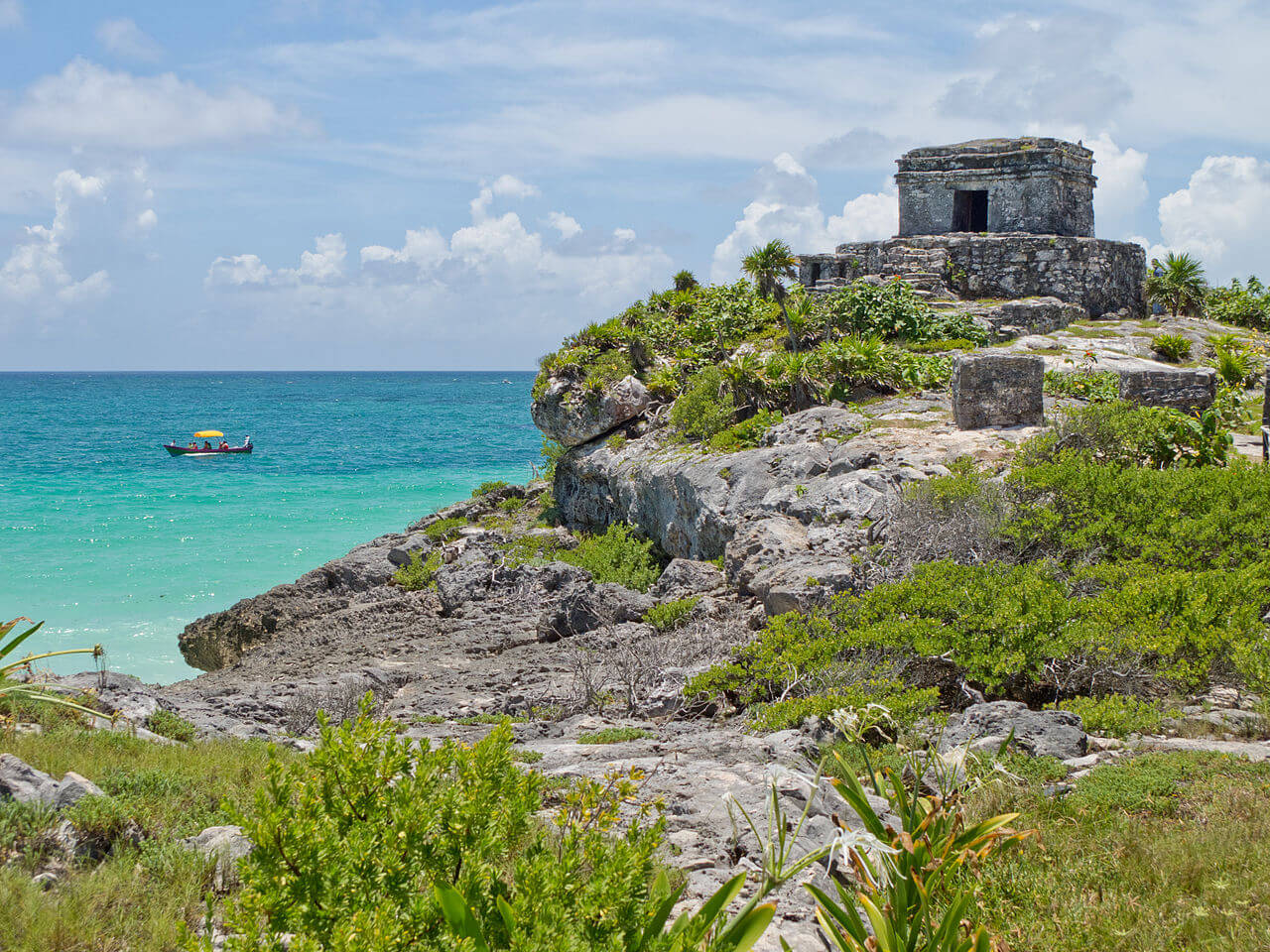
Tulum is set in one of the most spectacular natural settings of any Maya archaeological site. The city's ruins are situated atop 12-meter-tall (39-foot) limestone cliffs that rise dramatically from the turquoise waters of the Caribbean Sea. This elevated position along the east coast of the Yucatán Peninsula provided both defensive advantages and commanding views of the maritime approaches to the city. The cliffs themselves are part of the broader karst landscape that characterizes the peninsula, where porous limestone bedrock has been sculpted by millennia of wave action and weathering.
The site is approximately 130 kilometers (81 miles) south of Cancún and lies at the intersection of two critical geographic zones: the Caribbean coastal plain and the interior limestone platform. This location made Tulum a natural convergence point where coastal and inland trade routes met. A small cove with a sandy beach nestled within the otherwise continuous line of cliffs provided the perfect natural harbor for trading canoes, protected from the open sea yet accessible to vessels navigating the coast.
Connection to the Inland Capital
Tulum's role as the principal port for Coba was formalized through the construction of one of the Maya world's most impressive engineering achievements: a sacbe, or "white road," connecting the two cities. This raised causeway, built of stone and plaster and coated with white limestone stucco, extended approximately 100 kilometers (62 miles) through dense jungle from Coba to the coast. The sacbe was part of an extensive network of more than 50 such roads radiating from Coba, which served as the inland capital controlling much of the northeastern Yucatán Peninsula.
These raised roads averaged approximately 10 meters (33 feet) in width—comparable to a modern two-lane highway—and were elevated between 40 and 50 centimeters (16 to 20 inches) above the surrounding terrain, rising even higher when crossing depressions or wetlands. The white limestone surface reflected moonlight, allowing traders and travelers to navigate safely at night during the cooler hours. The construction of such massive infrastructure demonstrates the strategic importance of maintaining the connection between inland political power and coastal trade networks.
The Freshwater Source
In the Yucatán Peninsula, where surface rivers are virtually nonexistent due to the porous limestone geology, access to freshwater determined the viability of human settlement. Near the northern side of Tulum's defensive wall, a small cenote—a natural sinkhole exposing the underground aquifer—provided the city with its vital freshwater supply. This cenote was part of the vast underground river system that extends throughout the peninsula, today known to include over 1,400 kilometers (870 miles) of interconnected subterranean waterways.
The presence of this cenote was likely a primary factor in selecting Tulum's precise location. The Maya viewed cenotes not merely as water sources but as sacred portals to Xibalba, the underworld realm of their cosmology. The strategic positioning of the cenote within the protected confines of the walled city ensured that Tulum's inhabitants maintained exclusive control over this precious resource during times of siege or conflict.
The Fortified Bastion
A Defensive Masterpiece
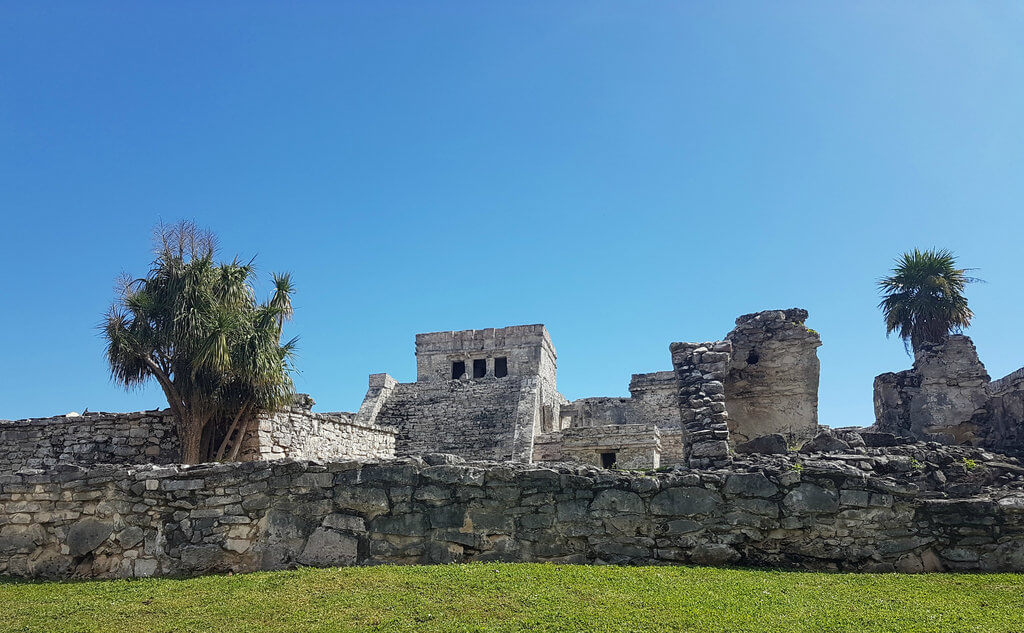
Tulum's defining feature is its impressive defensive wall, a testament to the Maya's engineering prowess and military strategic thinking. This colossal structure averaged between 3 and 5 meters (10 to 16 feet) in height and an astonishing 8 meters (26 feet) in thickness, stretching for 400 meters (1,300 feet) along the side parallel to the sea. The wall's construction required moving thousands of tons of limestone blocks and represents an enormous investment of labor and resources, underscoring how seriously the Maya took the city's defense.
The portions of wall running perpendicular to the coast, spanning the width of the site, were slightly shorter at approximately 170 meters (560 feet) on both the north and south sides. The seaward side required no wall, as the cliffs provided natural protection from maritime assault. This three-sided fortification created a defensible perimeter of nearly 750 meters (2,460 feet) and enclosed approximately 16 acres of ceremonial and elite residential space.
Strategic Brilliance
The location of Tulum was chosen with strategic brilliance, combining natural and constructed defenses to create one of the most impregnable Maya sites. The eastern approach was naturally protected by steep sea cliffs averaging 12 meters (39 feet) in height, presenting potential invaders arriving by sea with an imposing vertical barrier. The imposing wall on the landward sides featured small structures identified as watchtowers at the southwest and northwest corners, enhancing the city's defensive capabilities and ensuring vigilant surveillance of the approaches through the coastal forest.
Five narrow gateways punctuated the wall—two each on the north and south sides and one on the west—allowing controlled access to the city. These restricted entry points created natural chokepoints that could be easily defended by a small number of warriors, effectively neutralizing the advantage of superior attacking numbers. The narrow width of the gateways also prevented the rapid movement of large forces into the city interior.
Archaeological evidence suggests that the walls may have served a dual purpose beyond pure defense. Some scholars theorize that they also functioned as a social barrier, separating the elite priestly and noble classes who lived within the walled precinct from the common population who resided in perishable structures outside the walls. This interpretation aligns with Maya social stratification, where physical space often reflected social hierarchy.
A Confluence of Trade and Culture
A Coastal Trading Hub
Situated on the east coast of the Yucatán Peninsula, Tulum served as a convergence point for coastal and inland trade routes, making it a vital commercial hub in the late Postclassic period. The city's strategic position allowed it to control maritime trade along the Caribbean coast while simultaneously maintaining connections to the interior through the sacbe network, which linked to Coba. This dual access to both marine and terrestrial trade networks generated enormous wealth and regional influence.
The break in the barrier reef directly opposite Tulum's small landing cove was no coincidence. This natural channel through the dangerous coral formations provided safe passage for incoming canoes laden with trade goods. A small shrine atop El Castillo appears to have functioned as a navigational beacon, guiding traders through the reef break to the protected harbor. This maritime infrastructure demonstrates a sophisticated understanding of coastal navigation and marine geography.
Artifacts discovered in and around the site reveal extensive contact with regions across Central Mexico and Central America. Trade goods passing through Tulum included jade from the Motagua Valley in Guatemala, obsidian from highland volcanic sources, cacao from lowland plantations, salt from coastal evaporation ponds, honey from managed apiaries, copal incense, cotton textiles, and exotic feathers from tropical birds. The city also served as a redistribution point for marine resources, including dried fish, shells, and stingray spines used in bloodletting rituals.
Maritime canoes capable of carrying 20 to 30 passengers and substantial cargo plied routes extending from the Gulf of Mexico, around the Yucatán Peninsula, and south along the Caribbean coast to Honduras and beyond. These vessels, carved from large tree trunks and equipped with sails, connected Tulum to a vast commercial network encompassing much of Mesoamerica. The city utilized multiple coastal ports, including Xcaret, Xel-Há, Tankah, and Muyil, to facilitate this extensive trade system.
The Last Maya Bastion
Tulum was one of the last cities built and inhabited by the Maya, reaching its zenith between the 13th and 15th centuries during the late Postclassic period. This era followed the collapse of the great Classic-period cities in the interior and marked a maritime reorientation of Maya civilization, with coastal trading centers gaining prominence over traditional inland ceremonial capitals.
Remarkably, Tulum managed to survive for nearly 70 years after the Spanish began occupying Mexico in the early 16th century. When Spanish explorers sailing along the coast in the early 1500s first glimpsed the city, they compared it favorably to Seville, noting its impressive stone buildings painted in bright colors visible from miles at sea. Tulum was among the first evidence the Spanish encountered that a sophisticated civilization existed in the Americas—neither Peru nor the Aztec empire had yet been "discovered" when Spanish ships spotted this coastal gem.
The city's fortifications proved effective against military conquest, with no walls strong enough to prevent the ultimately devastating impact of European diseases. The introduction of Old World diseases by Spanish settlers led to catastrophic mortality rates among Indigenous populations who lacked immunity to smallpox, measles, and other infectious diseases. High fatalities disrupted Tulum's social fabric, decimating the population and interrupting the transmission of traditional knowledge and cultural practices.
The writings of Friar Diego de Landa document the demographic catastrophe that befell the Maya during the colonial period. Despite this devastating population collapse, local Maya communities continued to visit Tulum's temples to burn incense and pray until the late 20th century, demonstrating the site's enduring spiritual significance long after its abandonment as a living city.
Architectural Wonders
El Castillo: The Landmark Pyramid
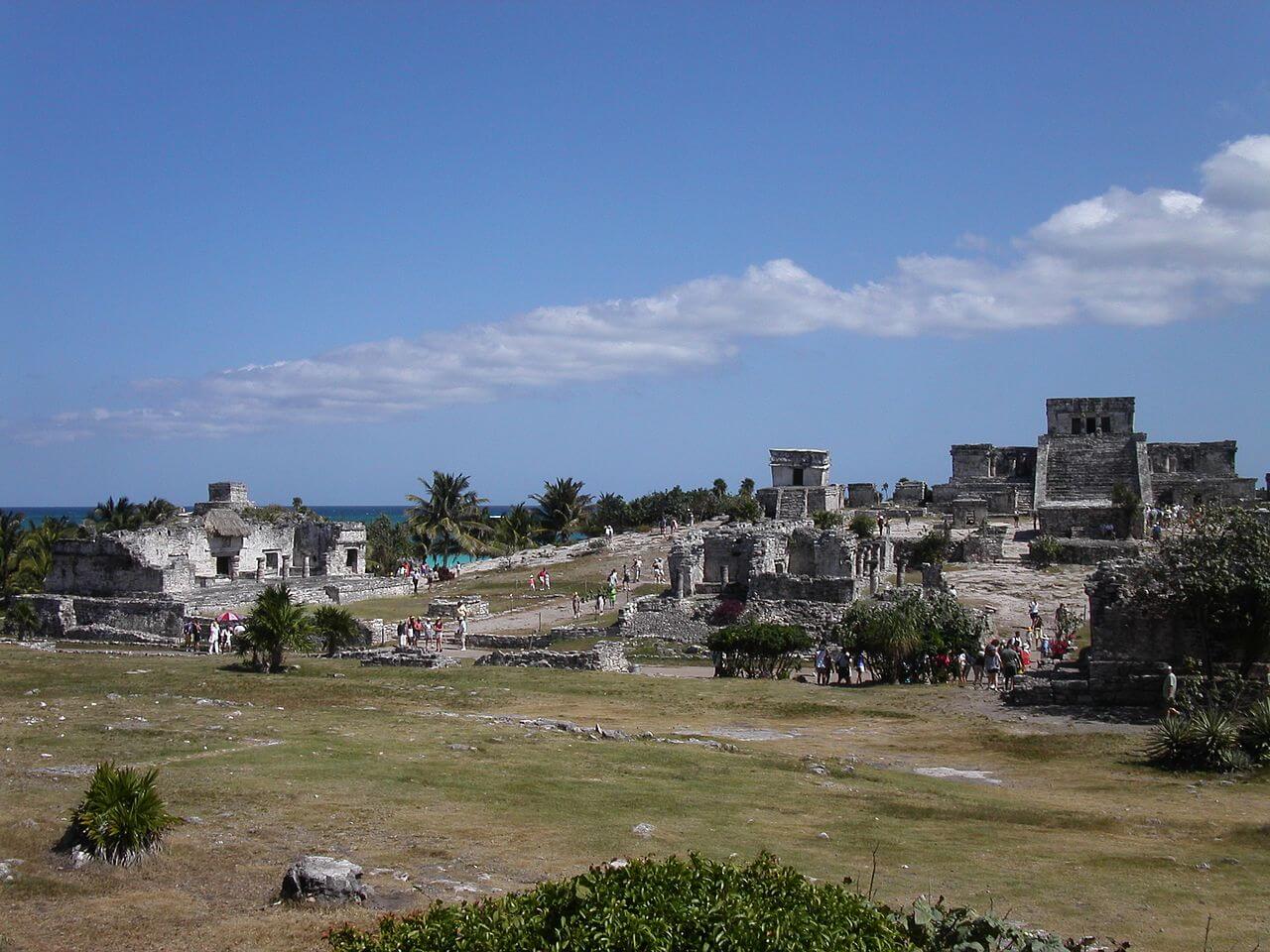
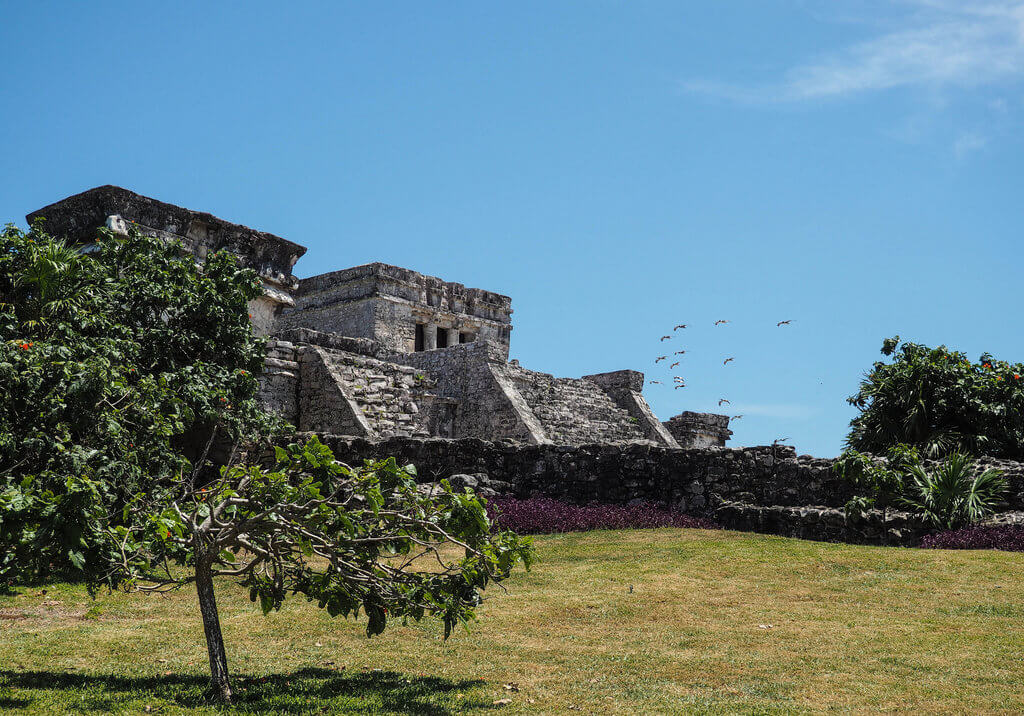
The most prominent structure at Tulum is El Castillo (The Castle), a 7.5-meter-tall (25-foot) pyramid-temple that dominates the site from its position at the edge of the cliff overlooking the Caribbean. Despite its modest height compared to the great pyramids of the interior, El Castillo commands attention through its dramatic coastal setting and architectural refinement.
The structure was built in stages, with the final visible pyramid encasing an earlier colonnade building, following the Maya architectural tradition of constructing new buildings over predecessors. The upper rooms feature lintels carved with serpent motifs, a design element that connects Tulum to the iconographic traditions of other Yucatec sites, including Chichén Itzá. The main facade is divided by two serpent columns that create three doorways, with the central entrance flanked by these symbolic representations of the feathered serpent deity.
Above these doorways, three niches once held carved reliefs of deities. One niche still preserves a representation of the "Descending God" or "Diving God"—a unique deity depicted in a headfirst diving position with legs raised. This figure, also found at Coba and other East Coast sites, may represent the bee god (associated with honey production, a major economic activity), the setting sun, Venus in its role as evening star, or a combination of these celestial and terrestrial associations.
El Castillo's position at the cliff edge and its alignment with the natural break in the offshore barrier reef suggest it served multiple functions beyond religious ceremonies. The structure appears to have operated as a navigational aid—essentially a pre-Columbian lighthouse—with beacon fires or reflective surfaces guiding trading canoes through the treacherous reef to the safe harbor below. This practical maritime function complemented its ceremonial importance, demonstrating the integration of sacred and commercial activities in Maya urban planning.
The Temple of the Frescoes
Among the most significant structures at Tulum, the Temple of the Frescoes stands out for its remarkable interior murals and astronomical function. This two-story building served as an observatory for tracking the sun's movements, critical for maintaining the agricultural calendar that governed planting and harvest cycles.
The lower gallery features elaborate frescoes depicting female and male deities, supernatural beings including anthropomorphized maize gods, serpents, and offerings to the gods such as flowers, fruits, and incense. These once-vivid paintings, now faded by centuries of exposure, represent some of the finest surviving examples of late Postclassic Maya mural art. The iconography reflects the complex Maya pantheon and provides insights into ritual practices and cosmological beliefs.
The smaller second-story gallery is adorned with niched figurines on its facade depicting the Maya "diving god" or Venus deity in various poses. The building's architecture incorporates astronomical alignments, with window placements designed to mark significant solar events, including the equinoxes and solstices. These astronomical observations were not merely academic—they were essential for coordinating agricultural activities with seasonal rains and for timing important ceremonial events.
Among the murals, one of the few surviving images of Ix Chel, the Maya goddess of fertility, medicine, and childbirth, can be found. Recent research has revealed that Tulum served as an important pilgrimage site for Maya women journeying to the holy island of Cozumel, where a major sanctuary dedicated to Ix Chel attracted devotees from throughout the Maya territories. The prevalence of Ix Chel imagery at Tulum and the preponderance of place names with the feminine "Ix" prefix along this coastal region suggest the area held particular significance in the worship of female deities.
The Temple of the Descending God
This smaller single-room temple, situated near El Castillo, is notable for the prominent carved and stuccoed sculpture of the diving deity above its doorway. The structure is accessed via a narrow staircase and features the characteristic East Coast architectural style developed during the late Postclassic period.
The "Descending God" motif appears repeatedly at Tulum, more so than at any other Maya site, suggesting particular local devotion to this deity. The winged figure descending headfirst, holding an object (possibly seeds, honey, or a rain symbol), may represent multiple symbolic associations. As potentially a bee god, the figure would connect to the region's important honey and wax trade. As a solar deity, it might represent the setting sun plunging into the western horizon or Xibalba. As Venus, it could symbolize the planet's descent below the horizon as an evening star.
During the spring equinox, sunlight streams directly through the temple doorway, illuminating the interior chamber—a celestial alignment likely intentional and used for ceremonial purposes. This integration of architecture with astronomical phenomena demonstrates the sophisticated mathematical and engineering knowledge possessed by Maya architects and astronomers.
Additional Architectural Features
The Temple of the Wind God, also called the Temple of the Initial Series for the calendar date recorded there, features a unique rooftop opening believed to serve as a primitive weather-warning system. The architectural design causes the opening to produce a whistling sound when wind speeds increase, potentially alerting residents to approaching storms—a practical innovation for a coastal city vulnerable to hurricanes.
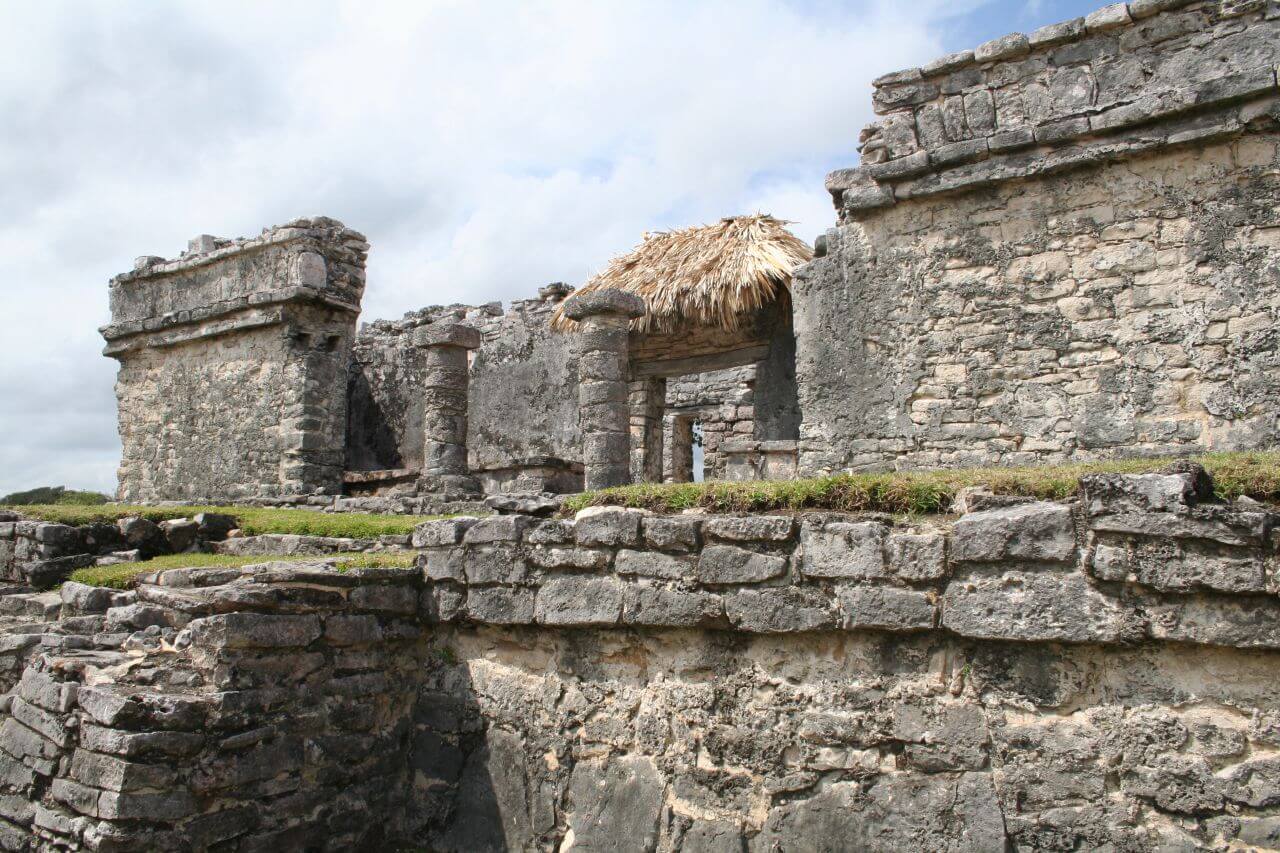
Tulum exhibits architectural characteristics typical of Maya sites on the east coast of the Yucatán Peninsula, a style distinct from the elaborate facades of Classic-period interior sites. This East Coast style is characterized by a step or molding running around the base of buildings that sit on low platforms or substructures. Doorways are typically narrow and, in larger buildings, use columns for structural support. The walls characteristically flare outward, with two sets of decorative molding near the top. Interior rooms usually contain one or two small windows and feature an altar against the back wall. Roofing consists of either beam-and-rubble flat roofs or corbeled vaults.
This architectural style, found at Tulum, nearby sites along the Caribbean coast, and at contemporary inland sites like Mayapan, represents a departure from the elaborate facades and intricate sculpture of earlier periods. The emphasis shifted toward functional buildings constructed more quickly and with less labor investment, reflecting changed priorities in the Postclassic period when defense, trade, and maritime orientation took precedence over the monumental architecture of earlier ceremonial centers.
The Karst Environment and Underground Wonders
The Subterranean Aquifer System
Tulum sits atop one of the world's most extensive karst aquifer systems, where the porous limestone bedrock acts as a vast natural reservoir. The Yucatán Peninsula's geology—a massive limestone platform formed from ancient reef deposits and marine sediments—contains virtually no surface streams or rivers. Instead, rainwater percolates through the soluble rock, gradually dissolving passages and creating an intricate three-dimensional maze of water-filled caves and underground rivers.
This Sistema Sac Actun, which extends beneath much of the Tulum region, was officially confirmed in 2018 as the world's longest known underwater cave system at 372 kilometers (231 miles) when two previously separate systems were proven to be connected. The cave system features approximately 226 known entrances through cenotes scattered across the landscape. These natural sinkholes formed where cave ceilings collapsed, creating windows into the aquatic underworld below.
The underwater passages contain invaluable paleoenvironmental and archaeological evidence. The presence of drowned speleothems—stalactites and stalagmites that formed in air-filled chambers but now lie underwater—documents massive sea level fluctuations associated with Ice Age glacial cycles. During glacial maximum periods, global sea levels dropped approximately 120 meters (394 feet) below present levels, exposing these caves to air and allowing mineral deposits to form. As glaciers melted and seas rose to current levels over the past 10,000 years, these passages flooded, preserving ancient formations and creating the surreal underwater landscape visible today.
Archaeological Treasures in Cenotes
The cenotes and underwater caves surrounding Tulum have yielded extraordinary archaeological discoveries. Remains of Pleistocene megafauna, including mastodons and extinct ground sloths, document the ancient ecosystems that existed when the caves were dry. More remarkably, human skeletal remains have been discovered deep within these systems, including some that may represent the oldest evidence of human habitation in the Americas.
The ancient Maya used cenotes for ceremonial purposes, making offerings of pottery, jade, gold, and other precious items by casting them into the sacred waters. Some cenotes served as sites of human sacrifice, particularly during periods of environmental stress such as prolonged droughts. The famous Sacred Cenote at Chichen Itza yielded hundreds of artifacts and human remains from such practices when it was dredged in the early 20th century.
Beyond their ceremonial significance, cenotes were essential to Maya survival. The concentration of major Maya settlements around cenotes demonstrates their critical importance as water sources. Without cenotes, permanent settlement in the northern Yucatán would have been virtually impossible. The Maya developed sophisticated knowledge of cenote locations and underground water flow patterns, information that was carefully guarded and passed down through generations.
Modern Conservation Challenges
Today, Tulum's fragile karst ecosystem faces unprecedented pressures from rapid urbanization and mass tourism. The modern town of Tulum, positioned inland from the archaeological site, has experienced explosive growth in recent decades, transforming from a small village to a bustling resort destination. This development has occurred directly atop the thin limestone crust separating the surface from the cave networks below—in many areas, the cave roof is less than 3 meters (10 feet) thick.
The high density of caves and cenotes within Tulum's urban area poses direct threats from massive tourist and housing developments. Wastewater contamination is a critical concern, as inadequate sewage treatment allows pollutants to seep directly into the aquifer. Once contaminated, the groundwater flows through the interconnected cave passages, spreading pollution throughout the system and potentially impacting the fragile ecosystems and communities that depend on this water source.
Protection of Tulum's underground waterways requires stringent wastewater treatment regulations, upgraded building codes to prevent cave roof collapse, and continuous hydrological monitoring. The challenge lies in balancing economic development and tourism revenue with environmental stewardship of this irreplaceable natural and cultural heritage.
Environmental Context and Climate
Tropical Coastal Environment
Tulum experiences a tropical savanna climate with distinct wet and dry seasons. Temperatures remain warm year-round, averaging 21°C to 29°C (70°F to 85°F), with minimal seasonal variation typical of equatorial latitudes. The dry season, from November through April, offers sunny conditions ideal for tourism, while the wet season, from May through October, brings higher humidity and afternoon thunderstorms, with occasional tropical cyclones.
The coastal location moderates temperature extremes, with sea breezes providing cooling relief from the intense tropical sun. The region lies within the hurricane belt, and over centuries, Tulum would have experienced numerous catastrophic storms. The Maya built accordingly, constructing massive stone structures capable of withstanding hurricane-force winds—a necessity for permanent coastal settlement in this dynamic environment.
Ecosystems and Biodiversity
The Tulum region sits at the intersection of multiple ecosystems. The coastal zone features beaches backed by coastal dune vegetation adapted to salt spray and sandy substrates. Immediately inland, the landscape transitions to tropical deciduous forest, where trees shed leaves during the dry season to conserve moisture. This forest type, characteristic of the Yucatán, contains economically valuable species, including mahogany (Swietenia macrophylla), cedar (Cedrela odorata), and ramon or breadnut (Brosimum alicastrum), the latter particularly important to the Maya as a dietary supplement.
Mangrove ecosystems fringe protected coastal lagoons and estuaries, including Tankah Bay just north of the ruins. These brackish water habitats, where freshwater from inland cenotes mixes with seawater, create highly productive nursery areas for fish and shellfish. The mixing zone between fresh groundwater and salt water, known as the halocline, creates a surreal underwater visual effect, with the two water masses of different densities forming a blurred boundary visible to divers.
Offshore, the Mesoamerican Barrier Reef—the second-longest barrier reef system in the world—parallels the coast. The natural break in this reef opposite Tulum provided the essential safe passage for trading canoes. This reef ecosystem supports extraordinary marine biodiversity, including corals, sponges, sea turtles (Chelonia mydas, Eretmochelys imbricata, Caretta caretta), rays, sharks, and countless fish species.
Tulum in the Modern Era
Rediscovery and Tourism
After its abandonment in the late 16th or early 17th century, Tulum was slowly reclaimed by the forest. The city remained known to local Maya communities but was "rediscovered" by the outside world in 1841 when explorers John Lloyd Stephens and Frederick Catherwood documented the ruins during their survey of Maya sites. Their published accounts and Catherwood's detailed lithographs brought Tulum to international attention, sparking archaeological and popular interest in this coastal marvel.
Systematic archaeological investigation began in the early 20th century, with the first detailed studies conducted in the 1910s and 1920s. Restoration and consolidation work have continued intermittently since then, stabilizing structures threatened by vegetation overgrowth, weathering, and visitor impact. The Mexican National Institute of Anthropology and History (INAH) oversees the site's management and conservation.
Today, Tulum ranks as the third-most-visited archaeological site in Mexico, after Teotihuacan near Mexico City and Chichén Itzá. The ruins received over 2.2 million visitors in 2017, with daily tour buses bringing a constant stream of tourists from Cancún and the Riviera Maya resort developments. This mass tourism brings economic benefits but also creates management challenges, including physical wear on ancient structures, erosion, and the difficulty of maintaining the site's historical ambiance amid crowds.
The archaeological zone remains relatively compact compared to sprawling interior Maya cities, making it accessible for visitors with limited time or mobility. The proximity to modern tourism infrastructure along Mexico's Caribbean coastline—combined with the site's spectacular ocean-cliff setting and well-preserved structures—ensures Tulum's continued status as one of Mexico's iconic archaeological destinations.
Conclusion
Tulum stands as a captivating testament to the ingenuity, strategic prowess, and cultural richness of the Maya civilization. Its formidable defensive walls, architectural marvels, and role as a thriving trade hub offer a glimpse into a world where fortifications and commerce coexisted in harmony, where celestial observations guided agricultural calendars, and where the boundaries between the sacred and mundane blurred.
Exploring Tulum's remnants reveals the secrets of the Maya's engineering and astronomical knowledge, providing insights into their resilience in the face of adversity. From its strategic clifftop location to its sophisticated maritime infrastructure, from its astronomical observatories to its connections with vast underground river systems, Tulum embodies the Maya ability to adapt to and thrive within the unique karst environment of the Yucatán Peninsula.
This fortified gem of the Maya world continues to inspire and intrigue, reminding all of the enduring legacy of human creativity and perseverance. As we balance the competing demands of tourism, development, and conservation, Tulum challenges us to preserve this irreplaceable heritage for future generations while acknowledging its continued significance to Maya communities who maintain spiritual connections to these ancestral places. The city that once greeted the dawn now stands as a bridge between past and present, between the achievements of an ancient civilization and the responsibilities of our contemporary world.