
Henri Pittier National Park: Venezuela's First Park, and the World's First Protected Cacao
Henri Pittier National Park, Venezuela's oldest, protects more than 500 bird species in an area barely larger than a mid-sized city and shelters Chuao, the coastal village whose cacao became, in 2000, the first in the world to receive a protected Denomination of Origin.

Henri Pittier National Park: A Swiss Botanist's Legacy, From Costa Rica to Caracas
In Venezuela's Aragua and Carabobo states, sandwiched between Lake Valencia and the Caribbean coast, Henri Pittier National Park holds a distinction no other protected area in the country shares: it was the first. Established under a different name nearly nine decades ago, the park has since become one of the most significant sites for bird conservation in the Americas relative to its size, and its coastal reaches shelter a village whose cacao chocolatiers worldwide consider among the finest on Earth.
A Park Born as Rancho Grande
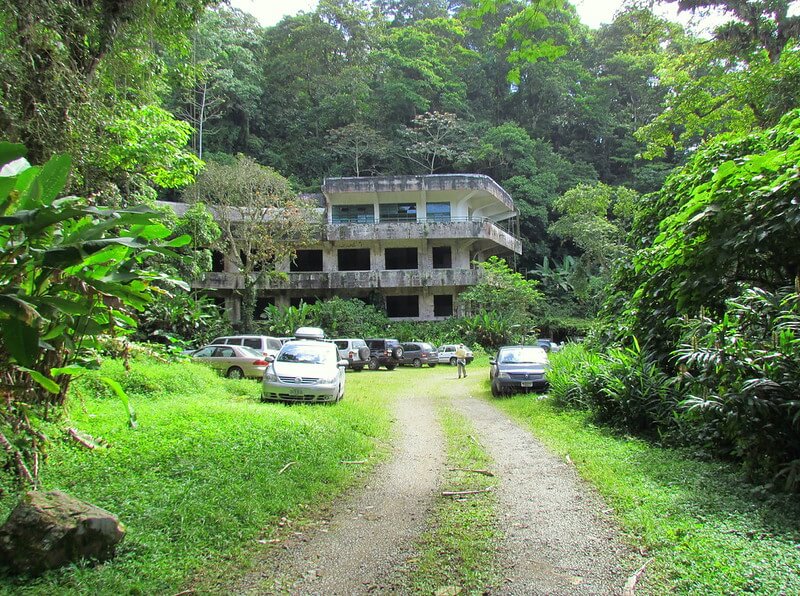
The park was created by presidential decree on February 13, 1937, under President Eleazar López Contreras, and was originally named Rancho Grande. In 1953, it was renamed in honor of Henri Pittier, the Swiss geographer and botanist whose scientific work proved essential to its establishment and whose broader career had, by then, already reshaped the scientific understanding of tropical flora across two countries. Covering roughly 107,800 hectares (266,400 acres) within the Serranía del Litoral of the Venezuelan Coastal Range, Henri Pittier remains the largest protected area in that mountain system, and its designation directly inspired the national park system Venezuela later built around it.
Henri Pittier: A Career Spanning Two Countries
Henri François Pittier de Fábrega was born on August 13, 1857, in Bex, Switzerland, and trained as an engineer at the University of Jena before turning to botany and geography. In 1887, well before he set foot in Venezuela, Pittier moved to Costa Rica, where he founded and directed the country's first geographic institute, the Instituto Físico-Geográfico Nacional; produced Costa Rica's first comprehensive geographic map; and studied and documented the language of the Bribrí people. He remained in Costa Rica until 1904, when he left to join the United States Department of Agriculture in Washington, D.C., where he conducted a botanical survey of the Panama Canal Zone among his other work.
Pittier arrived in Venezuela in 1917 to direct Caracas's Commercial Museum, and remained in the country for the rest of his life, eventually classifying more than 30,000 plant species and authoring landmark works including the Manual de las plantas usuales de Venezuela (1926) and Genera Plantarum Venezuelensium (1939). Over a career that produced more than 300 papers and books spanning botany, geography, forestry, anthropology, linguistics, geology, and climatology, Pittier became the foundational figure behind Venezuela's entire system of protected areas before he died in Caracas on January 27, 1950, at the age of 92; the Venezuelan government continues to award an Order of Merit for Conservation in his name.
A Concentration of Birdlife
Henri Pittier is recognized as an Important Bird Area. He ranks among the richest sites for avian diversity anywhere in the world relative to its size, with more than 500 recorded bird species, representing over 40% of every bird species found in Venezuela, packed into little more than 1,000 sq km (386 sq mi). At least 22 are endemic or have severely restricted ranges, including the helmeted curassow (Pauxi pauxi), a large, crested, endangered game bird found in only a handful of Andean and coastal cloud forest sites across the region.
Much of this diversity reflects the park's position along the Portachuelo Pass, a natural gap in the coastal mountains that funnels vast numbers of migratory birds and insects between the Caribbean coast and Venezuela's interior each year, making it one of the most productive bird-migration bottlenecks documented anywhere in South America. The Rancho Grande Biological Station, built within the park in the 1940s and named for its original designation, remains an active hub for tropical ecological research, drawing scientists from around the world to study the park's forests. The Sociedad Científica Amigos del Parque Nacional Henri Pittier, founded in 1989, continues to support this research and the park's broader conservation.
Chuao: The World's First Protected Cacao
On the park's isolated Caribbean coastline, reachable in most directions only by boat, lies the village of Chuao, first recorded by Spanish explorer Alonso de Ojeda in 1502 and among Venezuela's oldest coastal settlements. Cacao cultivation (Theobroma cacao) here dates back more than 450 years. The roughly 140 to 150 hectares (350 to 370 acres) of plantations surrounding the village support more than 75 genetic varieties of Criollo, the rarest and most aromatic cacao variety in the world, accounting for perhaps 5% of global cacao production and surviving in its purest form almost nowhere outside Venezuela; Trinitario, a hybrid of Criollo and Forastero, is also cultivated here.
In November 2000, Chuao cacao became the first cacao in the world to be granted a protected Denomination of Origin, formally recognizing the unique combination of soil, microclimate, heirloom genetics, and centuries-old processing methods—beans fermented in the open, dried under the Caribbean sun—that together produce what many of the world's leading chocolatiers regard as the finest cacao on Earth. Production remains organized through a farming cooperative, the Empresa Campesina de Chuao, which exports beans to certified importers in the United States, Japan, and Europe under a certificate-of-authenticity system designed to guarantee that chocolate marketed as genuine Chuao origin was actually grown in the village, and reinvests proceeds directly into local schools and medical infrastructure. Beyond cacao, Chuao is also known for the Diablos Danzantes, or Dancing Devils, an elaborate traditional festival performed each year during Corpus Christi that reflects the village's distinct Afro-Venezuelan cultural heritage.
Wildlife and Landscape
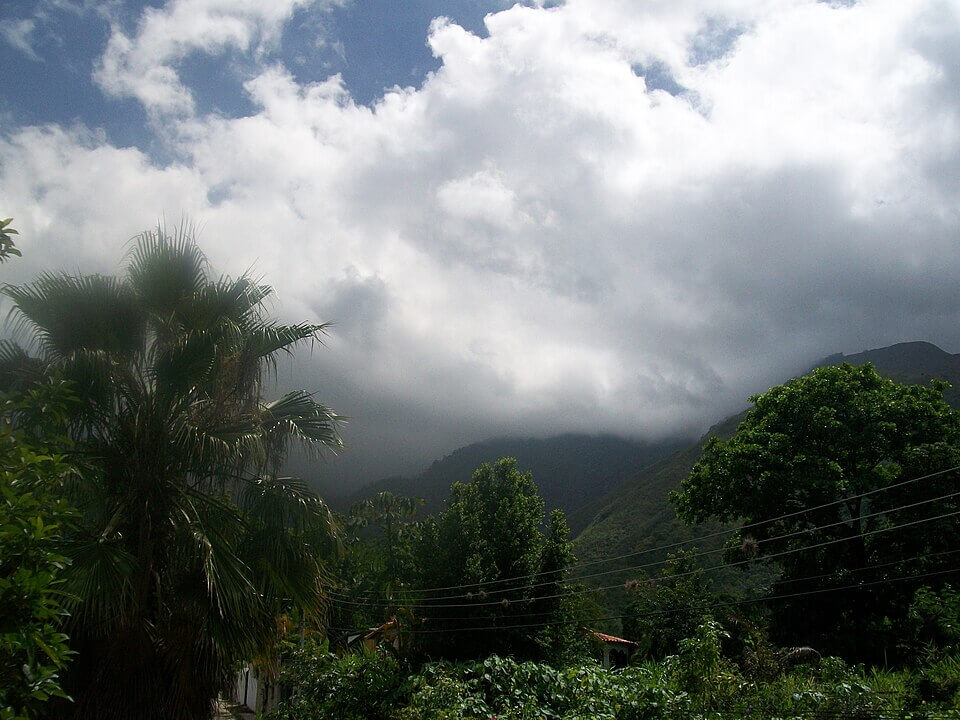
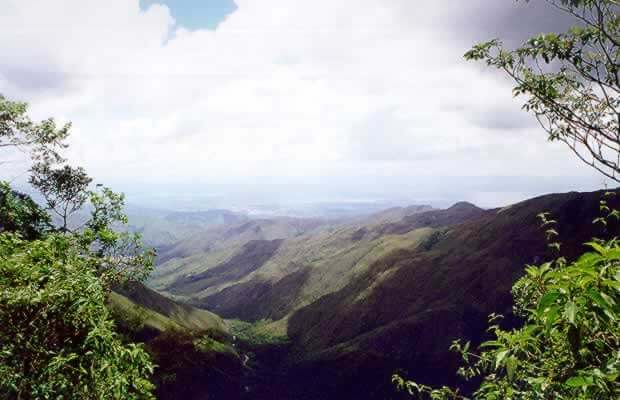
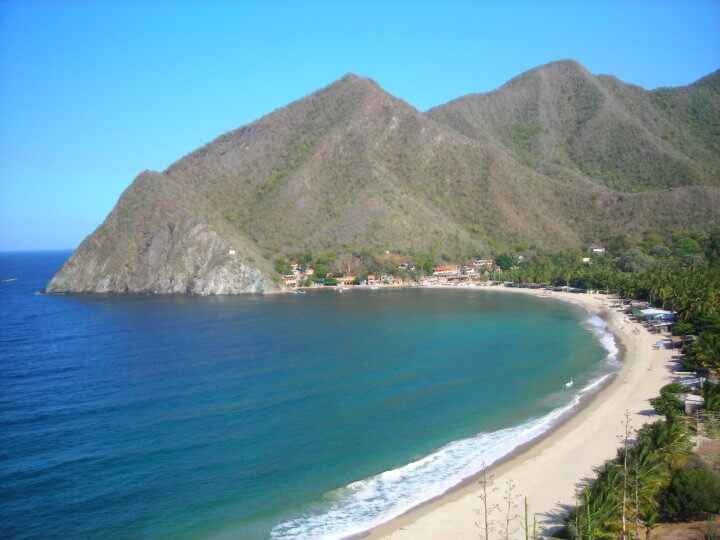
Beyond its avian diversity, Henri Pittier's dense rainforest interior shelters pumas (Puma concolor), red howler monkeys (Alouatta seniculus, treated by some authorities as the separate species Alouatta arctoidea in northern Venezuela), and rattlesnakes (Crotalus durissus), particularly along the forested route connecting the park to the coastal town of Choroní, one of the park's most popular gateways. The park's nine major rivers make it a vital regional water source in addition to its ecological role, and its combination of montane cloud forest and secluded Caribbean beaches, many accessible only by boat, gives it a striking range of landscapes within a relatively compact protected area.
Conclusion
Henri Pittier National Park occupies a singular place in Venezuela's conservation history: the country's first protected area, founded on the strength of one scientist's decades of work across two nations, and home today to a concentration of bird diversity rivaled by few places of comparable size anywhere in the world. Its coastal village of Chuao adds a further, unlikely distinction: the origin of the first cacao ever granted international recognition for the specific place that produced it, a testament to how much can be packed into a single, relatively small stretch of Venezuela's coastal mountains.