
The Backbone of Colombia: Exploring the Andean Natural Region
Colombia's Andean Natural Region, the heartland, is a tapestry of mountains, valleys, and ecosystems shaped by altitude, featuring three branches of the Andes. It serves as the core of Colombian life, housing urban centers, rich pre-Columbian Indigenous heritage, and a major part of the Magdalena River basin.
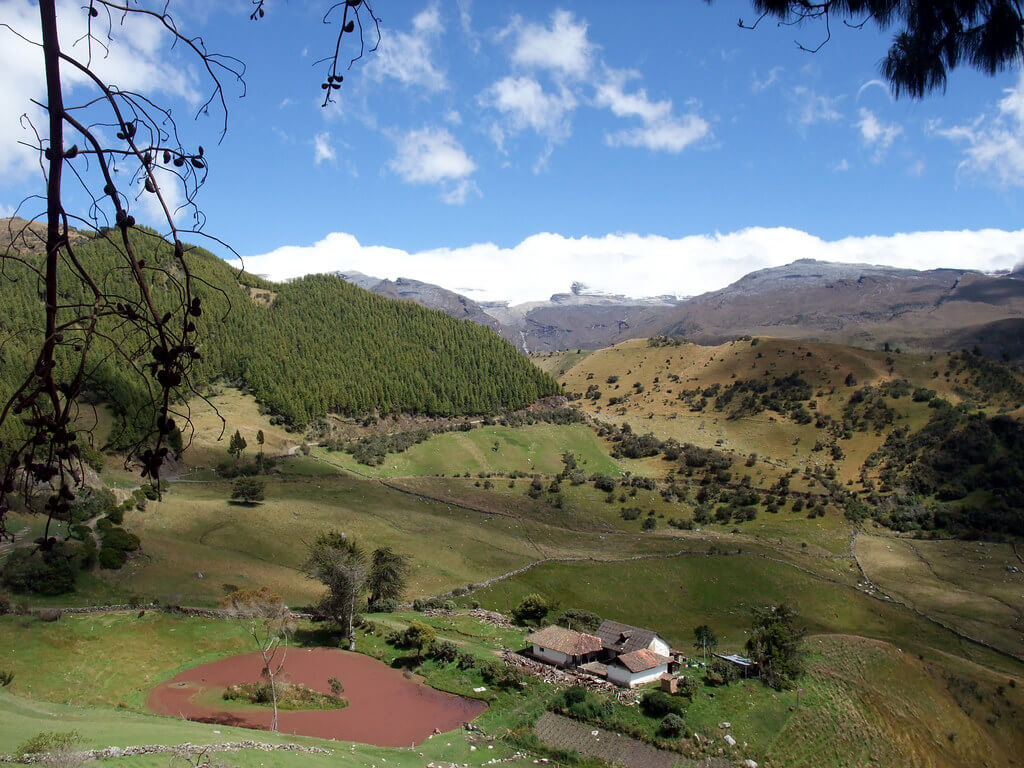
A Legacy of Altitude: History, Biodiversity, and Life in the Colombian Andes
Colombia's Andean Natural Region, the country's populous heartland, is a majestic tapestry woven from towering mountain ranges, fertile valleys, and diverse ecosystems sculpted by altitude. Forming the central backbone of the nation, this region is defined by the three branches of the Andes Mountains – the Cordillera Occidental (Western), Cordillera Central, and Cordillera Oriental (Eastern) – that traverse the country from south to north. Beyond its imposing topography, the Andean region is the historical and contemporary nucleus of Colombian life, home to the majority of its urban centers, significant pre-Columbian Indigenous heritage, and a substantial portion of the vital Magdalena River basin.
A Vertical World: Diverse Climates and Altitudinal Zones
The defining characteristic of the Andean Natural Region is its dramatic variation in climate and ecosystems, dictated by altitude. Rising from tropical valleys to high-altitude páramos and snow-capped peaks, the Andes create distinct thermal floors. The lower elevations experience warm, tropical conditions, gradually transitioning to temperate climates in the mid-elevations, where average temperatures hover around 18 °C (64 °F). Higher still, the climate becomes progressively cooler, entering the "cold zone" with average temperatures around 13 °C (55 °F), eventually leading to the páramo, a unique high-altitude ecosystem characterized by specialized vegetation adapted to cold, wet conditions, and finally, the permanent snow and ice of the highest summits. This vertical zonation supports an extraordinary array of biodiversity within a relatively compact area.
A Trio of Ranges: The Cordillera's Embrace
North of the Colombian Massif in the southwest, the Andes Mountains in Colombia dramatically split into three parallel ranges that define the Andean Natural Region's geography. The Cordillera Occidental, the westernmost range, runs closely parallel to the Pacific coast and is home to significant cities like Cali, known for its vibrant culture and surrounding agricultural lands. The Cordillera Central, the middle range, extends through the country's center, nestled between the valleys of the Cauca and Magdalena rivers, characterized by volcanic peaks and rich coffee-growing regions. The Cordillera Oriental, the easternmost and widest range, stretches northeast towards the Guajira Peninsula, encompassing major metropolitan areas such as Bogotá, the nation's capital, as well as Bucaramanga and Cúcuta, each with its own distinct character and surrounding landscapes. These three cordilleras, separated by inter-Andean valleys, create a complex and varied topography that influences climate, vegetation, and human settlement patterns.
Lifelines of Civilization: The Magdalena River Basin
The Andean Natural Region encompasses a substantial and economically vital portion of the Magdalena River and its extensive basin. Originating in the Colombian Massif, the Magdalena River flows northward through the heart of the Andes, serving as a crucial artery for transportation, irrigation, and supporting diverse ecosystems along its course. Its basin has historically been the primary axis of Colombian development, connecting inland regions to the Caribbean coast and fostering agricultural and industrial growth. The interplay between the mountainous terrain and the river system has shaped settlement patterns and continues to be a defining feature of the Andean landscape.
A Cradle of Heritage: Indigenous Roots and Urban Centers
The Andean Natural Region holds deep historical significance as the location of many of Colombia's most significant pre-Columbian Indigenous settlements, including the advanced civilizations of the Muisca and the Quimbaya. Their legacy is evident in archaeological sites and cultural traditions that persist in the region. Today, the Andes are the demographic heart of Colombia, home to the majority of the country's urban centers. Cities like Bogotá, Medellín, and Cali, nestled within the valleys and high plateaus, are vibrant hubs of culture, commerce, and industry, reflecting the region's central role in Colombian society.
Notable Features and Attractions: Peaks, Valleys, and Cities
The Andean Natural Region offers a wealth of natural and cultural attractions. The Coffee Cultural Landscape, a UNESCO World Heritage site, showcases the unique coffee-growing tradition in the central Andes. Chicamocha Canyon, one of the world's deepest canyons, offers breathtaking views and adventure activities. The Salt Cathedral of Zipaquirá, an underground church carved into a salt mine, is a unique architectural marvel. Numerous national parks, such as Los Nevados National Natural Park with its snow-capped volcanoes and páramo ecosystems, and Tayrona National Natural Park (partially extending into the Caribbean region but with significant Andean foothills), protect the region's biodiversity. The vibrant cities themselves, with their museums, historical sites, and cultural events, are major attractions, offering a glimpse into Colombia's rich heritage and contemporary life.
Conclusion: The Enduring Heart of Colombia
Colombia's Andean Natural Region, with its majestic mountain ranges, diverse altitudinal climates, and the vital Magdalena River basin, forms the physical and cultural backbone of the nation. From the remnants of ancient Indigenous civilizations to the bustling modern cities, the Andes have shaped the country's history and continue to be the center of its social and economic life. The region's breathtaking landscapes, ranging from tropical valleys to glacial peaks, and its rich biodiversity make it a compelling and essential part of Colombia's natural heritage, a testament to the powerful influence of the mountains on the land and its people