
Embracing the Emerald South: Exploring Chile's Zona Sur
Chile's Zona Sur, or "Southern Zone," stretches from the Biobío River to the Guaitecas Archipelago. It transitions to increased humidity, dense forests, and stunning volcanic landscapes. It features a temperate oceanic climate with heavy rainfall, many lakes and rivers, and the majestic southern Andes.
Ancient Forests and Volcanic Peaks: A Journey Through Chile's Temperate South
Chile's Zona Sur, the "Southern Zone," extends southward approximately 1,000 kilometers (620 miles) from the Biobío River to the Guaitecas Archipelago, marking a significant transition into a realm of increasing humidity, abundant forests, and dramatic volcanic landscapes. Recognized by CORFO in 1950 as one of the country's five distinct natural regions, this zone is characterized by a temperate oceanic climate, abundant rainfall, numerous lakes and rivers, and the imposing presence of the southern Andes. The Zona Sur is a land of verdant beauty that supports unique and often endemic flora and fauna, along with a rich cultural heritage influenced by both Indigenous Mapuche traditions and European settlement.
A Climate of Abundance: Temperate Rains and Oceanic Influence
The defining climatic characteristic of the Zona Sur is its temperate oceanic climate. This region experiences abundant rainfall throughout the year, with precipitation totals increasing significantly as one travels southward, ranging from around 1,000 mm (39 in) in the north to over 3,000 mm (118 in) in the southern reaches. Temperatures are generally cooler than in the Zona Central, with milder summers averaging between 15°C and 20°C (59°F and 68°F) and cool, wet winters where temperatures rarely drop significantly below freezing in the lower elevations, although snowfall is common at higher altitudes in the Andes. The proximity to the Pacific Ocean moderates temperature fluctuations and contributes to the high levels of humidity that sustain the region's lush vegetation.
Topographical Diversity: Forests, Lakes, and Volcanic Majesty
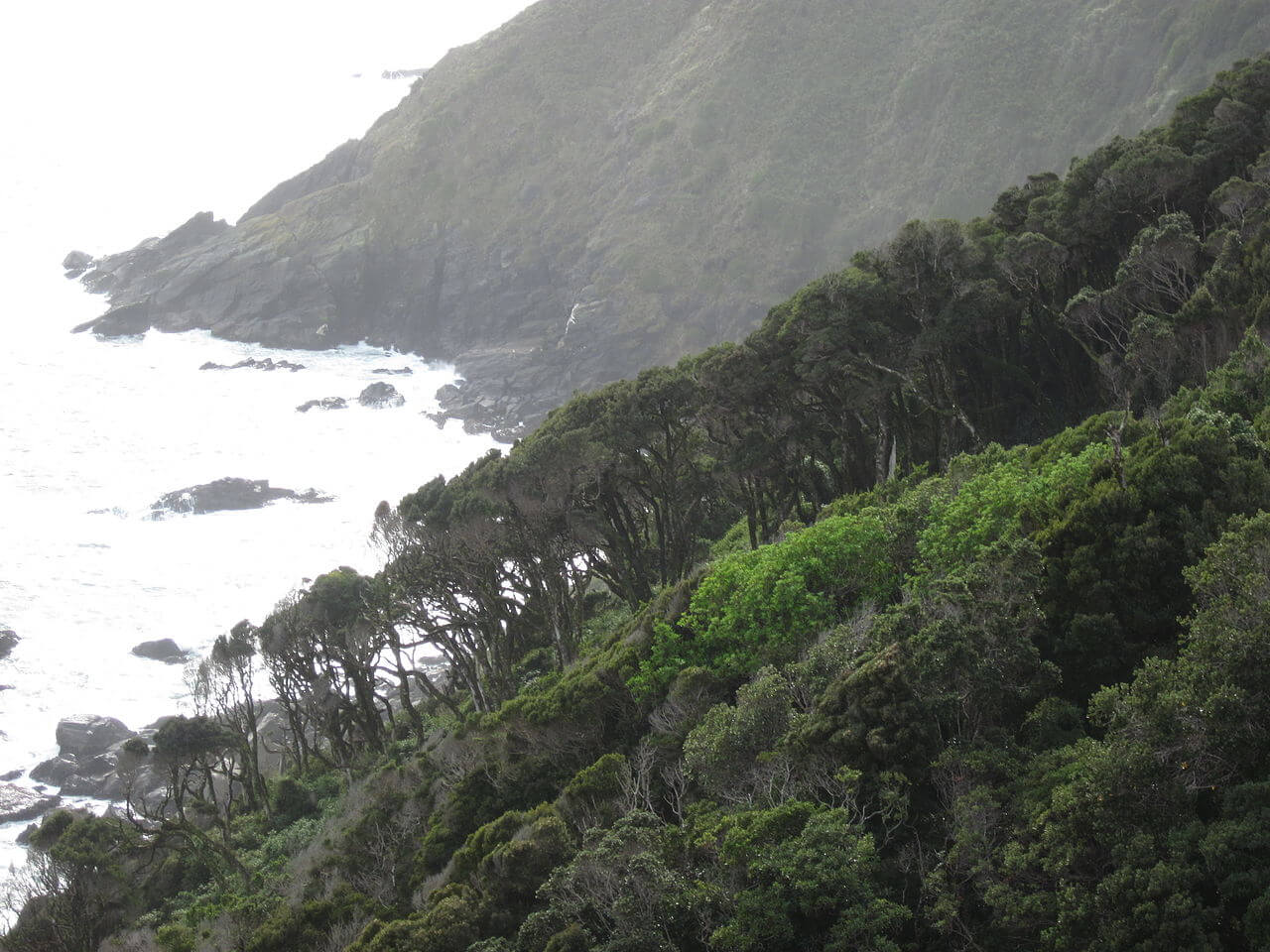
The topography of the Zona Sur is remarkably diverse, marked by dense temperate rainforests, numerous lakes and rivers, and the prominent presence of the southern Andes Mountains. The Coastal Range extends southward, though it is often lower and more fragmented than in the central zone. The intermediate depression widens and is characterized by fertile valleys and several large lakes, including Villarrica, Calafquén, and Llanquihue, many of which are surrounded by volcanic peaks.
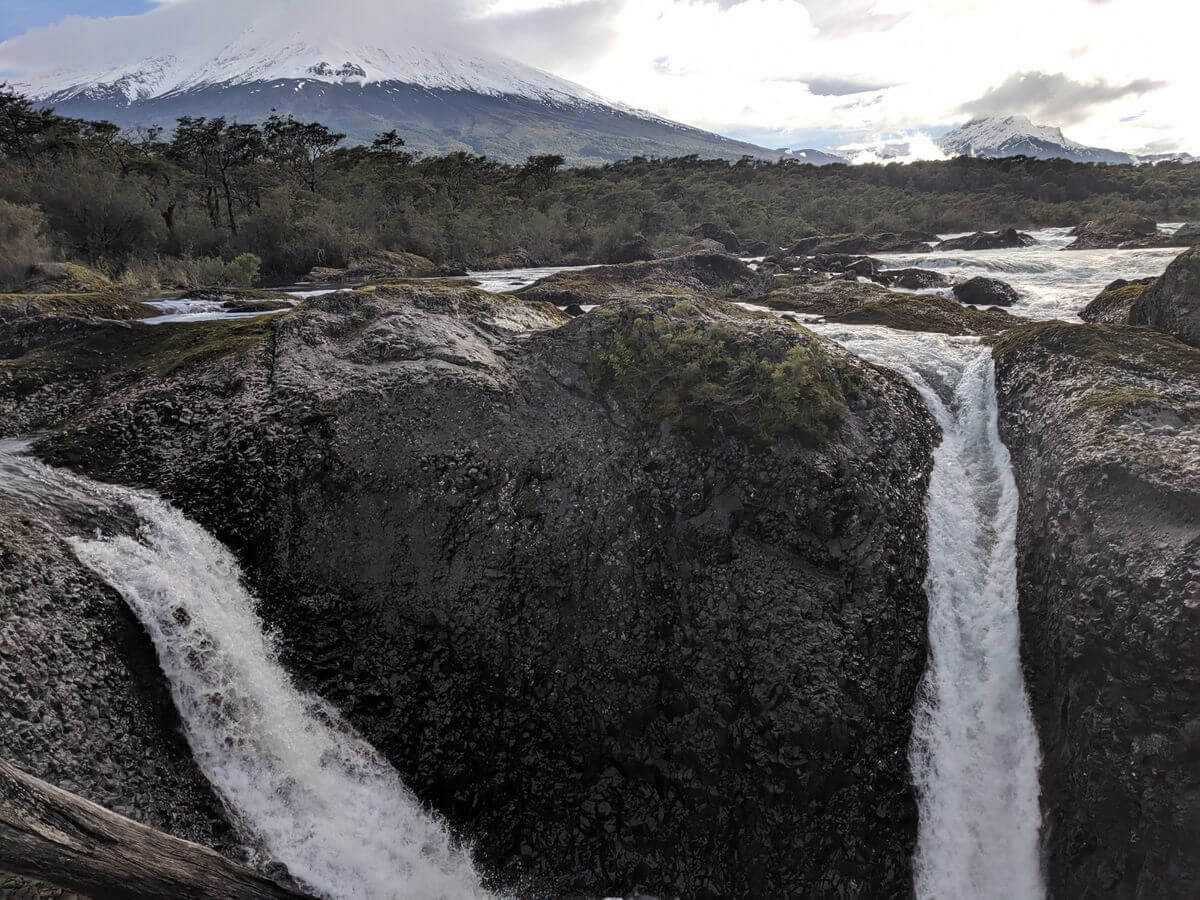
The Andes in the Zona Sur feature both active and dormant volcanoes, such as Villarrica, Llaima, and Osorno. Their snow-capped cones and volcanic soils contribute to the region's dramatic scenery and, in some areas, fertile agricultural lands. Glacial features are increasingly prominent in the southern part of the zone, shaping the landscape and contributing to the numerous rivers that flow westward toward the Pacific.
A Realm of Green: Unique Flora and Endemic Forests
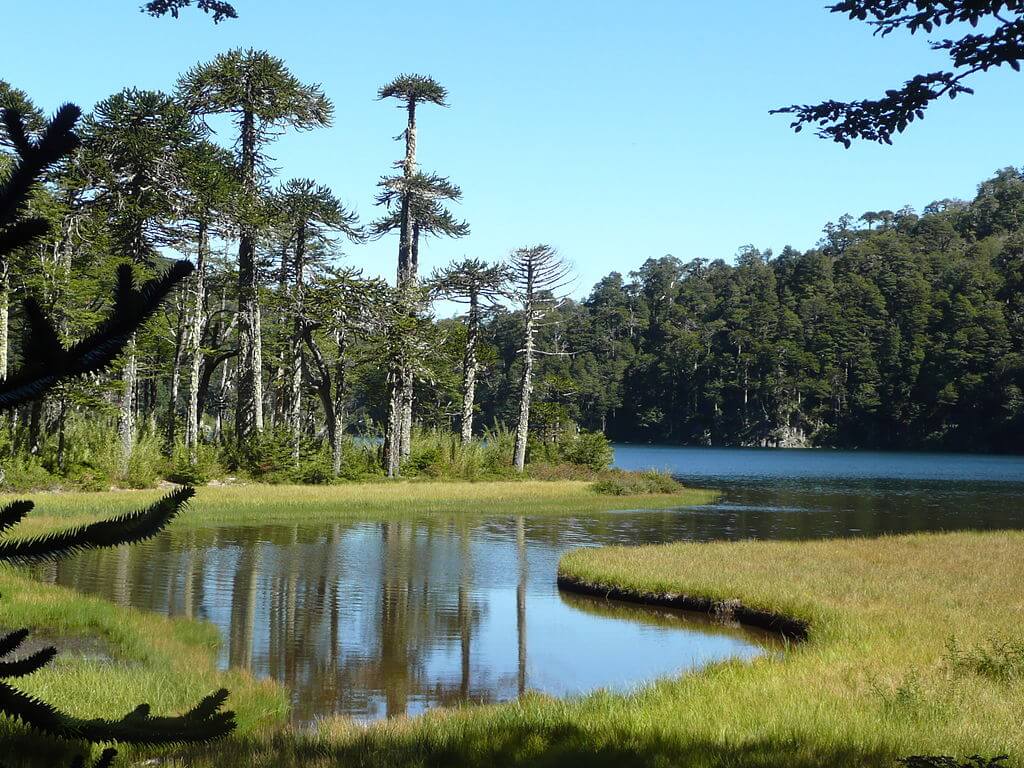
The Zona Sur is dominated by the Valdivian temperate rainforests, a globally significant ecosystem renowned for its high levels of endemism. These lush forests are characterized by a dense canopy of evergreen trees, including iconic species like the ancient alerce (Fitzroya cupressoides), the monkey puzzle tree or araucaria (Araucaria araucana), and various species of Nothofagus (southern beech). The understory is rich with ferns, mosses, and climbing vines, creating a vibrant and humid environment. The presence of these ancient forests, many of which have survived the last glacial period, underscores the region's ecological importance. The northern parts of the Zona Sur also exhibit areas of deciduous forests transitioning from the sclerophyllous vegetation of the central zone.
The fauna of the Zona Sur is equally unique and adapted to the dense forest environment. Iconic mammals include the pudú (Pudu puda), the world's smallest deer, and the elusive kodkod (Leopardus guigna), one of South America's smallest wild cats. Numerous species of birds inhabit the forests, including the Magellanic woodpecker (Campephilus magellanicus) and various endemic passerines. Amphibians and reptiles are also present, often associated with the region's abundant waterways. The numerous lakes and rivers support diverse fish populations, including native and introduced trout species.
A History of Resilience: Indigenous Culture and European Settlement
The Zona Sur has a rich cultural history, deeply intertwined with the Mapuche people, the region's Indigenous inhabitants who fiercely resisted both Inca and European colonization for centuries. Their traditions, language (Mapudungun), and connection to the land remain significant aspects of the region's cultural identity. European settlement, primarily by German immigrants in the 19th century, has also left a lasting mark on the architecture, agricultural practices, and cultural landscape of many towns and cities in Zona Sur. This blend of Indigenous heritage and European influence creates a unique cultural tapestry.
Notable Features and Attractions
The Zona Sur is a haven for nature lovers and adventure seekers, featuring numerous natural wonders and cultural attractions. The Lake District, a stunning area marked by several large lakes (Villarrica, Llanquihue, Panguipulli, etc.) surrounded by volcanoes and lush forests, provides opportunities for boating, fishing, and hiking.
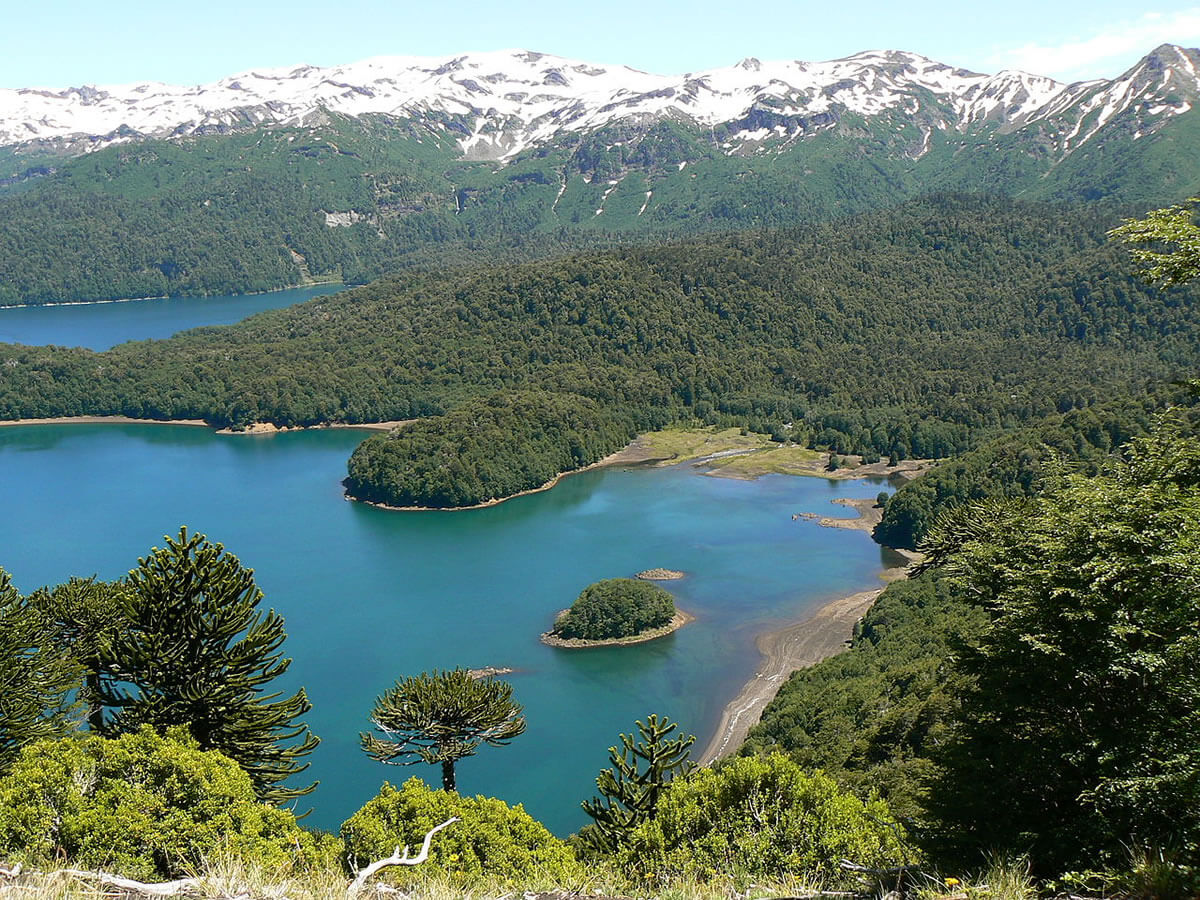
The region is home to several important national parks, including Conguillío National Park, known for its araucaria forests and volcanic landscapes; Huerquehue National Park, celebrated for its pristine lakes and ancient forests; and Vicente Pérez Rosales National Park, which features the Petrohué Falls and Osorno Volcano.
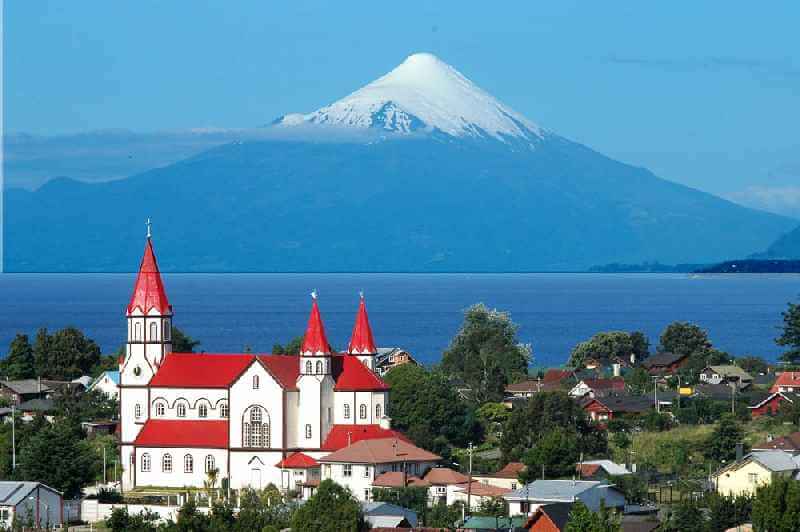
Iconic volcanoes such as Villarrica (an active volcano with opportunities for guided ascents), Llaima, Osorno (noted for its perfect conical shape), and Calbuco dominate the skyline while providing opportunities for hiking, skiing, and breathtaking views.
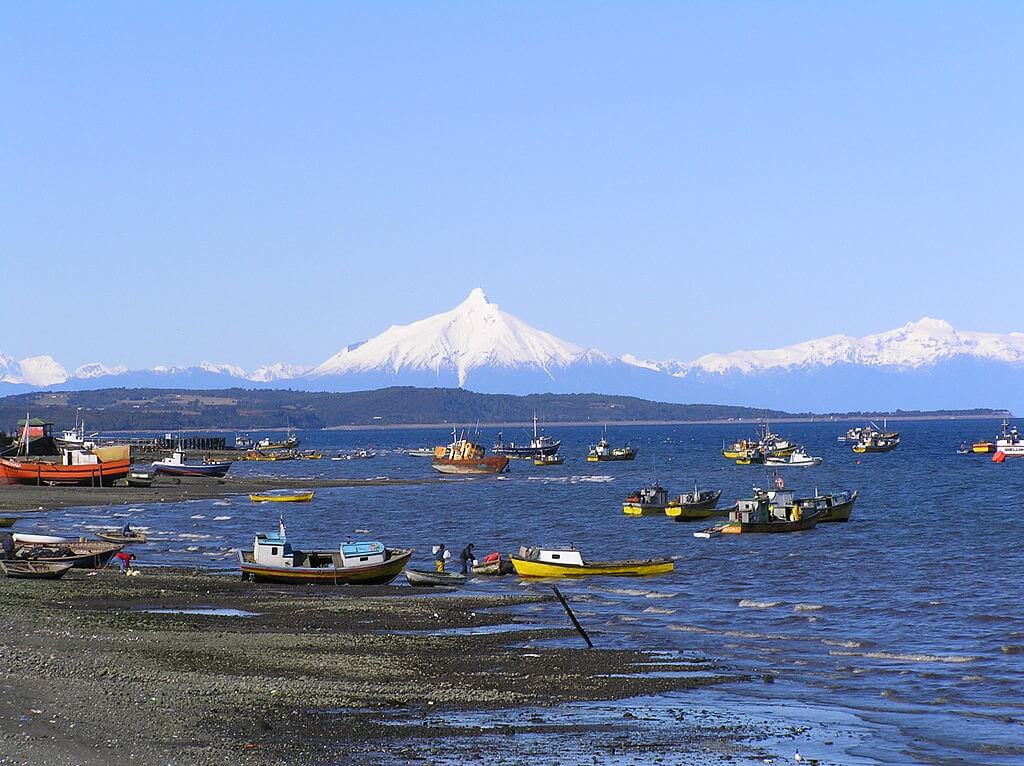
Temuco, the largest city in the Zona Sur and a significant cultural and economic center, boasts a vibrant Indigenous market and ties to Mapuche history. Valdivia, a historic city situated at the confluence of several rivers, is renowned for its German colonial architecture, breweries, and the annual "Semana Valdiviana" festival. Although often regarded as a sub-region, the unique culture, wooden churches (UNESCO World Heritage sites), and distinct maritime traditions of the Chiloé Archipelago represent a considerable attraction in the southern part of the Zona Sur.
Conclusion: A Verdant Realm of Water and Ancient Forests
Chile's Zona Sur, recognized by CORFO for its distinct natural characteristics, is a realm of emerald forests, shimmering lakes, and majestic volcanoes, defined by its temperate oceanic climate and abundant rainfall. This region stands in stark contrast to the aridity of the north, supporting unique and often endemic flora and fauna within its Valdivian temperate rainforests. The rich cultural heritage, shaped by the enduring presence of the Mapuche people and the legacy of European settlement, adds another layer of complexity to this captivating land. With its stunning natural beauty and opportunities for outdoor adventure, the Zona Sur remains a vital and cherished part of Chile's diverse natural and cultural tapestry.
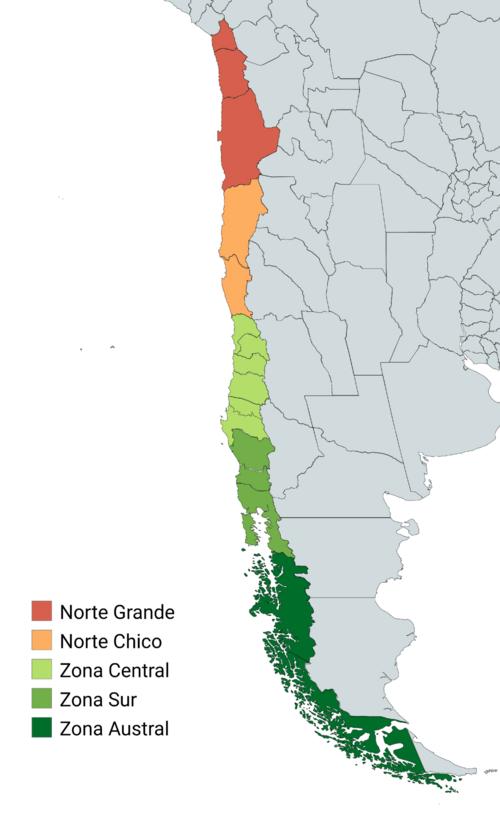
Map depicting the natural regions of Chile.