
Cave Systems of Latin America: Subterranean Wonders from Mexico to Patagonia
Beneath the jungles, deserts, and mountains of Latin America lies a hidden realm of extraordinary geological complexity and profound cultural significance. The region's cave systems represent some of the most extensive, deepest, and archaeologically important subterranean landscapes on Earth.
Beneath the Surface: The Geographic and Cultural Significance of Latin American Cave Systems
Beneath the dense jungles, arid deserts, and towering mountains of Latin America lies a hidden realm of extraordinary geological complexity and profound cultural significance. The region's cave systems represent some of the most extensive, deepest, and archaeologically important subterranean landscapes on Earth. From the world's second-longest underwater cave network in Mexico's Yucatán Peninsula to the highest major caves in the world nestled in Peru's Andes, these underground passages tell stories spanning millions of years of geological transformation and thousands of years of human interaction with the earth's interior.
Mexico's Sierra Madre Caves: From Coastal Yucatán to Mountain Chambers
Mexico's diverse geology has produced dramatically different cave systems across the country. While the Yucatán Peninsula's underwater caves represent one extreme, the mountainous interior showcases equally impressive subterranean chambers formed through various geological processes.
The Yucatán Peninsula: A Submerged Karst Wonderland
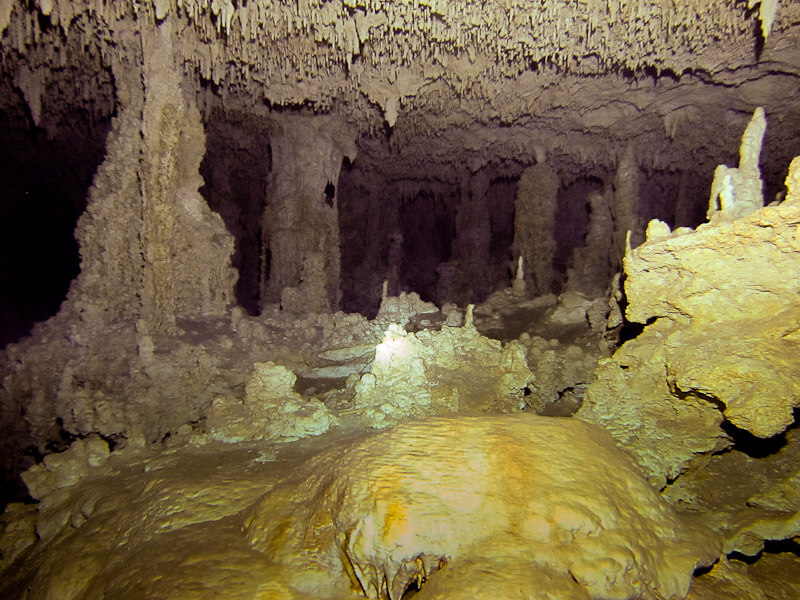
The limestone platform of Mexico's Yucatán Peninsula harbors what may be the most extensive network of underwater caves anywhere on the planet. Sistema Sac Actun, meaning "white cave" in Yucatec Maya, extends along the Caribbean coast near Tulum and became the world's longest known underwater cave system in 2018 when it was connected to Sistema Dos Ojos. As of 2019, this combined system measures 372 kilometers (231 miles) in length and has approximately 226 known entrances, called cenotes.
The formation of these vast subterranean passages reflects the peninsula's unique geology. Coastal sections feature low horizontal tunnels forming mazes parallel to the shore and rudimentary conduits broken by fracture-controlled rooms, while inland passages are fault-controlled with a linear, anastomotic configuration perpendicular to the coast. Access to this underwater realm comes through cenotes—sinkholes formed when limestone bedrock collapses, exposing groundwater beneath. These natural portals serve as windows into an aquatic underworld, where the remains of a mastodon and a human female have been discovered, potentially representing the oldest evidence of human habitation in the Americas.
The occurrence of drowned speleothems throughout the cave system and sections of air-filled upper passages indicates major fluctuations in sea level over time. This dynamic history of water level changes has created multi-layered cave systems that document millennia of environmental change. The cave holds an important, large freshwater reserve that supports great biodiversity, with hundreds of archaeological sites that include evidence of America's first settlers, Maya culture, and extinct animals.
Yet this extraordinary ecosystem faces mounting threats. The high density of caves and cenotes within Tulum's urban area poses direct threats from massive tourist and housing developments, as many cave roofs are very thin. Protection requires serious regulation of wastewater treatment, upgraded building codes, and continuous hydrological monitoring of this critical karst aquifer.
Grutas de Cacahuamilpa: Mexico's Subterranean Cathedral
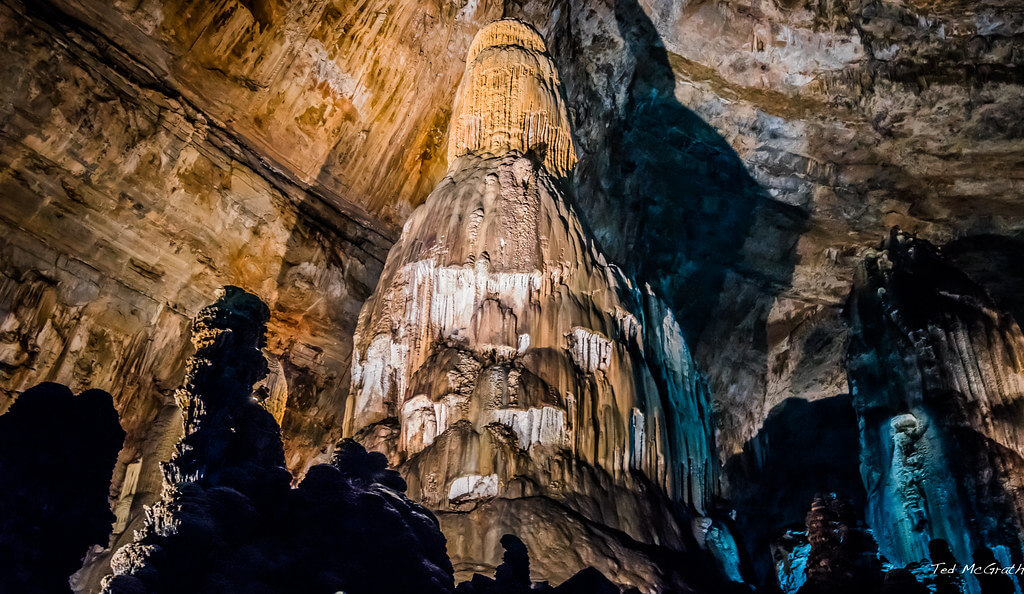
In the state of Guerrero, nestled within the Sierra Madre del Sur mountains, lies Grutas de Cacahuamilpa National Park, protecting one of the largest cave systems in the world. The main cavern extends approximately 2 kilometers (1.2 miles) through ninety large "salons" or chambers, connected by a central gallery, with dimensions averaging 40 meters (131 feet) wide and ranging from 20 to 81 meters (66 to 266 feet) in height. Most of these vast chambers lie beneath the Cerro de la Corona (Crown Hill), a limestone mountain ridge.
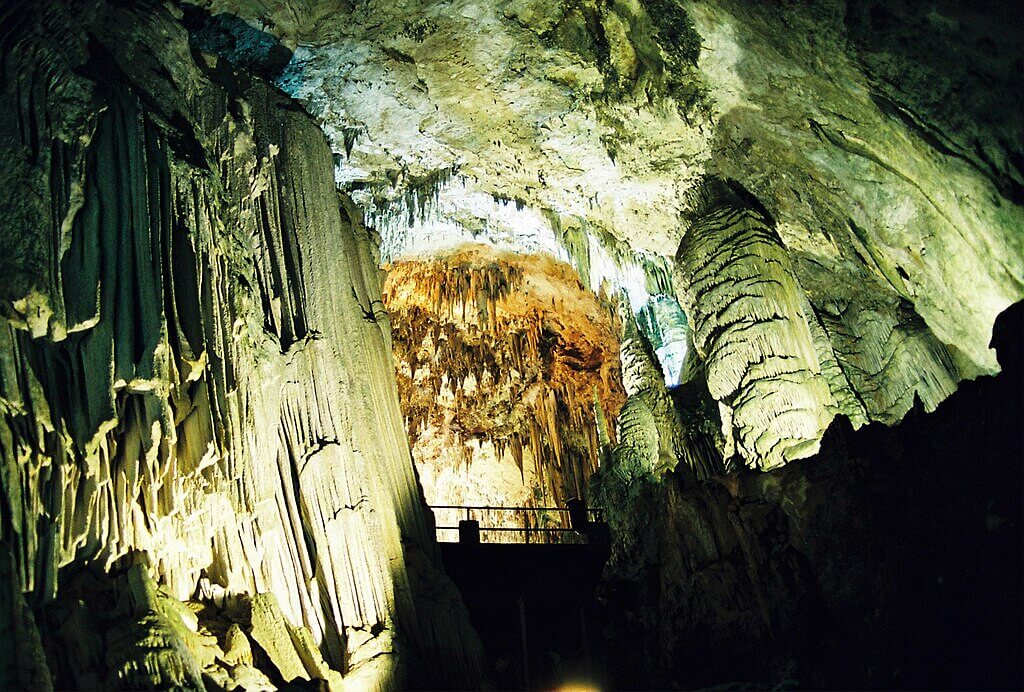
This is a living cave system where groundwater continues to filter through, allowing stalactites, stalagmites, and other formations to grow. The infiltration creates spectacular speleothems that have earned whimsical names from guides—including "The Bottle," which appears to overflow with foam, and "The Organs," pipe-like formations that produce musical tones when struck. One salon serves as a natural concert hall with exceptional acoustics, hosting symphonic performances year-round.
The park also encompasses the smaller Grutas de Carlos Pacheco system 400 meters (1,312 feet) to the south, considered a fossilized cave where formations stopped growing hundreds of years ago, and two active underground rivers: the San Jerónimo extending 12 kilometers (7.5 miles) and the Chontalcoatlán running 8 kilometers (5 miles). These rivers continue carving new passages through the limestone. Archaeological excavations have discovered pre-Columbian pottery within the caves, providing evidence of ceremonial use by the Olmec and later Chontal peoples, who called the system "Salachi." The park attracts approximately 350,000 visitors annually, making it one of Mexico's most popular natural attractions.
Maya Sacred Spaces: Portals to Xibalba
For the ancient Maya civilization, caves represented far more than geological curiosities. They were considered portals to Xibalba, the underworld home to ancient death gods, where priests conducted elaborate rituals to communicate with supernatural forces. The most remarkable archaeological cave site in Latin America—and perhaps anywhere—is Actun Tunichil Muknal in Belize.
Located near San Ignacio in Cayo District, Actun Tunichil Muknal (meaning "Cave of the Crystal Sepulchre") is notable for its Maya archaeological site, which contains skeletons, ceramics, and stoneware. The cave requires a challenging journey to reach: visitors must swim through a two-meter-deep (6.6-foot) pool at the entrance, wade up the cave river for a kilometer (0.6 miles), then walk another kilometer and a half (0.9 miles) past enormous boulders to reach the ceremonial chambers.
The cave contains over 1,400 artifacts from the end of the Ancient Maya Empire that have remained undisturbed for more than a millennium, used by priests to conduct human sacrifices during a time of drought, warfare, and civil strife. Fourteen burials have been found, along with two slate stelae in front of which Maya elites cut themselves with obsidian blades to collect blood offerings to the gods.
The most haunting discovery is the so-called "Crystal Maiden"—skeletal remains in the main chamber that have calcified over time, giving the bones a sparkling, crystallized appearance. Initially believed to be female, the skeleton is actually that of a teenage boy, about 17 years old, who was probably a sacrifice victim. The skeletons range in age from one year old to adult, with four infants aged one to three, some stuffed into crevices and small adjoining caves.
Archaeological dating revealed that most offerings and sacrifices occurred between 750 and 900 CE, coinciding with oxygen-isotope analysis of stalactites indicating major drought conditions from roughly 700 to 1200 CE. This evidence helped solve one of archaeology's enduring mysteries: the Maya civilization likely collapsed due to persistent drought, with increasingly desperate rituals and human sacrifices in caves like Actun Tunichil Muknal representing fervent appeals to the gods as crops died.
Cuba's Subterranean Giant
The Caribbean island nation of Cuba hosts Gran Caverna de Santo Tomás, considered the largest cave system in Cuba and the second-largest in the Americas, with over 46 kilometers (28.6 miles) of galleries spread across eight levels. Located in the Viñales region of Pinar del Río province, this massive system showcases the dramatic karst topography that characterizes western Cuba.
The cave's cultural heritage is significant, with Indigenous art including an Indian mural, and it is historically important as one of the most important areas of settlement for runaway slaves escaping from sugar plantations. The presence of aquifers, extraordinary stalactites and stalagmites, and unusual rock formations make it spectacularly beautiful.
Named after the Santo Tomás stream that formed many of the huge passages, the cave entrance sits at 150 meters (492 feet) in elevation, making it somewhat strenuous to reach in Cuba's hot climate. Only about 1 kilometer (0.6 miles) of the system is accessible to visitors through guided tours lasting approximately 90 minutes; there is no artificial lighting, and visitors are provided with headlamps.
Brazil's Cave Systems: From Atlantic Forest to Cerrado
Brazil's vast territory contains some of South America's most remarkable cave systems, spanning from the Atlantic Forest to the transition zones between major biomes. In the state of São Paulo, the Caverna da Tapagem, also known as Caverna do Diabo (Devil's Cave), is the second-longest cave in the state, with a formation dating back approximately 600 million years to the Precambrian era. The cave follows an underground stretch of the Rio das Ostras in the Serra de André Lopes and extends over 5 kilometers (3.1 miles).
Discovered in 1886 by explorer Richard Krone, the cave was originally named Caverna da Tapagem, meaning "mysterious place," but the more popular name, Devil's Cave, emerged around 1964. Indigenous people who inhabited the vicinity believed that if struck by water drops from the ceiling, they would be transformed into stone, and they interpreted the strange geological formations as people and animals that had been petrified.
The cave lies within a protected state park of over 40,000 hectares (98,840 acres) containing some of the most endangered Atlantic Forest remaining in Brazil. The park records diverse wildlife, including jaguars (Panthera onca), monkeys, and jacutingas, along with native trees such as heart of palm, though clandestine extraction has greatly reduced palm numbers. Of the cave's 6,237 meters (20,463 feet), only 700 meters (2,297 feet) are open to tourists, with walkways and lighting, descending 152 meters (499 feet) from the entrance to the exit.
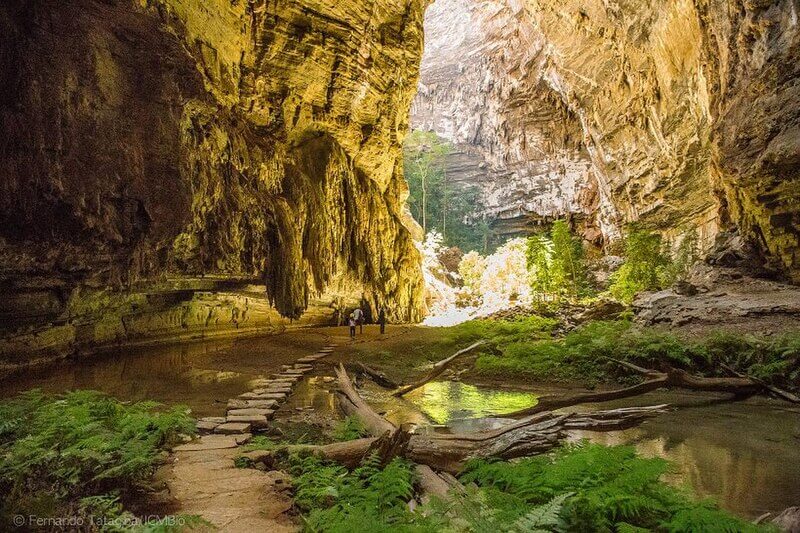
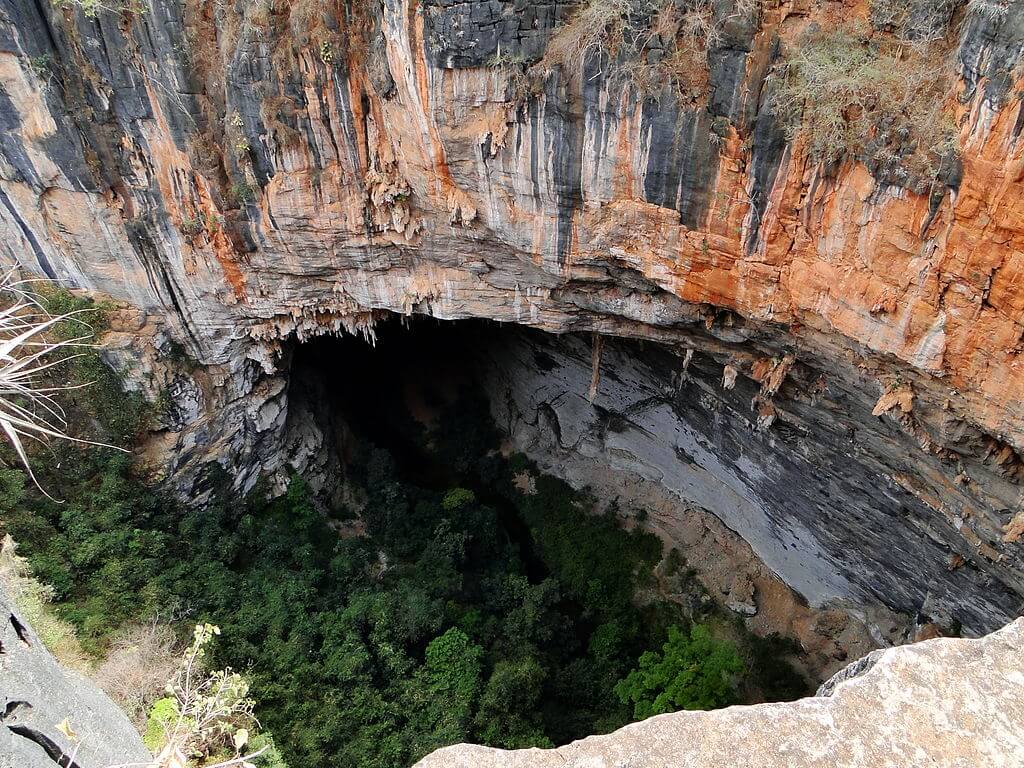
Further north in Minas Gerais state, the Cavernas do Peruaçu National Park protects one of Brazil's most spectacular karst landscapes. Covering 56,448 hectares (139,490 acres), the park contains over 140 documented caves carved by the Peruaçu River through limestone deposited when an inland sea covered parts of Brazil millions of years ago. The river has created a dramatic canyon with high cliffs, natural bridges, and extensive horizontal cave systems. The crown jewel is Gruta do Janelão, with internal dimensions exceeding 100 meters (328 feet) in both width and height, extending over 3 kilometers (1.9 miles) of passage. Massive circular skylights illuminate sections of the cave, allowing small forests to flourish within and creating an otherworldly garden-like atmosphere.
The park lies at the biogeographic intersection of Cerrado, Caatinga, and remnant dry forest ecosystems, supporting exceptional biodiversity, including significant populations of troglobitic species—organisms specially adapted to permanent cave life. Rock art dating back 12,000 years decorates cave walls and shelters throughout the system, providing evidence of early human occupation and making this a site of exceptional archaeological and geological importance.
Andean Heights: Caves at the Roof of the World
The Andes Mountains harbor some of the world's most extreme cave systems, both in terms of altitude and depth. Sima Pumacocha in Peru's Lima Region held the record for deepest known cave in South America from 2001 to 2006 at 638 meters (2,093 feet) deep. With its entrance at 4,372 meters (14,344 feet) above sea level and depth exceeding 500 meters (1,640 feet), it is the highest major cave in the world.
Located in the typical Andes puna at 4,300 to 4,400 meters (14,108 to 14,436 feet) elevation—high, treeless, and surrounded by 5,000-meter (16,404-foot) peaks—the valley is dotted with stone huts used by locals tending flocks of sheep, llamas (Lama glama), and alpacas (Vicugna pacos). Following steeply dipping limestone beds, Sima Pumacocha consists of several vertical shafts connected by short sections of horizontal to steeply sloping passages, with three main entrances leading to extensive independent passages before meeting underground.
The cave system called Gruta de Huagapo in Peru extends 2,141 meters (7,025 feet) and drops to 407 meters (1,335 feet) in depth on the eastern slopes of the Andes. Meanwhile, the Uma Jalanta cave in Bolivia's Torotoro National Park measures 4.6 kilometers (2.9 miles) long, with its entrance at 2,837 meters (9,308 feet) elevation, making it the longest cave known in Bolivia. It features many wide, low passageways that can flood.
Patagonian Paleontology: The Milodón Cave
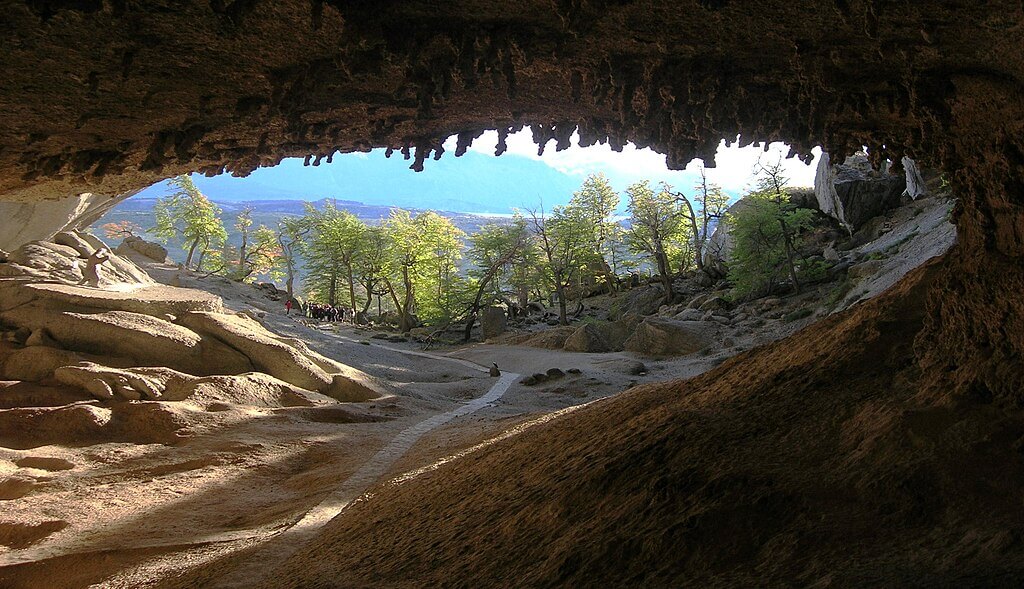
In the remote reaches of Chilean Patagonia, a different kind of cave tells stories of extinct megafauna. The Cueva del Milodón Natural Monument, located 25 kilometers (15.5 miles) north of Puerto Natales in the Magallanes Region, preserves the site where remains of the milodón (Mylodon darwinii) were discovered. The milodón was a large ground sloth that became extinct approximately ten thousand years ago.
In 1895, German settler Hermann Eberhard discovered remarkably well-preserved remains, including skin, bones, and other parts of this extinct herbivore, inside what was then called Eberhard Grotto. The finds included a piece of skin approximately one square meter (10.8 square feet) in size, so well-preserved that it initially sparked speculation the animal might still exist. The cave also yielded human skeletons belonging to the Paleoindian culture that inhabited the cave 8,000 years ago.
The cave originated during the last glacial expansion of the Quaternary period, some twenty thousand years ago, formed by strong waves from a proglacial lake that eroded the shale. Today, a life-size replica of the milodón stands at the cave entrance, part of the Route of the End of the World tourism circuit. The monument protects mammalian fauna, including culpeo fox (Lycalopex culpaeus), gray fox (Lycalopex griseus), puma (Puma concolor), wild cat (Leopardus colocolo), and, among birds, the condor (Vultur gryphus), while forests of lenga (Nothofagus pumilio), coigüe (Nothofagus dombeyi), and ñire (Nothofagus antarctica) predominate.
The Marble Caves: Sculptural Masterpieces
On the border between Chile and Argentina, the Marble Caves are a stunning set of caverns carved into solid marble on Lake General Carrera. Unlike most caves formed by water flowing through them, these cavern walls were sculpted by over 6,000 years of waves washing against them.
The caves on the Chilean side of the lake include La Capilla (the Chapel), El Cathedral (the Cathedral), and La Cueva (the Cave), with walls that now reflect the beautiful blue waters of the lake, changing in intensity and hue with the seasons. These unique geological formations are accessible only by boat or kayak.
The Marble Caves stand apart from the region's limestone karst systems, representing instead the erosive power of wave action on metamorphic rock. The swirling patterns in the marble, combined with the reflected azure of the lake—South America's second-largest—create otherworldly chambers that change appearance with water levels and lighting conditions.
Conservation Challenges and Future Exploration
Latin America's cave systems face mounting pressures from multiple sources. Urban development threatens fragile karst aquifers in places like Tulum. Climate change alters water tables and precipitation patterns that formed these systems over millennia. Archaeological sites within caves require delicate management, balancing tourism with preservation. Yet many systems remain only partially explored, with discoveries occurring regularly.
In the Yucatán alone, there are 358 submerged cave systems in northern Quintana Roo representing nearly 1,400 kilometers (870 miles) of flooded passages, with ongoing efforts to map connections between major systems. Many caves in South America remain secretive, with both cavers and governments distrusting the public with such delicate or dangerous environments.
These subterranean landscapes serve as archives of climate change, repositories of archaeological treasures, habitats for specialized organisms, and critical components of regional hydrology. They document the complex relationship between humans and the underground realm—from ancient Maya viewing caves as portals to the divine, to modern scientists extracting climate records from stalactites, to contemporary challenges of sustainable cave tourism.
As exploration continues and mapping technologies advance, Latin America's caves will undoubtedly yield new insights into geological processes, ancient civilizations, and the intricate ecosystems that thrive beyond the reach of sunlight. These hidden depths remain among the region's most compelling yet vulnerable natural and cultural heritage sites, demanding thoughtful stewardship for future generations.